
Key takeaways
- Eiji Aonuma called fixing the water temple 'overdue homework' after 28 years, acknowledging the dungeon's notorious difficulty in the original Ocarina of Time.
- The remake streamlines the Iron Boots mechanic with easier toggling and adds lattice-style walls that let players see between chambers, reducing disorientation.
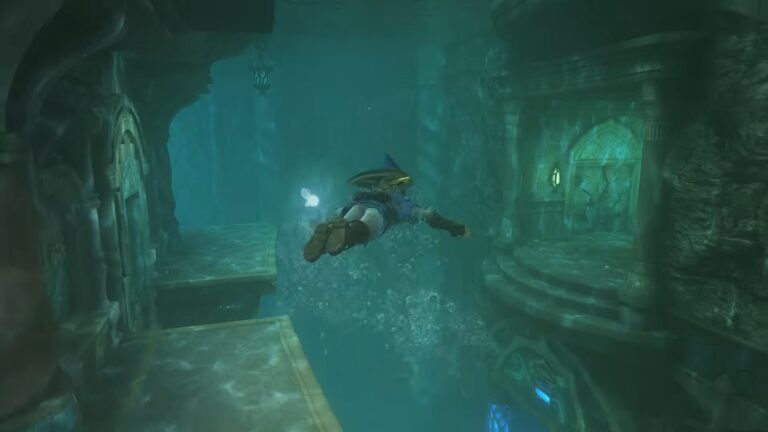
- Link can now properly swim underwater in the new version, eliminating the need for constant menu access to equip and unequip the boots.
- The game releases November 5, but some physical copies have already shipped early and at least one retailer delayed pre-order fulfillment.
The water temple stands as one of gaming’s most divisive dungeons. Players regard its conceptual design as excellent, yet many recall their first encounter as frustrating and exhausting. Eiji Aonuma, the original Ocarina of Time director and current series producer, directly acknowledged this reputation in a recent Ask the Developer interview, describing the fixes he implemented in the upcoming remake.
A 28-Year-Old Problem
Aonuma called addressing the water temple “overdue homework,” expressing a personal sense of responsibility for the dungeon that created such memorable frustration across the player base. The dungeon’s core mechanic involved raising and lowering water levels to access different chambers and solve puzzles. Raising water opened upper passages; lowering it revealed submerged areas. Both states were essential to complete the space.
The execution of this concept, however, generated widespread complaint. Link could not swim in the original game, making underwater exploration impossible without equipment. To reach the dungeon floor, players had to equip Iron Boots, which sank him beneath the surface. Returning required unequipping them. Every transition meant opening the menu, navigating to the equipment page, and toggling the boots. This cycle repeated dozens of times.
The Original Design’s Specific Frustrations
The Menu Interruption
The water temple’s greatest frustration stemmed from this constant menu interaction. Players could not streamline the process. Each boots transition broke immersion and interrupted the dungeon’s flow. Aonuma later reflected that he had wanted the dungeon to communicate what it felt like to explore underwater spaces. He enjoyed freediving and was fascinated by how different everything becomes submerged—the altered sounds, the changed spatial perception, the complete shift in movement feel. He designed the water temple with this sensory experience in mind.
The dungeon’s complexity, combined with relentless item toggling, undermined that goal entirely. Players spent more time navigating menus than experiencing the underwater atmosphere he had created.
Disorientation and Hidden Secrets
Navigation itself proved equally problematic. The numerous flooded chambers made spatial orientation difficult. Players frequently lost track of where they had been and which direction they faced. The disorientation was compounded by a particularly notorious hidden treasure chest positioned beneath a moving platform. Most players missed this chest entirely on their first attempt, forcing backtracking through the already complicated space and extending an already lengthy section.
The 3DS Precedent
Nintendo addressed many of these problems when remaking Ocarina of Time for the 3DS in 2011. The Iron Boots received a major revision: players could bind them to a single button, equipping and removing them instantly without opening menus. A revised cutscene made the hidden treasure chest’s location far more apparent, eliminating much of the frustration surrounding that particular secret. These changes made the dungeon substantially more accessible while keeping the original structure intact.
The upcoming remake applies similar treatment. Aonuma confirmed that the team made adjustments based on how well-known the dungeon had become for its difficulty. HokWai Ng, the remake’s director, provided additional specifics about the implementation. Item toggling operates far more smoothly in this version. Many walls that had previously caused disorientation now feature a lattice design, allowing players to see through to adjacent chambers. This visibility helps maintain awareness of the overall dungeon structure rather than feeling trapped in disconnected flooded rooms.
The Fundamental Change: Swimming
The most significant alteration addresses the core limitation that created most of the original problems. Link can now swim underwater. In the original game, submerged movement was impossible without the Iron Boots. The remake allows Link to swim freely, which fundamentally changes how the dungeon functions.
The Iron Boots still serve a purpose in this new context. Rather than being the only means of underwater navigation, they ground Link on the dungeon floor, enabling him to interact with specific underwater puzzles and mechanisms that require stability. This dual approach preserves the water level mechanic’s puzzle logic while eliminating the forced menu cycling that defined the original experience.
The addition of proper swimming grants Link movement precision beneath the surface that was previously impossible. This change has implications for puzzle design and dungeon navigation that remain to be fully understood, but the redesign suggests the space will play substantially differently despite retaining its familiar themes and overall structure.
Pre-Release Complications
The remake releases November 5. However, distribution complications have already emerged. Physical copies reached consumers days before the official launch date, and at least one major retailer canceled pre-orders after they were supposed to arrive, appearing to hold stock until the following week rather than launching on schedule.
Frequently Asked Questions
What was the main problem with the original water temple?
Players had to constantly open the menu to equip and remove the Iron Boots, since Link could not swim underwater. This repeated menu interaction broke immersion and made navigation tedious, with the process repeating dozens of times throughout the dungeon.
What improvements did the 3DS remake make to the water temple?
The 3DS version allowed players to bind the Iron Boots to a single button for instant equipping and removal without menu access. A revised cutscene also made the location of a previously hidden treasure chest more obvious.
How does the new version change the swimming mechanic?
Link can now swim underwater freely, eliminating the need for constant menu toggling. The Iron Boots remain useful for grounding Link on the dungeon floor to interact with specific underwater puzzles that require stability.
