
Key takeaways
- Competitive video gaming existed almost as soon as video games themselves did, beginning with arcade competitions in the early 1980s.
- As the 1990s progressed, Esports transitioned from purely amateur competition to semi-professional and professional structures with significant prize money.
- Different regions developed distinct esports cultures based on which games dominated their markets and the infrastructure available to support competitive play.
- The 2000s and 2010s witnessed esports expanding beyond regional strongholds into a genuinely global industry.
Esports—competitive video gaming at an organized, often professional level—has transformed from a niche hobby into a global entertainment phenomenon worth billions of dollars annually. Understanding this evolution reveals how technological advancement, community building, and commercial investment reshaped gaming from bedroom pastimes into legitimate sporting spectacles. The journey from underground LAN parties to sold-out arenas demonstrates the power of competitive gaming to captivate audiences and create lasting professional careers.
The Foundation: Early Competitive Gaming and LAN Culture
Competitive video gaming existed almost as soon as video games themselves did, beginning with arcade competitions in the early 1980s. Players gathered at arcade cabinets to compete in games like Donkey Kong and Pac-Man, with some venues hosting formal tournaments that attracted hundreds of participants. These arcade competitions established the fundamental appeal of Esports: the desire to prove mastery, earn recognition, and compete for prizes in front of witnesses.
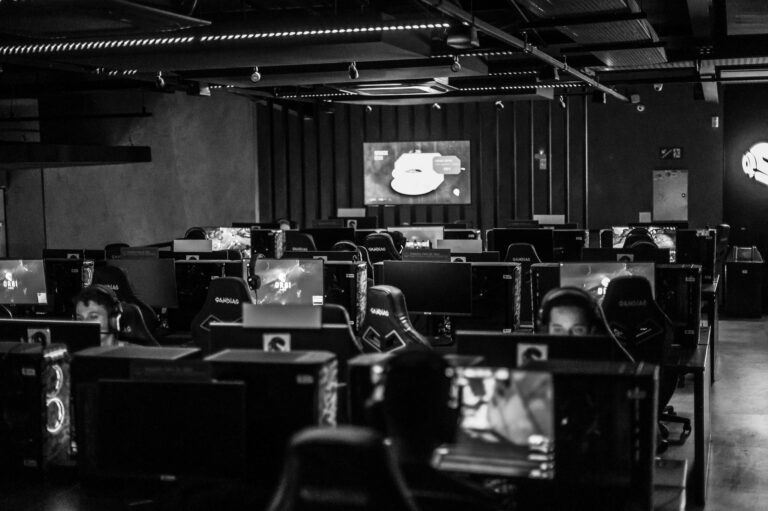
The transition from arcades to home-based competitive gaming accelerated with the rise of personal computers in the 1990s. Local Area Network (LAN) parties—events where players connected computers together to play multiplayer games—became the primary venue for organized competitive gaming. These gatherings, often held in basements, warehouses, or convention centers, ranged from small friend groups to large events attracting thousands of participants competing in games like Quake, StarCraft, and Counter-Strike.
The Rise of Professional Structures and Prize Pools
As the 1990s progressed, Esports transitioned from purely amateur competition to semi-professional and professional structures with significant prize money. Tournament organizers began charging entry fees and securing sponsorships, allowing them to offer prize pools that justified players dedicating serious time to competitive gaming. The professionalization process accelerated when major technology companies and beverage manufacturers recognized esports’ appeal to younger demographics and invested in tournaments and teams.
The Cyberathlete Professional League (CPL), founded in 1997, represented a watershed moment in esports legitimacy. The CPL organized tournaments across North America and internationally, offering prize pools that sometimes exceeded $100,000—sums that allowed top players to sustain themselves through gaming alone. Players like Dennis “Thresh” Fong became household names within gaming circles, earning sponsorships and endorsement deals that demonstrated esports could provide genuine career opportunities.
Regional Dominance and Game-Specific Ecosystems
Different regions developed distinct esports cultures based on which games dominated their markets and the infrastructure available to support competitive play. South Korea became the global epicenter of professional esports, particularly for real-time strategy games, due to high-speed internet infrastructure and cultural enthusiasm for competitive gaming. The Korea e-Sports Association (KeSPA) formalized professional gaming structures in Korea during the early 2000s, establishing player contracts, salary standards, and broadcast rights frameworks that other regions would eventually adopt.
StarCraft: Brood War became the defining esports title in Korea, with professional matches broadcast on television networks and drawing millions of viewers. Players like Lee “Flash” Young Ho and Lim “BoxeR” Yo Hwan achieved celebrity status comparable to traditional sports athletes, earning salaries, sponsorships, and appearance fees. The success of Korean esports created a template for professionalization that influenced how esports developed globally.
Globalization and the Expansion into Mainstream Entertainment
The 2000s and 2010s witnessed esports expanding beyond regional strongholds into a genuinely global industry. Internet streaming platforms, particularly Twitch (launched in 2011), fundamentally changed how esports reached audiences by allowing anyone with an internet connection to watch professional matches live. This democratization of access transformed esports spectatorship from attending physical events to watching from home, dramatically expanding the potential audience size.
Major technology companies and traditional sports organizations began investing heavily in esports infrastructure during this period. Games like League of Legends, developed by Riot Games and released in 2009, were designed with competitive play in mind from inception, featuring balanced gameplay and spectator-friendly mechanics. Riot Games invested hundreds of millions of dollars into the League of Legends World Championship, which grew to feature teams from multiple regions competing for prize pools exceeding $5 million, with matches held in major venues like Madison Square Garden and the Staples Center.
The International, an annual tournament for the game Dota 2 organized by Valve Corporation, introduced crowdfunding mechanisms that allowed the community to directly increase prize pools. The 2021 International featured a prize pool exceeding $40 million, making it comparable to major traditional sporting events in terms of financial stakes. These developments signaled that esports had achieved sufficient mainstream recognition to justify investment comparable to traditional professional sports.
Infrastructure, Broadcasting, and Legitimacy
As esports matured, the industry developed professional broadcasting infrastructure that rivaled traditional sports coverage. Dedicated esports studios, professional commentators trained in game knowledge and sports broadcasting, and multi-camera setups became standard for major tournaments. Organizations invested in graphics packages, replay systems, and analytical overlays that made esports broadcasts accessible and engaging to viewers unfamiliar with competitive gaming.
Major broadcasters and media companies began acquiring esports properties and broadcasting rights. ESPN began covering esports events, and traditional sports networks like ELEAGUE (Turner Broadcasting) created dedicated esports programming. This mainstream media integration provided esports with credibility and exposure that accelerated its growth beyond core gaming audiences into broader entertainment consumption.
Frequently Asked Questions
When did esports first become a professional career for players?
Professional esports careers began emerging in the late 1990s with organizations like the Cyberathlete Professional League offering substantial prize pools. By the early 2000s, particularly in South Korea, top esports players earned salaries comparable to traditional athletes, though widespread professionalization globally accelerated significantly in the 2010s.
Which game is considered the first major esports title?
StarCraft: Brood War, released in 1998, became the first game to achieve massive organized competitive infrastructure and professional structures, particularly in South Korea. However, earlier arcade games and titles like Quake also had competitive communities; StarCraft’s success simply established the template for modern esports.
How did streaming platforms change esports?
Streaming platforms like Twitch removed geographical barriers to esports spectatorship, allowing millions to watch tournaments simultaneously without attending physical venues. This accessibility dramatically expanded potential audiences and created new revenue streams through subscriptions, advertising, and sponsorships tied to viewership numbers.
The evolution from LAN parties to stadium-filled tournaments represents one of gaming culture’s most significant transformations. This progression demonstrates how organized competition, technological infrastructure, community investment, and commercial support can elevate niche activities into globally recognized entertainment industries.
