
Key takeaways
- Sony entered the video game market in December 1994 with the original PlayStation, a move that surprised many industry observers who viewed the company primarily as an electronics manufacturer.
- Sony released the PlayStation 2 in March 2000 in Japan and October 2000 in North America, introducing another transformative piece of hardware.
- The PlayStation 3, released in 2006, introduced the Cell processor and Blu-ray disc technology, continuing Sony’s strategy of bundling advanced media capabilities with gaming hardware.
- PlayStation’s dominance stems significantly from its exclusive software offerings—games developed or published by Sony that are available only on PlayStation platforms.
The PlayStation brand has shaped the video game industry for nearly three decades, establishing Sony as a dominant force in home console gaming. From its debut in 1994 to its current generation, PlayStation consoles have defined how players experience games through technological innovation, exclusive software, and industry-shifting business decisions. Understanding this evolution reveals not only the history of one company but the broader trajectory of modern gaming itself.
The Original PlayStation and the 32-Bit Revolution
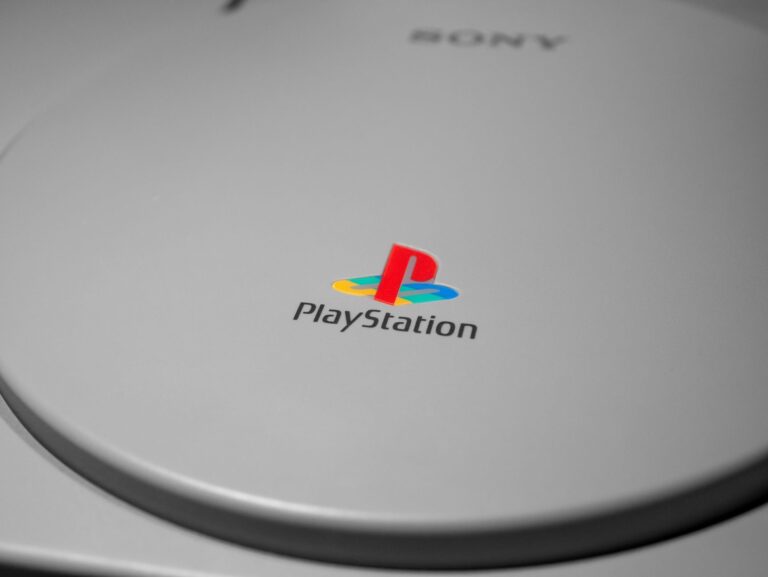
Sony entered the video game market in December 1994 with the original PlayStation, a move that surprised many industry observers who viewed the company primarily as an electronics manufacturer. The console featured a 32-bit processor, which represented a significant leap in computational power compared to the 16-bit systems that dominated the market at the time. This technical advantage allowed developers to create games with more detailed graphics, larger game worlds, and more complex physics simulations than ever before.
The original PlayStation sold over 102 million units worldwide across its lifespan, making it the best-selling console of its generation. Landmark titles like Final Fantasy VII, Metal Gear Solid, and Resident Evil demonstrated the console’s capabilities and attracted players who had never considered themselves hardcore gamers, fundamentally expanding the audience for interactive entertainment.
Optical Media and the CD-ROM Advantage
A critical decision that distinguished the PlayStation from its competitors involved the choice of CD-ROM (Compact Disc Read-Only Memory) as the storage medium, a technology that read game data from discs rather than cartridges. This format offered substantially greater storage capacity than the cartridges used by Nintendo’s competing systems, allowing developers to include full-motion video, expansive soundtracks, and massive game worlds. CD-ROMs also proved significantly cheaper to manufacture than cartridges, reducing production costs and retail prices.
The affordability and accessibility of CD-ROM technology attracted numerous independent and mid-sized development studios to create PlayStation games. This developer-friendly ecosystem resulted in a library of over 3,800 games for the original PlayStation, vastly outnumbering competitors and giving players unparalleled choice in gaming experiences.
The PlayStation 2 and the DVD Integration Strategy
Sony released the PlayStation 2 in March 2000 in Japan and October 2000 in North America, introducing another transformative piece of hardware. The PS2 incorporated a DVD (Digital Versatile Disc) drive, which could play movies in addition to games, effectively marketing the console as a home entertainment device rather than solely a gaming machine. This dual functionality positioned the PS2 in living rooms across the world during an era when DVD adoption was rapidly accelerating.
The PlayStation 2 became the best-selling video game console of all time, moving over 155 million units. Games like Grand Theft Auto: Vice City, Metal Gear Solid 2, and Final Fantasy X showcased the console’s technical capabilities and helped establish franchises that continue to influence game design principles today.
Evolution Through the PlayStation 3, 4, and 5
The PlayStation 3, released in 2006, introduced the Cell processor and Blu-ray disc technology, continuing Sony’s strategy of bundling advanced media capabilities with gaming hardware. The console faced a challenging launch due to its high price point and complex architecture, but strong software support and the eventual price reduction transformed it into a successful platform that sold over 87 million units. The PlayStation 4, released in 2013, returned to a more straightforward hardware design philosophy, featuring an x86 processor architecture that simplified game development and attracted developers from both traditional gaming studios and emerging independent developers.
The PS4’s emphasis on social features, streaming capabilities, and a robust online service called PlayStation Plus established a template that Sony carried forward into the PlayStation 5 generation. When released in November 2020, the PS5 featured custom AMD processors, an ultra-high-speed solid-state drive (SSD), and support for ray tracing—a rendering technique that simulates realistic lighting by calculating how light rays bounce through a virtual environment. These specifications enabled developers to create games with unprecedented visual fidelity and faster load times, with many PS5 games loading in seconds compared to the minute-long loading sequences common on previous generations.
Exclusive Software and Strategic Partnerships
PlayStation’s dominance stems significantly from its exclusive software offerings—games developed or published by Sony that are available only on PlayStation platforms. Studios like Naughty Dog, Insomniac Games, and Santa Monica Studio created franchises including The Last of Us, Spider-Man, and God of War that became system sellers, meaning players purchased the console primarily to experience these titles. Sony’s acquisition strategy, purchasing major development studios throughout the PS4 and PS5 generations, secured long-term exclusive content pipelines and reduced competition from rival platforms.
The strategy proved effective, with exclusive games consistently driving console sales. When Naughty Dog released The Last of Us Part II in June 2020, the game sold over 4 million copies within three days, demonstrating the commercial power of PlayStation exclusivity and the emotional investment players maintained in the brand.
Online Services and the Shift to Digital Distribution
PlayStation Plus, launched in 2010, fundamentally changed how players accessed and purchased games on PlayStation consoles. The subscription service grants members access to monthly free games, online multiplayer functionality, and cloud storage for save data, establishing a recurring revenue model that extended beyond hardware sales. As broadband internet became ubiquitous, the PlayStation Store digital marketplace increasingly replaced physical game sales, allowing players to purchase and download games instantly without visiting retail locations.
The PS5 generation accelerated this shift toward digital-only purchasing, with Sony releasing an all-digital version of the console that lacked a disc drive entirely. By the PS5’s third year on market, digital game sales represented a substantial portion of PlayStation’s software revenue, demonstrating a fundamental change in consumer purchasing behavior and retail distribution networks.
Backward Compatibility and Consumer Value
Each PlayStation generation introduced varying levels of backward compatibility—the ability to play games from previous console generations on newer hardware. The original PlayStation could not play PS1 games, the PS2 could play PS1 games through hardware emulation, and the PS3 launched with PS2 backward compatibility that was later removed due to hardware complexity. The PS4 could not play PS3 games, a limitation that frustrated players with existing libraries.
Sony addressed this criticism with the PS5, implementing a backward compatibility system that allowed the vast majority of PS4 games to run on the new console, often with improved performance. This decision preserved the value of players’ existing game libraries and demonstrated a consumer-focused approach to hardware transitions that influenced industry standards around backward compatibility expectations.
Frequently Asked Questions
What was the first PlayStation console, and when was it released?
The original PlayStation was released in Japan on December 3, 1994, followed by releases in North America on September 9, 1995, and Europe in September 1995. It was the first gaming console Sony produced and marked the company’s entry into the video game market.
How many PlayStation consoles have been sold across all generations?
Across all PlayStation generations, Sony has sold over 500 million consoles worldwide. The PlayStation 2 remains the best-selling console ever produced, with over 155 million units sold, while the original PlayStation sold over 102 million units and the PS4 exceeded 117 million units sold.
What makes PlayStation exclusive games important to the console’s success?
Exclusive games are titles available only on PlayStation platforms, creating unique reasons for players to purchase Sony’s hardware rather than competitors’ systems. Franchises like God of War, The Last of Us, and Spider-Man have driven console sales and established emotional connections between players and the PlayStation brand that span decades.
The PlayStation’s evolution from a surprising market entrant in 1994 to the industry-leading gaming platform demonstrates how technological innovation, strategic software decisions, and consumer-focused features combine to build lasting dominance. Sony’s ability to adapt to changing market conditions—from physical media to digital distribution, from exclusive hardware features to backward compatibility—has ensured that PlayStation remains central to gaming culture across multiple generations of players.
