
Key takeaways
- Sony ends PlayStation disc production in 2028, completing the industry's shift to digital-only gaming.
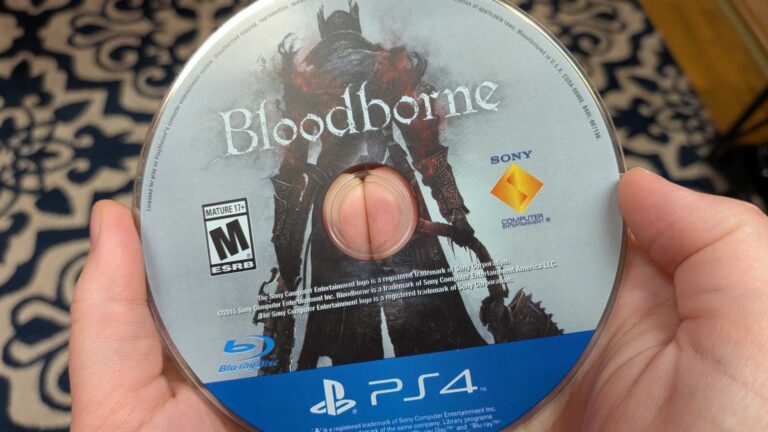
- Disc Butts—visual gags where disc artwork aligns to create anatomical illusions—will cease after 2028, though existing games like Bloodborne preserve the phenomenon forever.
- Physical media's loss removes game ownership, shrinks the used games market, and eliminates gaming's tangible, collectible nature.
Sony’s decision to discontinue physical disc production for PlayStation games beginning in 2028 represents a definitive end to an era of gaming distribution. The company’s shift toward digital-only releases follows years of gradual platform migration and reflects broader industry trends favoring online delivery. Yet this transition eliminates far more than convenient access to games—it erases specific cultural phenomena that emerged from players’ interactions with physical media.
The Disc Butt Phenomenon Explained
Among those phenomena is the Disc Butt: a visual gag created when disc artwork lines up in such a way that placing two fingers against the back creates the optical illusion of a character displaying exposed anatomy. While the terminology remains decidedly crude, the phenomenon persists as a genuine element of gaming culture, rooted in the tangible nature of disc-based media.
Bloodborne and the Canonical Example
Bloodborne serves as the most famous instantiation. The game’s disc artwork and character positioning align perfectly to enable this joke, transforming what was likely either an intentional Easter egg or an enormous oversight into gaming’s most celebrated visual gag. The alignment is precise enough that the phenomenon became recognizable across gaming communities.
How These Accidents Happen
Game developers design for screens, not for how players physically manipulate their hardware. Character positioning on disc artwork reflects in-game requirements: posture, framing, and composition serve narrative or artistic purposes unrelated to how the disc itself will be held. The printing process adds additional variables—alignment, angle, and ring design all factor into whether the visual gag works. Most games avoid it simply through different artistic choices or character posturing. Far Cry: Primal and Uncharted 4 have offered similar, if less celebrated, opportunities for players to manipulate their physical discs into these compromising positions.
Why Companies Never Learn
The curious paradox is that despite this happening repeatedly across generations, game publishers and their designers appear not to anticipate it. Companies have not learned their lesson regarding Disc Butts. Were disc production to continue indefinitely, the gag would almost certainly happen again with future releases. The combination of variables involved—character art, disc printing specifications, player ingenuity—makes it effectively unavoidable if someone is looking for it.
The End of an Accidental Gaming Tradition
After 2028, no new PlayStation physical games will reach store shelves. The possibility of future Disc Butts dies with the format. For players who already own copies of Bloodborne, Far Cry: Primal, and Uncharted 4, the ability to recreate the joke persists indefinitely. The physical discs themselves remain unaffected by Sony’s production decision. But the creation of new ones—the arrival of fresh disc art that might accidentally line up in compromising ways—ends permanently.
Xbox may follow suit if industry rumors prove accurate, further narrowing the window for physical gaming media generally. As publishers release fewer physical products, manufacturing becomes less economical, eventually leading format discontinuation not through official mandate but through market forces.
What Physical Media Actually Meant
This loss occurs within a larger transformation in gaming culture’s relationship with ownership and tangibility. For three decades, physical games represented actual property: objects a player could hold, trade, sell, or give away. The implications extended across multiple dimensions of how people experienced games.
Access and the Used Games Market
Used games populated bargain bins where players discovered titles at accessible prices. This market served price-conscious consumers in all regions, as new game pricing represents substantial expense for many households. That market contracts severely when physical products disappear. Players in developing regions depend on physical media precisely because internet infrastructure supports neither streaming nor rapid downloads.
Ownership Versus Licensing
A digital game exists not as property but as a license revocable by the publisher. No bargain bins exist for digital games because publishers control secondary market access entirely. Used digital games cannot exist because the format provides no mechanism for transfer. More critically, digital games vanish when publishers delist them, when servers shut down, when licenses expire, or when business conditions change. A physical disc functions regardless of platform servers or publisher decisions.
The Tangible Collection
The visibility of collection disappears in digital formats—digital libraries hide behind menus rather than occupying physical space. Children learned consequences from physical damage when they scraped discs across concrete. Friends could borrow games because the object itself transferred. Game collections occupied shelf space as visible markers of play history. Digital distribution eliminates each of these dynamics.
The Business Logic Behind the Shift
From a business perspective, the transition to digital distribution makes economic sense. Publishers eliminate manufacturing costs, reduce distribution complexity, decrease environmental impact, and gain direct control over their product’s entire lifecycle. The convenience argument holds water: digital games download instantly rather than requiring store visits or mail delivery. For players with reliable internet and sufficient storage, the practical advantages are genuine and measurable.
What Gets Lost in Translation
Yet the practical benefits and the cultural losses coexist without negating each other. Gaming evolved partially through the physicality of its products. The interaction between player and object—pulling a case from a shelf, reading box art, inserting a disc, seeing it spin in a console—constituted the gaming experience itself. DRM, licensing, and digital storefronts replaced that tactile engagement with account management and download progress bars.
The Disc Butt phenomenon, in all its crude simplicity, represents what made physical gaming meaningful: the ability to take a manufactured object, interact with it creatively, and discover unexpected properties through that interaction. It was a joke that only worked because games existed as actual things rather than files. After 2028, Bloodborne remains the permanent monument to this phenomenon—a reminder that games once arrived as objects players could hold, manipulate, and interact with in ways their creators did not entirely anticipate.
Frequently Asked Questions
What is a Disc Butt and why does it matter?
A Disc Butt is a visual gag that occurs when disc artwork lines up perfectly so that placing two fingers against the back creates the optical illusion of a character's exposed anatomy. Bloodborne is the most famous example. It represents a cultural phenomenon unique to physical gaming media.
When will PlayStation discs stop being produced?
Sony will discontinue physical disc production for PlayStation games beginning in 2028, completing the industry's shift to digital-only distribution.
Can existing Disc Butts still be created after 2028?
Players who own physical copies like Bloodborne, Far Cry: Primal, and Uncharted 4 can continue making the gag with those existing discs indefinitely. However, no new games will be produced on disc, so no new Disc Butts will ever be created.
