
Key takeaways
- Mobile Pokémon Champions is now eligible for official local tournaments including Open Play Sessions and VGC Cups, though regional competitions still require Nintendo Switch or Switch 2.
- New disconnect rules grant judges broad discretionary authority rather than establishing objective criteria, sparking community concerns about fairness and potential favoritism.
- The staggered rollout allows Pokémon Company to gather performance and participation data before considering broader mobile eligibility for competitive play.
The Pokémon Champions competitive scene has absorbed several significant rule updates following the San Francisco World Championships, with the community sharply divided between enthusiasm for one change and genuine concern about another. As the competitive calendar shifts toward Singapore’s next major event, players are grappling with decisions that could reshape tournament accessibility and fairness.
Mobile Version Finally Getting Official Tournament Support
The June-launched mobile version of Pokémon Champions will now be permitted at certain official competitions, marking a breakthrough in its competitive legitimacy after months of exclusion from organized play.
Tier Structure and Current Restrictions
The Pokémon Company specified that eligible events include Open Play Sessions, VGC Cups and Challenges, and Celebration Events that feature the game. Regional competitions and higher-tier tournaments, however, maintain the existing requirement that players compete on either a Nintendo Switch or Switch 2. This means the mobile version cannot currently qualify players for the world championship circuit, establishing a deliberate two-tier system based on platform. Players competing for spots at Singapore or future Worlds events must still bring a Switch.
Accessibility and Commercial Strategy
The policy represents a meaningful shift in accessibility and player acquisition. Since phones are more ubiquitous than dedicated gaming consoles, expanded eligibility opens competitive play to a substantially larger potential participant base. The Pokémon Company’s decision to introduce mobile support through smaller local tournaments first reflects a deliberate testing approach that generates attendance data and performance metrics before potentially extending eligibility to regional events.
Community observers supportive of the gradual rollout framed it as pragmatic business strategy. Deploying mobile support at lower tiers allows the company to monitor how the version affects tournament participation and sales without risking technical failures that could compromise a major competition. Redditors discussing the announcement noted that this approach provides time to optimize performance issues before they might damage a high-stakes tournament. This expansion also permits developers to address balance issues or performance problems before releasing the mobile build on the larger competitive stage.
The move signals optimism within the Pokémon Company about the mobile version’s trajectory. Eventually reaching parity with the Switch version in tournament eligibility depends on performance data collected from these grassroots-level competitions over the coming seasons.
Disconnect Rules Create Immediate Concerns
The updated ruleset governing mid-match disconnections has generated substantial player backlash. While some scenarios contain clear resolutions—if a match concludes before a player can reconnect, for instance, the result stands as legitimate—other situations grant referees considerable interpretive authority that concerns the competitive community.
Real Incidents from Worlds
One competitor was eliminated during Round 5 of Worlds following an in-game disconnection that exemplified the practical problem. After the player’s game dropped, they reconnected through a judge’s intervention but faced severe disadvantage: they had missed how the previous turn resolved while offline. The opponent possessed full visibility into the turn sequence; the disconnected player possessed only incomplete information. This asymmetry meant reconstructing the game state proved difficult under tournament time constraints, turning a technical issue into a competitive liability.
The incident highlights why disconnects represent such a challenging edge case. Unlike most rule violations, a disconnect involves a genuine technical failure rather than player misconduct, yet it occurs within a competitive context demanding fairness and consistency. Different scenarios—whether the disconnect happens on a critical turn, midgame, or early—present entirely different questions about player agency and legitimate outcome determination.
Perceived Unfairness in Rule Wording
Twitter and Reddit discussions revealed multiple layers of concern about how judges will interpret the new policy. Some players read the rule’s wording as potentially permitting competitors in losing positions to delay reconnection, forcing a voided match rather than accepting defeat. Others characterized the policy as fundamentally arbitrary, arguing it reduces competitive integrity to whatever individual judges decide on any given day. The repeated phrase “judge discretion” in player commentary identified the core problem: the absence of objective criteria.
One Redditor summarized the community’s unease bluntly: essentially whatever staff decides in each case, which creates a bonus for people with good relationships with tournament officials and a disadvantage for those without favorable standing.
The Core Technical Problem
Pokémon Champions matches operate under strict turn timers that automatically execute a move if a player remains inactive beyond a set window. This design prevents stalling but creates a secondary problem: reconnection doesn’t simply resume play from the interruption point. Instead, the player returns to a game state potentially altered by automatic move selection and opponent actions they couldn’t observe.
The compressed timeline of tournament schedules compounds this substantially. With matches scheduled in succession and minimal time between rounds, players lack sufficient opportunity to fully process what occurred while disconnected before they must submit their next move. This creates the possibility of playing under meaningfully incomplete information—a situation that influenced actual outcomes during Worlds.
The technical architecture creates a genuine bind for rulemakers: the timer system prevents stalling but inadvertently creates information asymmetries when reconnection occurs. Solving for fairness requires either changing the technical system itself or establishing rules that account for the inherent uncertainty.
Broader Pattern of Subjective Rulings
Competitive Pokémon’s overall ruleset and adjudication practices have already drawn community scrutiny for inconsistent enforcement of what constitutes disruptive play or game-state alteration. The disconnect rulings amplified pre-existing concerns about rules lacking objective criteria, adding to frustration that has been building.
Multiple competitors characterized the disconnect policy as fundamentally discretionary—granting judges authority to determine outcomes based on personal judgment rather than consistent, verifiable standards. This concern extends beyond disconnects themselves; it reflects patterns players perceive across Pokémon Champions governance. Questions about whether relationships between competitors and tournament staff might influence how disconnection incidents are evaluated suggested potential inequities in competitive fairness, raising worries about favoritism affecting tournament outcomes.
What’s Coming Next
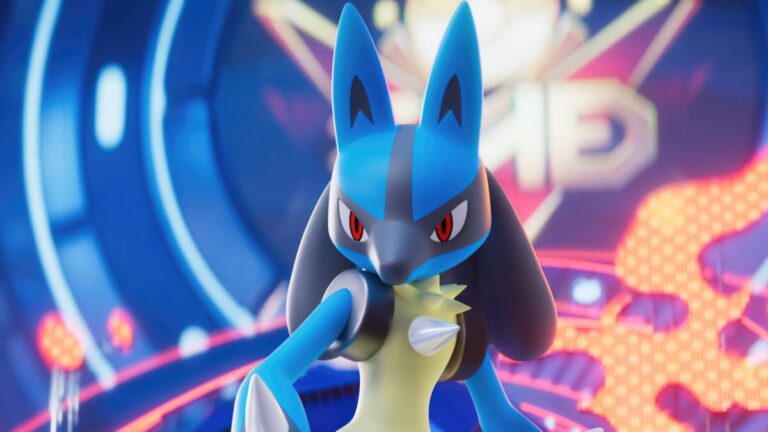
Pokémon Champions’ new competitive season launches on September 9, introducing Z-form Mega Evolutions for Lucario, Absol, and Garchomp to the battle simulator. These additions will reshape team building and strategic calculations throughout the season, forcing competitors to reconsider their core rosters.
The Singapore World Championships mark the next major tournament milestone on the competitive calendar. How these rule updates function across a full tournament season will determine whether the disconnect policy requires clarification based on real-world application, and whether mobile-tournament performance justifies broader platform eligibility for competitive play at higher levels.
Frequently Asked Questions
Can mobile Pokémon Champions players compete at Worlds?
No. The mobile version is only approved for local tournaments including Open Play Sessions, VGC Cups, Challenges, and Celebration Events. Regional tournaments and higher-tier competitions require players to use either a Nintendo Switch or Switch 2.
What's the issue with the new disconnect rules?
The rules grant judges significant discretion rather than establishing objective criteria, leading players to worry about inconsistent enforcement and potential advantages based on relationships with tournament staff.
When does the new Pokémon Champions season start?
The new competitive season launches on September 9 and introduces Z-form Mega Evolutions for Lucario, Absol, and Garchomp to the battle simulator.
