
Key takeaways
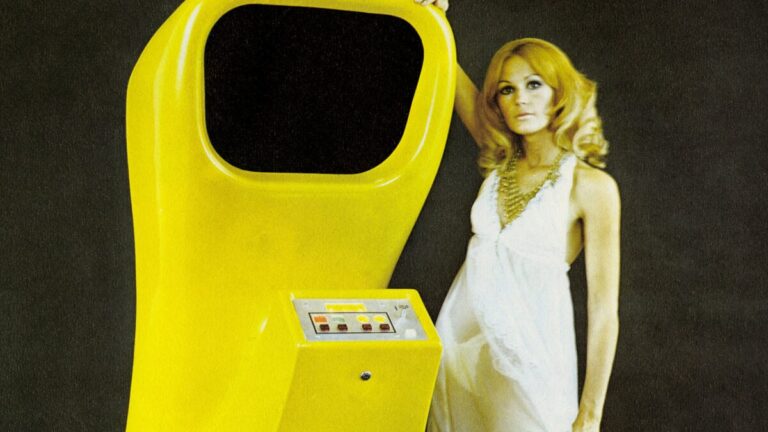
- David Perry is auctioning a 1973 Computer Space two-player arcade cabinet, considered the rarest arcade game in existence and worth well over $20,000.
- Computer Space was the first commercially distributed arcade game, created by Nolan Bushnell and Ted Dabney in 1971, but its commercial failure makes surviving cabinets extremely rare.
- The two-player variant is far scarcer than the single-player version, which sold for $69,000, reflecting the authentic historical value that distinguishes genuine arcade artifacts from mass-produced collectibles.
The Rarest Arcade Machine on the Market
David Perry, the studio founder behind Earthworm Jim and MDK through Shiny Entertainment, is auctioning what is widely recognized as the first commercially distributed arcade game. The item is a two-player variant of Computer Space from 1973—a machine so scarce that Perry himself described it as “probably the rarest arcade game in existence, found in museums.” The cabinet’s historical weight stems not merely from its age but from its foundational role in arcade gaming history and the extreme scarcity of surviving examples.
How Computer Space Became a Legend
Created by Soon-to-Be Atari Founders
Computer Space was created in 1971 by Nolan Bushnell and Ted Dabney, two engineers who would go on to establish Atari. Their design represented an adaptation of an earlier computer game: 1962’s Spacewar!, which existed only on university computers too large and expensive for public consumption. Computer Space brought that concept to commercial arcades in a form that everyday players could theoretically access.
Gameplay and Design
The gameplay mechanics were straightforward: players controlled a rocket ship navigating firefights against a UFO opponent. The cabinet itself was a towering presence in amusement halls, a physical manifestation of what early computers were capable of achieving. Despite this novelty and technical accomplishment, Computer Space failed to capture public imagination. Players who encountered it were simply not impressed by what appeared on the screen, and the game quickly faded from arcades.
Why This Machine Became So Rare
The commercial failure of Computer Space has profound consequences for its historical value today. The game did not remain in production long enough to saturate the market. Few cabinets were manufactured originally, and even fewer have survived the decades. Most original Computer Space machines now reside in museums or serious private collections. The game has even found its way into cinema, appearing in the background of 1973’s Soylent Green and other science fiction films of the era, where its presence served as set dressing for future-world environments.
The Two-Player Variant
Practically Unobtainable
The specific unit Perry is auctioning carries additional significance within already-rare territory. According to auction documentation, the two-player version is considered “practically unobtainable.” The more common single-player variant reached $69,000 at auction, a figure that establishes a floor for understanding how collectors value Computer Space machines. This two-player example is far scarcer than its single-player predecessor, making it exceptionally valuable to institutions and advanced collectors.
Working Condition and Appearance
The cabinet arrives at auction in working condition, meaning potential buyers will acquire not just a museum piece but a functional artifact capable of actual gameplay. The machine features a striking appearance with sparkling green coloring that distinguishes it from contemporary arcade aesthetic. This visual distinctiveness further adds to its collector appeal and historical documentation value. Perry decided to put it up for sale after running out of display space in his home—a luxury problem that speaks to the scale of his personal collection.
The Auction in Progress
As of the most recent bid count before publication, the auction had reached approximately $10,000, with auctioneers estimating the final sale price will exceed double that amount. This projection aligns with the documented value of the single-player version and reflects genuine market demand for authentic arcade history. The cabinet represents a tangible connection to the moment when coin-operated gaming emerged from the theoretical realm into public experience.
Authentic History vs. Speculative Collecting
The broader context surrounding this sale touches on a growing divide within video game collecting circles. As gaming has become one of the leading categories in speculative collectible markets, critics have increasingly questioned whether monetary values track actual historical importance. Major auction houses and professional grading organizations have rolled out substantial marketing efforts for high-profile bids on popular Nintendo games—particularly the Super Mario Bros. franchise—which command eye-watering prices despite being commercially abundant by comparison.
Computer Space represents the opposite end of this spectrum. This was not a mass-market success. Its cultural footprint was minimal in its own era. Its value derives entirely from its primordial position in arcade history and the sheer scarcity of surviving examples. No speculation, hype cycles, or nostalgia-driven demand artificially inflates what this machine should represent—its rarity is absolute and its historical credentials are unquestionable.
Museums have already made their institutional commitment to Computer Space preservation, maintaining examples in their permanent collections as essential documentation of gaming’s origins. Perry’s cabinet, once sold, will likely join another institutional or serious private collection where it can continue to be preserved and studied. The machine’s journey from active arcade cabinet to collectible to museum-quality artifact charts the entire arc of how society has come to value video games—not just as entertainment products, but as cultural and technological documents worthy of archival preservation.
Frequently Asked Questions
What is Computer Space?
Computer Space is the first commercially distributed arcade game, created in 1971 by Nolan Bushnell and Ted Dabney. It featured a rocket ship engaged in combat with a UFO and was adapted from the 1962 computer game Spacewar!.
Why is the two-player version so rare?
Computer Space was not commercially successful, so few cabinets were produced. The two-player variant from 1973 is even more scarce than the single-player version, making it practically unobtainable and found almost exclusively in museums.
What is the estimated auction price?
The current top bid is around $10,000, with auctioneers estimating the final sale price will exceed $20,000. For comparison, the more common single-player version sold for $69,000.
