
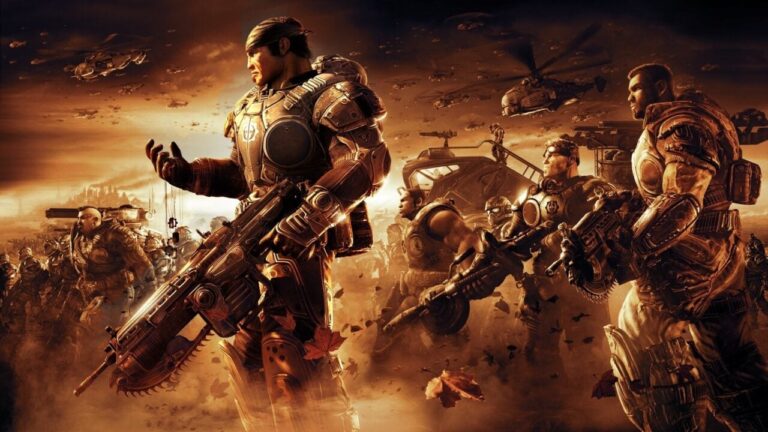
A single modder named xHeliosx has released an unofficial native PC port of Gears of War 2 called Gears of War 2: Hollow in July 2026, nearly 18 years after the game’s original Xbox 360 exclusivity locked it away from PC players. The port delivers the full campaign, all DLC content, Road to Ruin, and Horde mode with support for 4K resolution and 120 FPS framerates—features that were never available on the original 2008 console release. This achievement marks a watershed moment for a franchise that saw its first installment receive an official PC port in 2007, only to have its most successful sequel remain inexplicably confined to Xbox hardware for nearly two decades.
An Unofficial Solution to an 18-Year Drought
The Hollow port enables players to run Gears of War 2 natively on Windows without requiring an Xbox 360 emulator, a technical feat that xHeliosx accomplished by embedding leaked development build files into a custom PC executable. The modder’s work circumvents the emulation barrier that previously made the game inaccessible to the average PC gamer, delivering a playable experience that preserves the core content millions of console players experienced at the game’s 2008 launch. The port is distributed freely through modding communities and Discord servers, with xHeliosx noting that multiplayer functionality remains unstable but single-player and cooperative modes operate reliably.
The technical specifications of Hollow represent a substantial upgrade over the original hardware constraints. Support for resolutions up to 4K and frame rates reaching 120 FPS transforms a game originally designed for Xbox 360’s 720p/60 FPS ceiling into a modern PC experience. Steam-based cooperative play functionality enables players to experience the campaign and Horde mode together from their computers, restoring multiplayer accessibility that was previously exclusive to console owners with Xbox Live subscriptions.
Why One of Gaming’s Best-Sellers Was Never Ported
Gears of War 2 stands as the best-selling entry in the franchise, with 6.75 million units sold worldwide according to VGChartz, yet Xbox Game Studios—the franchise’s current owner—never authorized an official PC release despite the original game receiving a port in 2007. Lead designer Cliff Bleszinski explicitly rejected a PC version during development, telling IGN that “Gears of War is a great franchise first and foremost for Xbox 360, and therefore we’re focusing on that platform for Gears of War 2. We’ve decided we’re not going to do a PC version this time around.” PR manager Dana Cowley reinforced this stance in June 2008, confirming that no PC version was in development.
The commercial success that made a PC port economically questionable at launch has only intensified the franchise’s platform fragmentation over time. While the original Gears of War received a remaster titled Gears of War: Reloaded on August 26, 2025, bringing the first game to both PC and PlayStation 5, Gears of War 2 remained conspicuously absent from any official multi-platform strategy. The game’s Metacritic score of 93/100 on Xbox 360—placing it in the top 25 best-reviewed games on the platform—underscores the quality of the content that remained locked away from PC audiences for nearly two decades.
Community Action Triggers Broader Franchise Revival Interest
The release of Hollow has catalyzed immediate community momentum toward unofficial ports of other entries in the series, with fans already beginning work on a Gears of War 3 port following the success of xHeliosx’s technical achievement. The modding community’s rapid mobilization signals that demand for these games extends far beyond nostalgia, representing a genuine appetite for classic entries that corporate licensing and platform exclusivity agreements have kept inaccessible. This grassroots effort demonstrates how fan-driven preservation can fill gaps left by official publishers, even when those gaps persist for nearly two decades.
The Hollow port’s availability as a free download has triggered conversations about franchise stewardship and the role of fan projects in video game preservation. Developers and publishers monitoring these efforts face renewed scrutiny regarding their own decisions to withhold classic titles from modern platforms, particularly when the original creators no longer control the intellectual property. The technical success of running Gears of War 2 at 4K/120 FPS on modern hardware also challenges assumptions about why the game could not receive an official PC release during the many years since 2008.
A Franchise Split Across Platforms and Time
The Gears of War series has occupied an unusual position in gaming history, with individual entries scattered across different platforms and release windows that fragment the franchise’s accessibility. The original 2006 game reached PC in 2007, establishing precedent for multi-platform releases, yet the sequel broke that pattern entirely by committing exclusively to Xbox 360. This inconsistency has persisted through subsequent releases, with some entries receiving broader distribution while others remained confined to specific hardware ecosystems.
Gears of War 2’s 6.75 million unit sales figure reflects its status as the franchise’s commercial peak, achieved despite—or perhaps because of—its exclusivity to a single platform at a time when console gaming dominated the market. The game hit 5 million units within its first year, surpassing the original Gears of War’s 6.09 million lifetime sales and the later Gears of War 3’s 6.22 million, cementing its legacy as the most successful entry the franchise has produced.
What Comes Next for Gears of War on PC
The success of Gears of War 2: Hollow establishes a template for fan-driven ports that may accelerate community efforts to bring other exclusives to PC, particularly as the modding community refines techniques for extracting and adapting console game files. Xbox Game Studios faces a decision point regarding whether to acknowledge, tolerate, or actively combat these unofficial ports—a choice that carries implications for how the company manages its relationship with the modding community and franchise preservation efforts. The technical achievement of running an Unreal Engine 3.5 game at modern resolutions and framerates without official developer involvement raises questions about why similar efforts were never undertaken by the franchise’s official stewards.
The modding community’s commitment to bringing Gears of War 3 to PC signals that Hollow’s release represents the beginning of a potential wave of unofficial ports rather than an isolated achievement. As more players gain access to these games through fan projects, pressure may mount on Xbox Game Studios to reconsider official re-releases or remasters for PC and other platforms. The 18-year gap between Gears of War 2’s original launch and its unofficial PC arrival stands as a stark reminder of how licensing decisions and platform exclusivity can inadvertently drive fan-led preservation efforts that circumvent official channels entirely.
