
Key takeaways
- Prototype footage from May 2007 reveals FromSoftware originally designed Demon's Souls with switchable first-person and third-person perspective before implementing the lock-on system that defined the Souls formula.
- The early presentation referenced South Park's World of Warcraft episode to position Demon's Souls as a satisfying solo RPG alternative to addictive MMO experiences.
- The prototype contained unusual design elements like a regular alligator enemy and a more mechanically-driven Demon God boss fight that evolved significantly in the final release.
- Analysis by community historians uncovered evidence of a cut tutorial area still embedded in the game's geometry, revealing remnants of Demon's Souls' developmental process.
Gaming historian Lance McDonald has unveiled a fascinating piece of FromSoftware’s developmental past: prototype footage of Demon’s Souls that diverges dramatically from the release version that defined an entire genre. The video documentation, which surfaced recently, originates from an industry presentation that took place at GameShare IV in Tokyo during May 2007, providing an unprecedented window into the studio’s early design thinking for what would become one of the most influential action RPGs in modern gaming history.
The authenticity of the materials appears well-established, though McDonald has not yet disclosed the precise means by which he acquired access to this archival content. The recreation and analysis presented in the video benefited from collaboration with John Linneman of Digital Foundry, who helped contextualize the original materials. The 2007 presentation itself was delivered by Daisuke Ishidate, who held a position at Japan Studio at that time.
The Road Not Taken: Alternative Camera Design
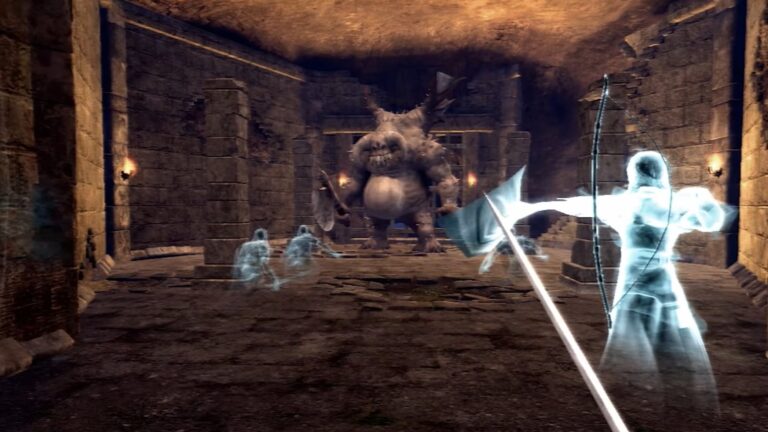
Perhaps the most striking revelation in the prototype footage is the prominence of first-person perspective mechanics. Rather than committing entirely to the over-the-shoulder third-person view that would become the franchise standard, the early iteration of Demon’s Souls apparently offered players the ability to shift between first-person and third-person camera angles during gameplay. This dual-perspective system suggests that FromSoftware was exploring multiple ways to present the player character’s interaction with the environment before eventually settling on the configuration that became the series benchmark.
Camera Systems and Control Evolution
Equally noteworthy is the absence of the lock-on targeting mechanic that has become synonymous with the Souls formula across subsequent releases. The prototype build displays a more rigid, forward-facing third-person framing that operated without the dynamic camera locking players have come to expect. This suggests that the sophisticated targeting system that FromSoftware would refine across Dark Souls, Bloodborne, and beyond was not part of the original conception, but rather a design decision that crystallized during development.
Camera Perspectives in Early Development
The presentation materials indicate that the studio was actively considering how camera perspective influenced player engagement and combat readability. The toggle between first-person and third-person represented a deliberate design investigation into whether players would benefit from multiple vantage points. That this feature ultimately disappeared suggests the team concluded that a unified perspective—coupled with the lock-on system—created superior gameplay clarity.
A Curious Historical Reference Point
The GameShare IV presentation includes an unexpected cultural touchstone: imagery and discussion referencing the “Make Love, Not Warcraft” episode of South Park, which aired in 2006. During a segment discussing the fundamental differences between solo RPG design and massively multiplayer online game design, the presenter uses stills from the episode—showing the show’s characters sitting motionless at computers—to humorously illustrate the risks of MMO addiction. The joke hinges on positioning Demon’s Souls as a satisfying single-player experience that would not ensnare players in the endless time-sink dynamics of online worlds.
The MMO Context of 2007
This comparison reveals much about FromSoftware’s positioning strategy during an era when massively multiplayer games dominated industry conversations. World of Warcraft had become a cultural phenomenon, and positioning a new action RPG against that phenomenon—especially one designed to be enjoyed in solitude—made strategic sense for marketing purposes. The South Park reference was topical and resonant with an audience familiar with the episode’s pointed critique of gaming obsession.

Strange Design Choices in the Prototype
The prototype footage contains several elements that diverge sharply from what players encountered in the final release, suggesting significant refinement between this early build and the finished product. Most peculiar among these is the presence of a regular alligator as an enemy encounter. Unlike the fantastical and supernatural creatures that populate Demon’s Souls, this alligator appears to be a mundane reptile with no magical or undead properties. The player character kills it without narrative justification or special fanfare, presenting an oddly prosaic moment in what would become a deliberately atmospheric, carefully curated experience.
The Demon God Transformation
The Demon God boss encounter presents another significant point of divergence. In the prototype, the fight appears to function as a genuine boss battle with distinct phases and combat mechanics. By contrast, the final release largely strips agency from this encounter, transforming it into something closer to a prolonged interactive cutscene where the player has limited meaningful input. This shift toward narrative-driven presentation over mechanical challenge reflects a fundamental design philosophy that evolved between prototype and release.
Remnants of Deleted Content
Community analyst Illusory Wall, a respected FromSoftware content creator, contributed important observations about the footage. At the 6:10 mark of the video, discernible elements of a tutorial area appear—one that did not survive into the shipped game. Through careful environmental analysis, Wall identified the approximate location where this tutorial section would have existed in the final version’s map structure. While the physical space has been rendered inaccessible and the content removed, traces of its existence remain embedded within the game’s geometry.
The Archaeology of Game Development
This discovery exemplifies how video games often retain evidence of their evolutionary process long after features have been cut. Developers occasionally remove functionality or entire sequences without completely erasing the architectural framework that supported them. Players who know where to look—or in this case, when community historians apply rigorous analysis—can reconstruct aspects of developmental intent that the released product obscures.
Implications for FromSoftware’s Design Legacy
The emergence of this prototype material adds valuable context to understanding how the Souls formula developed. Rather than representing a fully-formed vision that FromSoftware refined through iteration, the formula evidently evolved through significant changes in philosophy. The decision to eliminate first-person perspective options, implement the lock-on system, and shift toward more cinematic boss encounters shaped the experience that would resonate with millions of players.
The cultural references and presentation materials also illuminate the business context in which Demon’s Souls was developed. FromSoftware’s positioning of the game against mainstream MMO culture, combined with its emphasis on solo gameplay, represented a deliberate market differentiation strategy. This contrast—a challenging single-player experience in an industry increasingly focused on online persistence—turned out to be precisely the positioning the market was ready to receive.
McDonald indicates that further exploration of these materials may be forthcoming, suggesting the potential for a downloadable version of the complete presentation to emerge. Gaming historians and FromSoftware enthusiasts will likely analyze every detail these materials contain, potentially uncovering additional insights about the studio’s design thinking during this formative period. For now, this glimpse into the prototype iteration provides the most concrete evidence yet of how deliberately the Souls formula took shape, and how far FromSoftware’s vision traveled from its initial conception to the experience that defined modern action RPG design.
Frequently Asked Questions
What is Lance McDonald known for documenting?
Lance McDonald has established himself as the primary documentarian of FromSoftware's development history, ensuring significant aspects of the studio's creative process are preserved and analyzed.
When was the Demon's Souls prototype footage originally presented?
The prototype and presentation materials date from May 2007 and were originally showcased at GameShare IV, an industry event held in Tokyo.
What major design feature was absent from the prototype version of Demon's Souls?
The prototype lacked the lock-on targeting system that became fundamental to the Souls formula, instead featuring a more rigid third-person camera without dynamic targeting.
