
Key takeaways
- Disney creator Toni Kulusich faced stalking accusations after a viral video with a Peter Pan performer exceeded one million views, leading detractors to demand her ban from the parks.
- Park performers, including Dylan Gadeke who played Peter Pan, defended Kulusich as enthusiastic rather than predatory, distinguishing her behavior from genuine stalking incidents they have experienced.
- The incident exposes the gray zone theme park performers inhabit, where they are coached to generate viral moments while entertaining abnormally intense fans.
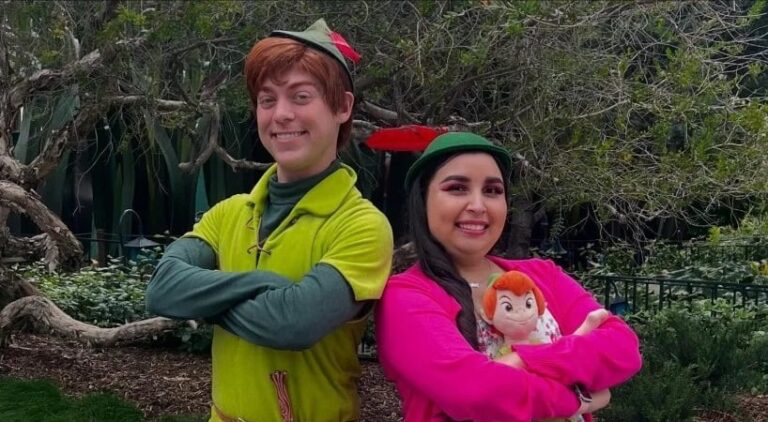
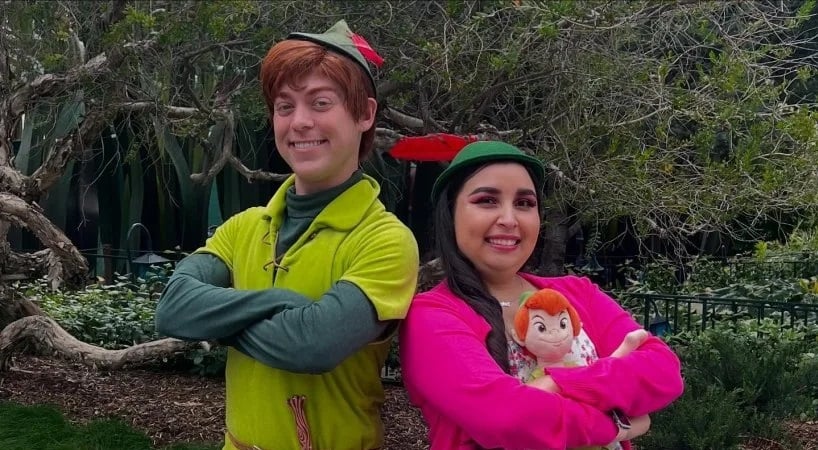
In late July, Disney content creator Toni Kulusich posted a video at Disneyland that would trigger weeks of online scrutiny. The roughly five-minute clip showed Kulusich handing a home-made plush toy to an actor playing Peter Pan, after which the two spent time together in Fantasyland while friends filmed. The video accumulated more than a million views. Comments quickly shifted from appreciation to suspicion—viewers questioned whether Kulusich had overstayed her welcome or suggested the performer appeared uncomfortable, despite the actor’s visible willingness to participate throughout the interaction.
What began as debate over a single encounter escalated into something far more invasive. Detractors dug through a decade of Kulusich’s social media history, cataloging her posts about interactions with Peter Pan performers. Some went further: a petition circulated calling for her permanent ban from Disneyland. The campaign crossed into personal territory when commenters identified Kulusich’s place of employment. She became genuinely afraid of facing harassment both inside the park and at her workplace.
A Performer’s Perspective on Fandom
Park performer Dylan Gadeke, who has worn the green tights himself, offered a counterpoint to the stalking accusations. In a public comment, Gadeke characterized Kulusich’s behavior as exuberance rather than predation: “She was very enthusiastic about meeting the character. Maybe a little more so than most, but it never crossed the boundary of trying to get to know the performer.”
The Real Stalking Problem
Gadeke and other actors who have played Peter Pan acknowledged they have genuinely dealt with stalkers—people who tracked their movements through staff parking lots and excavated their personal information. But they were careful to distinguish between genuine harassment and what they witnessed with Kulusich. The performer defended her conduct, framing it as someone excited to meet a character, not someone attempting to separate the performer from the role.
Why Park Performers Choose to Defend
These defenders had reason to be precise about their language. The accusation of stalking against Kulusich threatened to trivialize the real safety concerns that theme park workers face. By speaking publicly, performers were pushing back against a tendency to weaponize the label against ordinary fans and content creators, even when behavior, however enthusiastic, stayed within professional boundaries.
The Disney Content Creation Machine
Kulusich is one of thousands who participate in what has become a vast ecosystem of Disney-adjacent content creation. These creators visit parks regularly, produce videos and photos, and generate free marketing for Disney attractions, merchandise, and experiences. Disneyland did not need to pay for publicity around the Peter Pan encounter—millions of people saw the video simply because it was compelling enough for social platforms to amplify.
Coaching Performers for Virality
Behind the scenes, park performers have almost assuredly received coaching on how to foster videos likely to go viral. The incentive structure is clear: a five-minute interaction that reaches a million people represents extraordinary marketing value. When park staff interact with enthusiastic fans, they are essentially being asked to perform both the character and an appealing version of spontaneity, all while the cameras roll.
The Scale of the Industry
The Disney content creation circuit encompasses thousands of people—all motivated to produce free advertising for the parks and products. This is not a marginal phenomenon. It has become a significant driver of foot traffic and merchandise sales. Disneyland benefits enormously from this volunteer marketing class, creating a system where performers and creators interact under implicit pressure to generate moments that convert into views and engagement.
Institutional Responsibility
Disney’s reputation for ethical management is not strong, and the company’s willingness to push staff toward maximizing interactions with enthusiasts raises genuine questions. How far will the company encourage performers to go in accommodating fans? At what point does the pursuit of viral moments override consideration for worker comfort or safety?
The Gray Zone of Performance
Kulusich’s situation illustrates a problem that has no clean resolution. Theme park performers occupy an unusual middle ground. They are on the clock to entertain an audience that is often abnormally intense by the standards of typical social interaction. They wear costumes and adopt personas, creating psychological distance from their own identities. Yet they remain real people, with boundaries and vulnerabilities.
The line between performance and something more troubling—possession, obsession, or parasocial attachment—can blur quickly in this environment. A performer is paid to engage with fans; a fan can become convinced that the engagement carries personal meaning. When the interaction is filmed and amplified to a million viewers, the ambiguity only deepens. Did the performer genuinely enjoy the moment, or did they perform enjoyment because their job required it?
What the Kulusich Incident Reveals
The backlash against Kulusich exposed how online platforms amplify escalation. A video that might have been a pleasant memory for everyone involved was transformed, through comments and social curation, into evidence of wrongdoing. A petition emerged not because Kulusich had broken park rules, but because enough people online agreed that something felt off. The accusation of stalking gathered weight through repetition, until it became the dominant frame for understanding her fandom.
Kulusich herself tried to contextualize her interests. “It’s not like I’m going to the store or to my job thinking about Peter Pan,” she told WIRED. “It’s just that when I’m inside Disney, I’m able to release my inner child and the kid who doesn’t want to grow up.” This explanation—that her fixation is situational and compartmentalized—may be the most honest thing said in this entire episode. She visits the park about once a week. She creates content. Within that context, she engages intensely with characters. Outside the park, she maintains a normal family life.
The Broader Principle
A strong argument exists that all content creators should exclude strangers from their output entirely. Policy enforcing this separation would eliminate the entire category of videos featuring third parties without their explicit, informed consent. That would also eliminate the incentive for performers to play up their reactions or for fans to engineer moments designed for capture and sharing.
But this solution is unlikely and perhaps impossible to enforce. Online platforms thrive on spectacular escalation, even after such escalation erupts into real consequences in the physical world. The architecture of social media rewards the kind of dispute that swallowed Kulusich. The algorithmic logic that made her video go viral also made the backlash inevitable.
A final thought: Universal Studios, Disney’s main competitor in the theme park space, faces a different demographic and different character roster. No one has reported fostering intense parasocial relationships with Blues Brothers impersonators. But this absence tells us less about Universal’s moral superiority and more about which fan communities—and which characters—are currently most susceptible to the dynamics that turned Kulusich into a symbol of boundary violation overnight.
Frequently Asked Questions
What incident sparked the accusations against Toni Kulusich?
In late July, Kulusich posted a five-minute video at Disneyland showing her handing a home-made plush toy to a Peter Pan performer and spending time with them in Fantasyland. The video accumulated more than a million views.
How did park performers respond to the stalking accusations?
Peter Pan performer Dylan Gadeke and other actors who have worn the role defended Kulusich as very enthusiastic but not crossing boundaries into stalking, while acknowledging they have genuinely dealt with stalkers in the past.
What makes the situation complicated for theme park workers?
Performers are on the clock to entertain abnormally intense fans while wearing costumes and adopting personas, and they have been coached to foster viral videos—creating ambiguity about whether their engagement is genuine or performed for their job.
