
Key takeaways
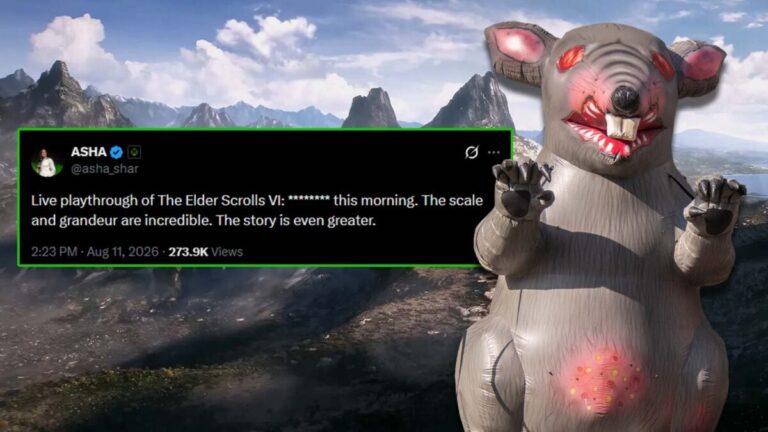
- Xbox CEO Asha Sharma confirmed The Elder Scrolls VI is in active development with strong scale and story, though an eight-letter censored subtitle sparked immediate fan speculation.
- The announcement came the same day unionized workers protested outside Bethesda's office with a giant inflatable rat, objecting to 1,600 layoffs already implemented and 1,600 more planned by year's end.
- An id Software veteran publicly disputed Xbox's assurances that layoffs won't affect The Elder Scrolls VI, claiming management 'doesn't understand art' and has 'gutted' entire departments.
On August 11, Xbox CEO Asha Sharma made her way to Bethesda’s Rockville, Maryland headquarters for a live demonstration of The Elder Scrolls VI, one of gaming’s most anticipated titles. The visit resulted in her posting reactions to the as-yet-unnamed RPG sequel, which fans have been waiting for since the franchise’s last major installment, Skyrim, launched in 2011. The announcement, however, carried loaded timing: unionized workers and members of the Communications Workers of America were simultaneously protesting outside the building with a giant inflatable rat—a labor symbol—demanding fair contracts and objecting to sweeping job cuts across Xbox.
Sharma’s brief social media post describing her impressions of the live playthrough became the day’s headline-grabbing moment, but it arrived against a backdrop of serious studio instability that threatens to reshape both Xbox’s operations and the development landscape at one of gaming’s most storied publishers.
What Sharma Revealed About Development
The Xbox CEO’s August 11 tweet offered limited but enthusiastic details about The Elder Scrolls VI’s current state. She claimed the game’s “scale and grandeur are incredible” while adding that “the story is even greater.” These observations came from what she described as a “live playthrough,” suggesting she watched someone else play a demonstration rather than getting hands-on time with the build herself.
The most cryptic element of her post was a censored eight-letter subtitle for the upcoming RPG. Sharma included asterisks covering the full subtitle, igniting immediate speculation among Elder Scrolls enthusiasts about what name Bethesda might have selected for this sequel to Daggerfall. The community has spent years theorizing about potential subtitles following the game’s formal announcement in 2018, and this glimpse—even if obscured—offered concrete evidence that the studio is actively developing and refining the title’s branding.
The Technical and Creative State
Beyond Sharma’s vague assessment, little concrete information about the game’s development emerged from the visit. Industry veteran Nathan Purkeypile previously characterized Bethesda’s open-world RPG as “super tech constrained,” suggesting the studio has grappled with ambitious design goals that pushed available engine and hardware capabilities. This aligns with the extended development cycle, given that eight years have elapsed since the franchise’s last major entry.
The Labor Protest and Its Timing
Scabby and Union Action
The physical circumstances of Sharma’s visit proved far more contentious than her social media announcement. According to reports from August 11, members of the CWA—alongside other unionized Xbox workers—had inflated Scabby, a giant rat commonly deployed by labor unions to signal worker grievances, directly outside Bethesda’s front entrance. Red flags representing laid-off employees were also displayed, creating a visible statement about the human cost of management decisions.
The protest was deliberately timed to coincide with Sharma’s visit, making clear that workers wanted Xbox leadership to witness their opposition to recent and planned workforce reductions. Next week, on August 18, Xbox workers coordinated with the CWA plan to hold rallies across both the United States and Canada to further protest the layoffs and demand union contracts that would include stronger protections against future job cuts.
The Broader Layoff Context
The Bethesda protest reflected mounting tension following Xbox’s announcement of 1,600 layoffs across its studios. These reductions have already been implemented, with additional cuts of another 1,600 workers planned before the end of 2026. This two-wave approach to workforce reduction has sparked significant backlash from both affected employees and industry observers who question the strategic rationale behind such dramatic staffing changes at a time when the company continues developing major franchise titles.
Perception of Strategic Distraction
Industry commentators and media observers immediately noted the contrast between the Elder Scrolls VI announcement and the simultaneous labor action. Sharma’s decision to publish enthusiastic details about game development while union representatives literally stood outside the building protesting job cuts created a narrative in which the announcement appeared designed to redirect media attention away from worker grievances and toward positive news about upcoming games.
Whether intentional or coincidental, the timing raised questions about corporate communication strategies during periods of internal conflict. By offering concrete, exciting details about a beloved franchise during a moment when Xbox workers were publicly objecting to their treatment, the announcement potentially shaped news cycles in a direction favorable to management rather than workers.
Developer Concerns About the Cuts
id Software’s Public Criticism
Not everyone within Xbox and Bethesda has accepted leadership’s assurances that The Elder Scrolls VI will remain unaffected by the layoffs. During a recent podcast interview, one veteran id Software developer openly challenged Xbox’s commitment to quality game development, claiming the company “doesn’t understand art” or games in the way necessary to support ambitious creative projects. The developer further characterized entire departments as having been “gutted” by the reduction process, suggesting that cuts extended beyond simple efficiency measures.
Studio Culture and Retention Risks
The combination of existing layoffs, planned future cuts, and public criticism from senior developers signals potential vulnerabilities in Xbox’s ability to retain institutional knowledge and creative talent. When studios lose departments rather than making surgical cuts, projects typically suffer in ways that may not become apparent until later development stages. The Elder Scrolls VI, in particular, depends on the kind of collaborative expertise that takes years to build within a studio.
Historical Context for the Franchise
The Elder Scrolls series has navigated significant critical and commercial transitions before. The franchise’s second major installment, Daggerfall, released in 1996 and established the open-world template that would define subsequent entries. When Morrowind arrived in 2002, critics found the game divided opinion despite its ambitions, but the title ultimately proved greater than the sum of its individual components—a lesson relevant as Bethesda develops the next entry in the franchise.
The gap between Skyrim’s 2011 release and now represents the longest period between major Elder Scrolls titles in the franchise’s history. This extended timeline has amplified both anticipation and anxiety within the fanbase about whether the finished product will justify the wait and whether development continuity has been maintained through multiple industry transitions.
What Comes Next
Xbox and Bethesda have publicly assured fans and critics alike that The Elder Scrolls VI will not suffer from the ongoing workforce reductions. However, with developer pushback against this narrative and unionization efforts accelerating across the studio, execution will matter far more than promises. The planned August 18 rallies will likely sustain media attention on labor issues even if announcement cycles move forward.
Sharma’s reveal of development progress, while exciting to franchise enthusiasts, ultimately underscored the challenge facing Xbox leadership: managing perception around a major release while simultaneously navigating legitimate worker grievances and studio instability. How the company addresses these competing pressures in the coming months will influence both The Elder Scrolls VI’s final quality and Xbox’s standing within the broader gaming industry.
Frequently Asked Questions
What did Asha Sharma reveal about The Elder Scrolls VI?
Sharma posted on August 11 that the game's "scale and grandeur are incredible" and "the story is even greater" after watching a live playthrough at Bethesda's office. She also teased an eight-letter censored subtitle without revealing what it is.
Why were workers protesting during Sharma's visit?
The Communications Workers of America organized a protest with a giant inflatable rat (Scabby) outside Bethesda's Rockville office to oppose 1,600 layoffs that have already occurred and another 1,600 planned before the end of 2026. The protest was timed to coincide with Sharma's visit to make leadership witness worker opposition.
What did id Software developers say about the layoffs?
One veteran id Software developer claimed in a podcast interview that Xbox "doesn't understand art" or games, and stated that entire departments have been "gutted" by the reduction process, contradicting Xbox's assurances that The Elder Scrolls VI would not be affected.
