
Key takeaways
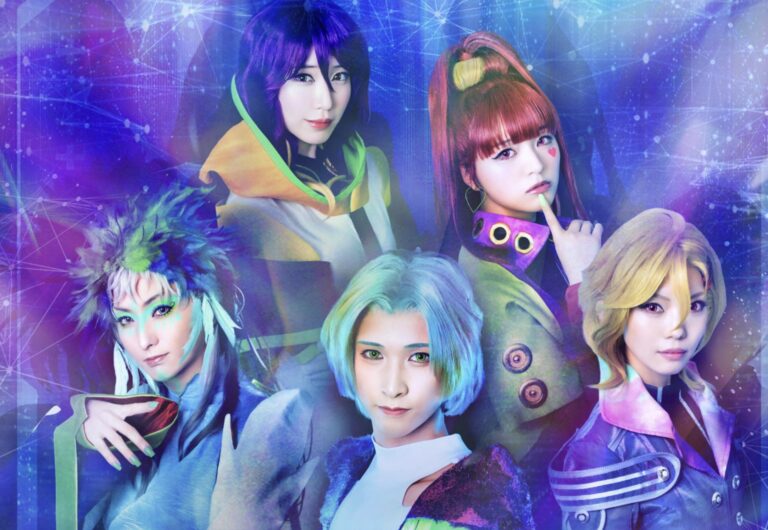
- Gnosia, a 2019 sci-fi social deduction game, is being adapted into an entirely improvised live theater show by Japan's Jinrou "Live Playing Theater" troupe.
- Performers learn their character roles only moments before performing, with most not knowing if they play innocent crew members or the Gnosia, preserving the game's core uncertainty.
- The opening performance streams free on YouTube through September 6, with additional shows available for 3,300 yen ($21) each in the 20-performance limited run.
A social deduction game built around unpredictability is being adapted into a stage production that embraces its own uncertainty. Gnosia, a 2019 sci-fi visual novel-Werewolf hybrid developed by Petit Depotto for PlayStation Vita, is currently performing as an entirely improvised live show through Japan’s Jinrou “Live Playing Theater” troupe. The opening performance is available free on YouTube through September 6, with additional shows in a limited 20-performance run available for paid streaming.
Gnosia: The Original Game
Gnosia merges narrative depth with deduction gameplay rather than presenting a story that unfolds in predetermined fashion. Players find themselves aboard a spaceship populated by humanoids, aliens, and talking dolphins, working collectively to identify and cryogenically freeze the Gnosia—a parasitic being that has infiltrated the crew. Rather than following a fixed sequence of events, gameplay generates unpredictability through its deduction systems; players must analyze character dialogue to uncover the threat’s identity, but the Gnosia isn’t predetermined, shifting between playthroughs based on randomization. This randomness—combined with the game’s visual novel presentation—ensures that replay value emerges from discovering different outcomes and hidden character details rather than from narrative branches designed to diverge.
Critical Recognition
Gaming critics recognized Gnosia as one of the most acclaimed Japanese indie games of recent years, validating its hybrid approach to blending interactive fiction with Werewolf-style social deduction. The title offered something distinct within the indie landscape when released, successfully merging two separate genres into a cohesive experience that felt fresh despite drawing from established game design traditions. Its success demonstrated that deduction-based gameplay could carry a video game experience even without relying on complex narratives or action systems.
The Adaptation Challenge
Translating Gnosia to the stage posed problems that don’t affect other successful game-to-theater adaptations. Franchises like Ace Attorney and Castlevania, both adapted by Japan’s all-female Takarazuka Revue theater troupe, rely on structured narratives that fit traditional theatrical formats—scenes occur in sequence, dialogue remains consistent across performances, and adaptations can condense or reframe narrative events for live audiences. Gnosia’s core appeal, by contrast, hinges on the player’s gradual discovery of hidden information and the unpredictability of threat identification. Achieving this interactivity in a live setting required abandoning conventional theatrical approaches entirely.
Why Scripting Wouldn’t Work
A traditional script would undermine the premise’s essential tension. If performers knew their roles and character motivations beforehand, their reactions would feel rehearsed and predetermined, stripping away the moment-to-moment uncertainty that defines the game. Audience members watching a scripted performance would recognize patterns and anticipate reveals, knowing that every “discovery” has been choreographed. The troupe needed a solution that preserved the core mechanic—genuine uncertainty among performers who must discover truth through authentic interaction rather than rehearsal.

Improvisation as Solution
The Jinrou “Live Playing Theater” troupe solved the adaptation problem by removing the script entirely. Performers receive character assignments only moments before taking the stage, with most actors learning whether they’re playing innocent crew members or the Gnosia just before the performance begins. This constraint forces actors to respond authentically to unpredictable situations, mirroring the game’s central tension. Reactions cannot be faked or rehearsed; performers must genuinely adapt to dialogue and accusations they weren’t expecting. The troupe has committed to a 20-performance limited run, with each show structured to be completely different based on how individual performers navigate their assigned roles.
Performance Structure
Without a predetermined script, tension emerges organically from character dynamics. An actor assigned the Gnosia must maintain their cover while other performers, genuinely unaware of their identity, direct suspicions and accusations. Innocent crew members face the authentic challenge of identifying the threat among people whose true natures remain hidden—the same challenge players face in the original game. Performance duration stretches to two hours, giving performers and audience time to develop theories, test accusations, and experience the slow revelation of truth.
How to Watch
Availability and Pricing
The troupe released the opening performance on YouTube for free viewing through September 6, providing a no-cost entry point for both existing fans and newcomers unfamiliar with the original game. The performance carries no subtitles in any language, a potential barrier for non-Japanese speakers, though the physical acting and character reactions remain clear enough to follow dramatic arcs and emotional beats. Beyond this free offering, the remaining 19 performances in the limited run are available for individual streaming at 3,300 yen, approximately $21 per show. This pricing structure allows viewers to sample the concept before committing to additional performances.
Why It’s Worth Watching
Two hours of entirely ad-libbed theater based on a critically acclaimed indie game represent substantial entertainment for audiences regardless of familiarity with the original title. The performance demonstrates how gameplay-driven experiences can translate to live performance through entirely different mechanisms than narrative extraction. Even without understanding the game’s original context, viewers can appreciate the real-time tension created by performers operating without a script, the genuine confusion and suspicion that arises from hidden roles, and the theatrical skill required to maintain character while responding authentically to unexpected dialogue.
Significance in Game Adaptation
This adaptation represents a distinct choice in how game properties transition to other mediums. Rather than extracting narrative and abandoning gameplay—as occurred with Ace Attorney and Castlevania—the Jinrou troupe achieved translation by making improvisation central to the performance. By removing scripted dialogue, they maintained the core mechanic: deduction under genuine uncertainty.
This approach opens possibilities for adapting other gameplay-heavy titles that resist traditional narrative-based theatrical translation. Where most game-to-theater projects assume narrative is the primary transferable element, Gnosia’s adaptation asserts that mechanical systems themselves can form the basis of compelling live performance. As the gaming industry continues to explore theater adaptations, this improvised approach may influence how developers and theater practitioners think about translating games that prioritize systems over storytelling.
Frequently Asked Questions
What is Gnosia?
Gnosia is a 2019 sci-fi social deduction game developed by Petit Depotto for PlayStation Vita that combines visual novel storytelling with Werewolf-style gameplay, where players aboard a spaceship must identify and freeze a parasitic being called the Gnosia.
How is this theatrical adaptation different from other game-to-theater shows?
Unlike narrative-based adaptations like Ace Attorney and Castlevania, Gnosia's live performance is entirely improvised with no script; performers only learn their roles moments before performing, creating genuine uncertainty that mirrors the original game's mechanics.
How can I watch the performance?
The opening show is free to stream on YouTube through September 6; additional performances from the 20-show limited run are available for 3,300 yen (approximately $21) each.
