
Key takeaways
- Donald Duck's mismatched finger count on Kingdom Hearts Collection box art triggered widespread speculation about AI involvement before Square Enix corrected the design.
- Square Enix clarified the error resulted from human mistakes by internal developers, not from generative AI manipulation of the original Tetsuya Nomura artwork.
- The collection releases October 8 for Switch 2, representing the franchise's first appearance on a current-generation Nintendo home console.
The Nintendo Switch 2 is shaping up to receive a robust slate of launch window titles, and publishers are moving quickly to prepare software for Nintendo’s upcoming hardware. Square Enix has made recent headlines by announcing Kingdom Hearts Collection [I~III], bringing the first three numbered entries in the beloved franchise to Switch 2 for the first time. However, the announcement encountered immediate complications when the North American box art launched—not due to game content concerns, but because of a glaring artistic error that sparked speculation about the involvement of generative artificial intelligence technology.
A Finger-Counting Error on Display
The Discovery
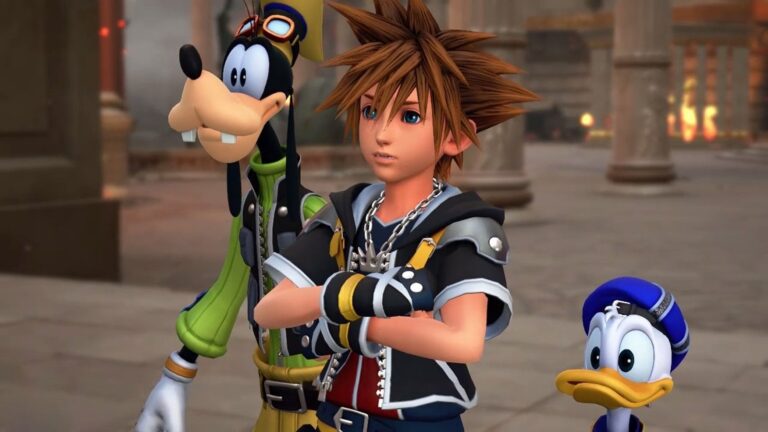
Fans examining the North American box art for Kingdom Hearts Collection [I~III] quickly noticed that something appeared wrong with one of the featured characters. The illustration of Donald Duck showed inconsistent finger counts across both hands—a visual mistake that proved impossible to miss once pointed out. The error circulated rapidly through social media, drawing attention from gaming communities and observers monitoring the game’s promotional campaign.
What made the mistake particularly notable was its context. In an era where generative AI continues to trigger controversy across entertainment industries, the distinctive nature of the error immediately raised questions about technological involvement. Finger anomalies have become so closely associated with AI-generated imagery that viewers began speculating whether an algorithmic tool had played a role in creating or modifying the artwork.
Departure From the Original Design
Adding fuel to these theories was the composition’s departure from the original artwork created by director Tetsuya Nomura. The previous box art arrangement positioned characters together near the center of the image. The new design separated figures across the artwork, introducing white space and gaps that required filling. Some observers theorized that if new sections needed rendering to accommodate the revised layout, a development team might have turned to digital tools—including AI—to complete the image efficiently.
The GenAI Speculation Mounts
Why The Theory Gained Traction
The architectural differences between designs created a plausible foundation for genAI suspicion. If substantial portions of the original artwork required redrawing or extension to fill the new composition, using generative AI to rapidly produce fills for those areas would represent a logical workflow choice from an efficiency standpoint. The finger-counting error on Donald Duck seemed to align perfectly with known failure modes of AI image generation systems, which have consistently struggled with anatomical elements like hands and fingers across countless documented examples.
This characteristic weakness has become so predictable that incorrect finger counts have effectively become cultural shorthand for identifying AI-generated imagery. The appearance of exactly this type of error in promotional materials for a major game release made the theory almost inevitable among informed observers and skeptical fans who follow the gaming industry closely.
Square Enix Responds to Speculation
Square Enix responded to mounting questions by providing an official statement to GameSpot. A company representative indicated that the organization was aware of feedback concerning the recent Kingdom Hearts visuals. The company’s position was definitive: these assets were created by Square Enix’s development team without the use of generative AI technology. According to the statement, the errors resulted entirely from human error rather than algorithmic output.
The company did not elaborate extensively on the specific circumstances that allowed the finger-counting mistake to advance through development and quality assurance phases if the work was entirely created by humans. Regardless, Square Enix proceeded to replace the problematic artwork in promotional materials distributed ahead of the game’s October 8 launch date. A company PR representative reiterated that quality holds tremendous importance for Square Enix and that updated assets have been deployed where appropriate. The original social media post that sparked the initial controversy remained publicly visible, however, serving as a permanent record of the error even as official promotional channels shifted to corrected imagery.
Strategic Implications for the Collection
Launch Window Significance
The Kingdom Hearts Collection [I~III] arrives on October 8, a deadline that shaped the timeline for finalizing and distributing promotional materials. The release window positions the compilation as a meaningful title for Switch 2’s launch period, when major publishers typically deploy their strongest offerings to build platform enthusiasm among consumers upgrading to new hardware.
The collection represents significant strategic importance for both Square Enix and Nintendo. The Kingdom Hearts franchise has primarily resided on PlayStation platforms and various handheld systems throughout its history. Bringing the first three mainline entries to Switch 2 marks a major multiplatform expansion, opening the series to Nintendo audiences who never experienced these games on contemporary Nintendo home consoles. For the publisher, the title broadens franchise accessibility and creates new revenue opportunities from previously unavailable player bases.
Industry Context and AI Policy
The incident connects to ongoing industry conversations about artificial intelligence in creative fields. Square Enix has publicly positioned itself as bullish on generative AI’s prospects for improving operational efficiencies across development and publishing operations. The company’s denial of AI involvement in the box art, therefore, carries additional weight—simultaneously addressing a specific quality issue while maintaining distance from genAI during a period of heightened industry sensitivity regarding algorithmic image generation.
The correction of the artwork error, though relatively minor in scope, removes a potential distraction from the collection’s launch messaging. The incident underscores the importance of quality assurance processes in game publishing, demonstrating how promotional materials require careful review even when human creators produce work without AI assistance. Looking ahead, Kingdom Hearts Collection on Switch 2 represents one piece of an expanding software library designed to establish the new platform as an essential system within the gaming landscape.
Frequently Asked Questions
What error appeared on the Kingdom Hearts Collection box art?
The North American box art showed Donald Duck with different numbers of fingers on each hand.
Did Square Enix use generative AI to create the box art?
No, Square Enix stated the artwork was created by their development team without generative AI, and the errors resulted from human error.
When is Kingdom Hearts Collection [I~III] releasing?
The collection releases on October 8 for Nintendo Switch 2.
