
Key takeaways
- Kotaku's month-long Kingdom Hearts replay confirms longtime criticism that the 2002 PS2 original has aged poorly, particularly in platforming precision and level design.
- Sora's floaty jump and Deep Jungle's layered vertical map make simple navigation tedious, with each fall requiring extensive backtracking rather than immediate respawns.
- Final Fantasy characters, once meaningfully integrated as crossovers, have gradually disappeared from the series as the franchise shifted toward Disney-exclusive content.
- Player opinions on Gummi Ship segments remain divided, though successive games reportedly improved both customization options and the ability to skip segments.
Kotaku has embarked on a year-long replay of the Kingdom Hearts series called “Guiding Key,” and one month into the project, the team has confirmed what longtime fans have long claimed: the 2002 PS2 original shows significant wear. Nostalgia and memories of beloved moments cannot overcome the nearly 25-year-old game’s technical limitations and design choices.
The first Kingdom Hearts attempts to be multiple games simultaneously. It blends action gameplay, RPG progression, space flight combat, and platforming mechanics. That final category has proven most problematic during this replay, revealing issues that may not have been evident during the original experience but register as serious flaws upon return.
Movement and Platforming: Core Frustrations
Sora’s Floaty Jump
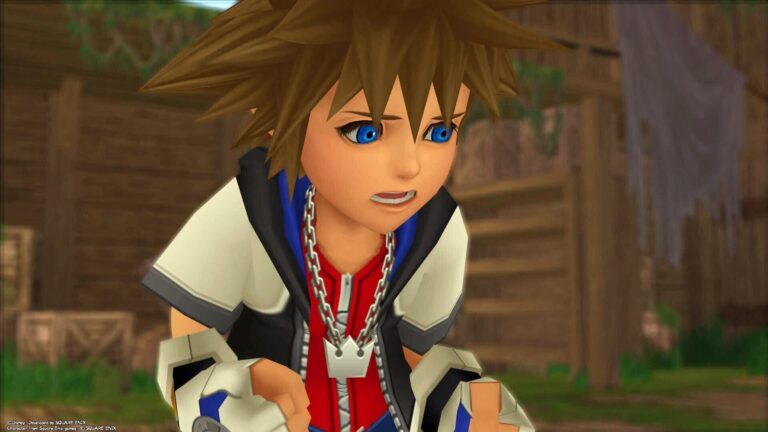
Sora’s jump, which once seemed charming, now represents a fundamental design problem. The character’s floaty jump physics lack the precision required for platforming sections, particularly those recreating Disney worlds. This looseness makes every jump feel risky rather than confidently executed.
Deep Jungle’s Vertical Maze
The Tarzan-inspired Deep Jungle level crystallizes these frustrations most clearly. Navigation requires jumping across platforms and vines, but Sora’s imprecise movement makes this genuinely difficult. The level’s vertical design compounds the problem significantly. Rather than respawning at checkpoints when players fall, falling from a platform sends the player down to a lower section of the map. Each failure becomes a cycle of tedious backtracking upward, transforming single mistakes into lengthy repetitive segments that drain engagement.
This frustration reached a point where continuing felt untenable, prompting switching to Overwatch instead. While other PS2-era action games achieved responsive, snappy controls, Kingdom Hearts opted for looser mechanics that undermine the platforming experience throughout the early game.
Creative Freedom in Smaller Spaces
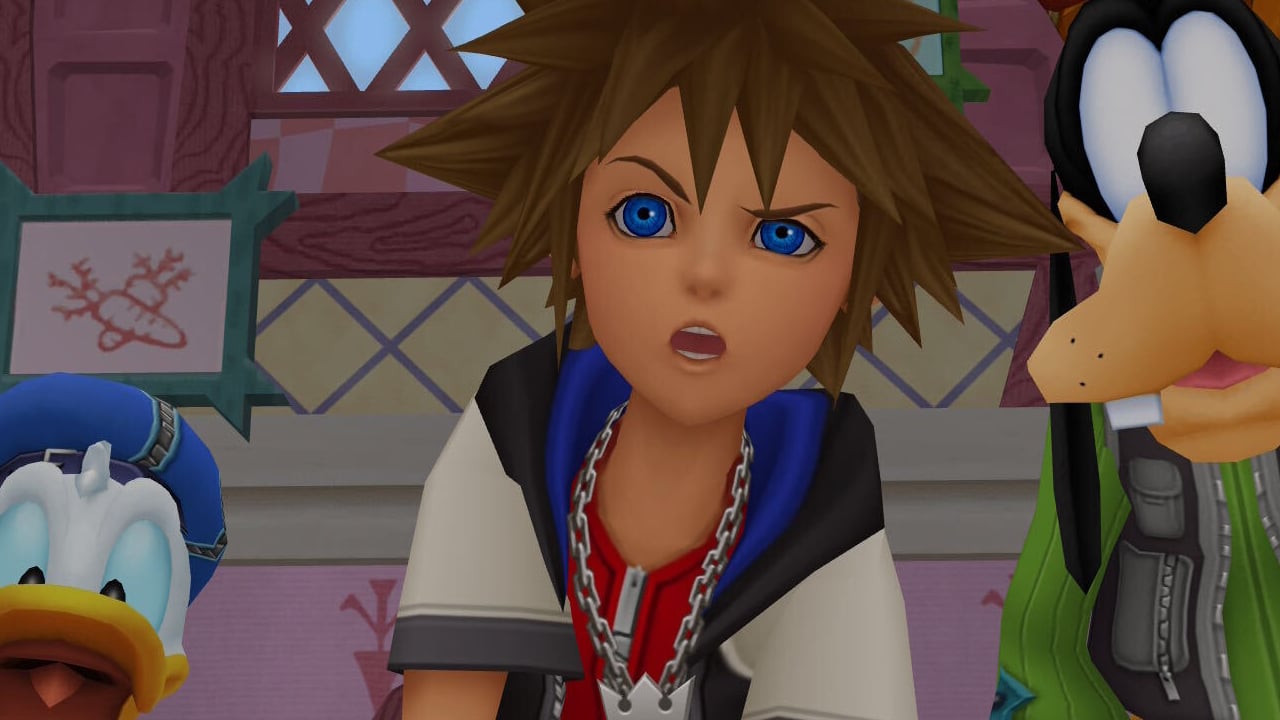
The early Disney worlds reveal that Square Enix possessed considerable creative latitude with recognizable intellectual property. These worlds successfully remix Disney material, though they feel noticeably more compact than remembered. Wonderland, in particular, registers as dramatically smaller upon return, though this does not significantly impact the overall experience because the world holds limited appeal compared to alternatives.
Olympus Coliseum and Crossover Magic
The standout among early Disney worlds is Olympus Coliseum, which represents one of Kingdom Hearts’ most effective mergers of Disney and Final Fantasy elements. Remarkably, this world comprises only three distinct rooms, yet within that limitation, Square Enix created something substantial. The Coliseum functions as a tournament ground, serving narrative purpose beyond merely hosting boss encounters.
Cloud Strife, protagonist of Final Fantasy VII, participates in the games on behalf of Hades, seeking to eliminate Hercules. The Cloud fight ranks among the most challenging encounters experienced this far into the game. His bandaged Buster Sword, swift attack patterns, and superior mobility forced Sora to survive the entire battle while Donald and Goofy fell quickly. Victory came without using any potions. The subsequent Cerberus battle feels more predictable, though it still presents a credible threat.
Final Fantasy’s Gradual Retreat
Across the Kingdom Hearts series, Final Fantasy characters and worlds have become increasingly marginalized. According to developers, early FF cameos like Cloud’s appearance functioned largely as placeholders. Over the years, the franchise has shifted toward emphasizing Disney properties almost exclusively, moving away from the original game’s more balanced approach.
Community discussion reflects genuine disagreement about this direction. Some players view the series as fundamentally Disney-focused, with FF characters as optional bonus content. Others contend that FF representation was central to what made the series distinctive, providing additional fantasy elements beyond the Disney brand. One player emphasized that FF characters “added the fantasy feeling of the game” and “gave that game its uniqueness.”
Kingdom Hearts III notably removed the Sephiroth fight entirely. Characters from Final Fantasy X-2, including Yuna, Rikku, and Paine, appeared in Kingdom Hearts II but were transformed into tiny pixies rather than maintaining their full character designs. This frustrated fans who valued seeing major FF characters appear alongside other representatives of the franchise.
Gummi Ship Segments Divide the Fanbase
The Gummi Ship sequences, which function as rail-shooting segments connecting Disney worlds, generate strongly divergent reactions. These sections require building custom spacecraft from components. For some players, the building system proved engaging enough to spend considerable hours designing and testing various configurations. One player reported spending hours on ship building and testing, finding that “the actual on-rails stuff was fine but I can see how it would be an annoyance to anyone that it does not vibe with.”
On replay, however, many players found the building system tedious, simply assembling ships with the strongest available components without deeper engagement. The actual flight segments require minimal interaction. One player discovered that holding a single button to fire straight forward allows reaching the next world intact, essentially permitting players to ignore the intended challenge altogether.
Subsequent games reportedly improved upon this foundation. Kingdom Hearts II enhanced the building interface, level design, and the ability to skip segments for disinterested players. The third entry continued these refinements, though some felt the open-world environments lacked the personality of earlier route designs.
Nostalgia Meets Technical Reality
Kingdom Hearts has proven more interesting to analyze than to replay. The core concept remains compelling: combining Disney, Final Fantasy, and original characters into a unified narrative. However, the underlying technical and design issues mount during extended play. The movement frustrations, imprecise controls, and occasionally tedious level design represent genuine obstacles rather than minor inconveniences.
This aligns with reports from longtime fans who have returned to the original game in recent years. Time has not been particularly kind to Kingdom Hearts’ moment-to-moment gameplay, despite the boldness of its design ambitions for a 2002 release. As Kotaku continues through the Guiding Key project toward Kingdom Hearts IV, expected roughly one year away, the replay serves as a clear reminder that nostalgia does not always survive contact with aging software.
Source: Kotaku
Frequently Asked Questions
What is 'Guiding Key'?
"Guiding Key" is Kotaku's year-long replay series examining the Kingdom Hearts franchise, designed to work through the series ahead of Kingdom Hearts IV's release approximately one year away.
What platforming issue frustrates Kotaku most in the original Kingdom Hearts?
Sora's floaty jump lacks precision, compounded in levels like Deep Jungle where falling sends players to lower map layers requiring tedious backtracking instead of respawning at checkpoints.
How have Final Fantasy characters changed throughout Kingdom Hearts?
FF characters have become increasingly sidelined, with Yuna, Rikku, and Paine transformed into pixies in Kingdom Hearts II, and the Sephiroth fight removed entirely by Kingdom Hearts III.
