
Key takeaways
- Steven Asarch documented a trend of LARPtubers—young creators who impersonate rather than develop original content based on YouTubers they admired.
- Original creators like iDubbbz have evolved beyond controversial early work but express conflicted feelings when young fans recreate that outdated style.
- TechnoLarp's impersonation of deceased Minecraft streamer Technoblade violated ethical boundaries and prompted the creator to pivot to an original persona.
- Young creators who transition from impersonation to original work, like StrikerMC, have found growing audiences, suggesting a possible healthy trajectory.
Over two decades, YouTube has grown from a platform for user-submitted videos into the dominant force in entertainment consumption. That growth has created persistent problems around content moderation—the platform has struggled to establish rules for what creators can publish while maintaining relationships with advertisers. This tension has fundamentally shaped how YouTube personalities develop their careers.
Reporter Steven Asarch recently examined a phenomenon born from this struggle. His investigation focuses on what he calls “LARPtubers”—young content creators who do not simply replicate the style of the YouTubers they admired during childhood, but rather directly impersonate them. The result is a disorienting spectacle that dredges up memories some original creators would prefer to leave behind.
Asarch frames the broader issue this way: “Children born after the year 2000 got their content through YouTube, where there were little to no guardrails for what they could watch. A decade is a long time on the internet. And as a creator, you either evolve or you die.”
What That Earlier Era Looked Like
YouTube’s early governance was minimal. There were few rules about what creators could publish, minimal demonetization practices, and a cultural expectation that the platform’s unpredictability was part of its appeal. This ecosystem allowed certain creators to build massive audiences through deliberately provocative content that would struggle to monetize under today’s standards.
Watershed Moments in Boundary-Pushing
Several high-profile creators from that period have since become cautionary tales about the consequences of that freedom. PewDiePie paid others to hold up signs praising Hitler. Logan Paul created multiple controversies, including content filmed in Japan that damaged his reputation significantly. Parents staged fake “pranks” on their children for views. These incidents were not isolated aberrations but reflections of a platform that had not yet established the content guardrails now expected across YouTube.
How the Platform Adjusted
The company has continuously refined its algorithms and payment structures to discourage similar behavior, though enforcement remains imperfect. These changes forced a reckoning for creators who had built their audiences in the lawless early years. Content that had been possible—and what had launched their initial fame—was no longer sustainable under the new regime. Some creators evolved their material alongside the platform’s standards. Others maintained their approach but lost reach, revenue, or both. The asymmetry created a gap: a generation of fans who wanted more boundary-pushing content from heroes who had largely abandoned it.
The iDubbbz Paradox
Ian Kane Jomha, known professionally as iDubbbz, built his early YouTube career on politically incorrect comedy and deliberately provocative content. He attracted a devoted audience by refusing to temper his approach or acknowledge social conventions around speech. Like other successful creators from that era, he has since moved away from that style.
The Problem of Evolution
When Asarch brought this to Jomha’s attention, interviewing him about his impersonators, the creator expressed genuine ambivalence. “I think my feelings are a little bit complicated,” Jomha said. “I’ve kind of been fighting against that myself for so long and to so many people like it’s it’s kind of a joke now. If people don’t want to leave that time, I can’t really force them. I’ve tried to do it in all the ways that I can. So if they’re able to get it in, just kind of like a watered down, I would say hopefully less slurs version of iDubbbz then cool.”
The statement reveals the bind many evolved creators face. Jomha acknowledges his struggle to distance himself from his own past work and recognizes that some viewers remain emotionally attached to his earlier approach. He cannot prevent others from recreating that content, and the best outcome he can envision is a diluted version. The fact that he is willing to accept a “watered down” imitation suggests how uncomfortable a closer approximation would be for him.
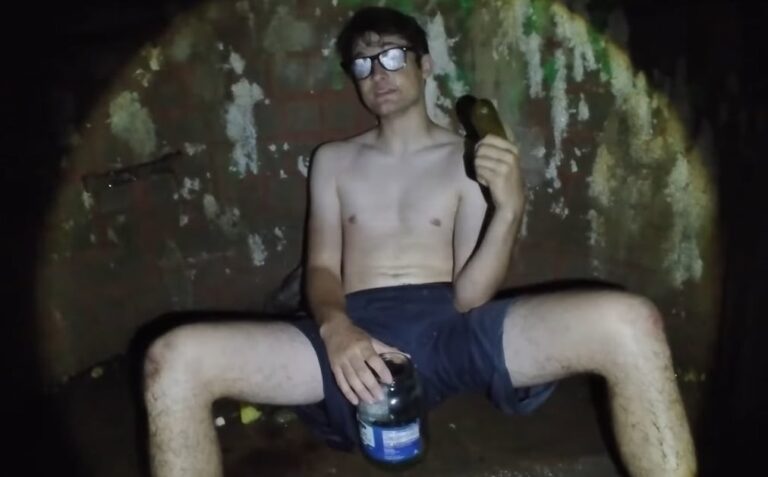
One of Jomha’s impersonators is a teenager known as ILarpzTV. This creator directly mimics the style, tone, and approach of iDubbbz’s earlier work, creating a living archive of content that Jomha himself is struggling to watch. The appeal for ILarpzTV’s audience is precisely the authenticity of the reproduction: this is what iDubbbz used to do, before he became someone else.
The Technoblade Case
The most ethically fraught example Asarch examined involved TechnoLarp, a young creator who built an audience by closely recreating the streaming persona of Technoblade, a Minecraft content creator. TechnoLarp mirrored Technoblade’s voice, avatar design, and overall presentation. The impersonation would have been merely nostalgic except for one crucial fact: Technoblade died in 2022 from cancer.
While some viewers appreciated the opportunity to experience that creator’s content again, others—including Technoblade’s family—viewed the performance as inappropriate. The family demanded that the impersonation stop. TechnoLarp, who now goes by StrikerMC, acknowledged the mistake in his conversation with Asarch: “I did something I really shouldn’t have. I’m not a super emotionally adept person.”
This incident illustrates a boundary that younger creators sometimes fail to recognize: impersonating a living creator whose popularity has declined is one thing; recreating a deceased creator’s persona is another. Technoblade’s family saw the mimicry as exploitative, a commercialization of grief and memory without permission or sensitivity.
From Impersonation to Original Work
Since pivoting away from the Technoblade imitation and developing an original streaming personality, StrikerMC has continued to grow an audience. This outcome suggests a possible trajectory for LARPtubers: using impersonation as a training ground before developing a distinct voice.
Asarch frames this as the best-case scenario. Young creators might use these videos like “training wheels,” developing technical skills and learning how to engage an audience before figuring out how to draw their own lines. Some clearly have the capacity to make that transition. Others may remain committed to recreating the past.
The Broader Platform Question
YouTube’s evolution reflects broader questions about platform governance, nostalgia, and authenticity in digital culture. The platform has created economic incentives for ever-greater provocation while simultaneously punishing it through algorithmic suppression and demonetization. Creators face pressure to be sensational and shocking, yet face consequences for crossing undefined lines. This contradiction attracts young people who want to push boundaries but also those who want to relive a moment when the boundaries were further back.
The LARPtubers phenomenon is relatively niche, not a dominant trend, but it reveals how younger generations relate to YouTube history. For those born after 2000, nostalgia is not about a distant past but about internet content from a decade ago—a timeframe that barely exists in traditional culture. The creators they revere are not distant historical figures but people who are still active, still visible, often still producing content. The distance between fan and creator is measured in years and algorithmic placement, not decades and cultural reinterpretation.
Frequently Asked Questions
What are LARPtubers?
Young content creators who impersonate or closely recreate the streaming persona and style of older YouTubers they admired during childhood, rather than developing original content.
How did iDubbbz respond to being impersonated?
He expressed conflicted feelings, saying he had fought against his old image for so long but acknowledged he could not prevent others from recreating it, adding that a "watered down, hopefully less slurs version" was preferable to exact recreation.
What happened with TechnoLarp and Technoblade?
TechnoLarp impersonated Minecraft streamer Technoblade by mimicking his voice and avatar, but Technoblade died in 2022 from cancer, and the creator's family demanded the impersonation stop. TechnoLarp, now known as StrikerMC, acknowledged the mistake and pivoted to original content.
