
Key takeaways
- Phil Tippett closed Tippett Studio in 2024 after the company filed for bankruptcy, ending a 40-year career as a Hollywood visual effects pioneer.
- The studio's financial difficulties intensified after Mad God (2021), an ambitious passion project Tippett developed for 31 years that required crowdfunding and contributed to his psychiatric hospitalization.
- At a liquidation sale in Berkeley, former Tippett Studio employees purchased back props and creatures they had created for films including Jurassic Park and Star Wars.
- Tippett, 74, told CBS News he remains 'down, not out, and not ready to retire,' despite the studio's closure.
Phil Tippett, the stop-motion animator and visual effects supervisor who shaped three decades of Hollywood blockbusters, has closed Tippett Studio after filing for bankruptcy in 2024. The effects master, 74, founded the company in 1984 with his wife Jules Roman. Over nearly 40 years, the Berkeley-based shop produced creature effects for Star Wars, RoboCop, Jurassic Park, Dragonheart and Starship Troopers. During a liquidation sale in recent weeks, former employees returned to purchase props they had worked on, while Tippett reflected on the studio’s legacy.
“I will die with my sword in my hand,” Tippett told CBS News. “We had almost a 40-year run. It was a good run.”
Financial pressures mounted after the production of Mad God, an animated feature Tippett had been developing since 1990 and released in 2021. Though the bleak, surreal film earned critical acclaim, the project required multiple rounds of crowdfunding and a psychiatric stay from the director, draining resources. The studio’s struggles mirror a broader industry shift away from traditional effects shops toward digital pipelines and computer-generated imagery.
From Star Wars to ILM
Early recruitment and the holographic chess sequence
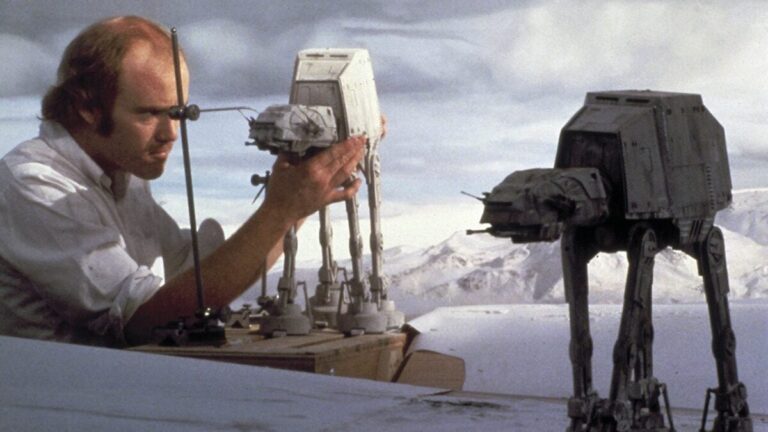
Tippett’s career began under the influence of Ray Harryhausen, the pioneering stop-motion animator whose work captivated a generation of filmmakers. Industrial Light & Magic recruited Tippett early, assigning him to create the holographic chess sequence in the original Star Wars. The work demonstrated his mastery of practical effects and caught the attention of George Lucas’ production team.
Rising to department leadership
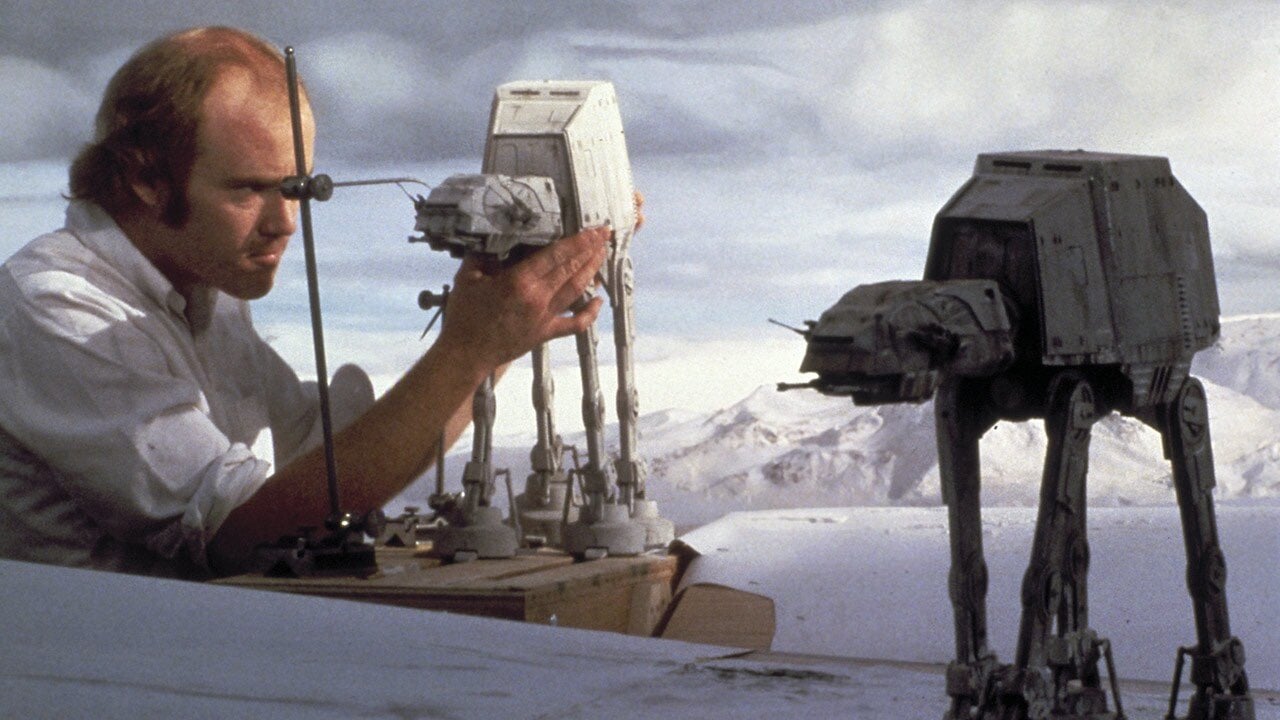
By the time production began on The Empire Strikes Back, Tippett had risen to head ILM’s animation department, overseeing creature development for Lucas’ expanding universe. In those years, Tippett described the creative process as a form of auditioning: Lucas would examine tables of creatures that Tippett and his team had crafted and assign them roles within scenes, selecting which designs would make the final cut. This hands-on approach, rooted in practical puppetry and meticulous craftsmanship, defined the technical standards of the era.
Tippett’s first Academy Award, won for Return of the Jedi, validated his mastery of the craft and gave him the standing to establish his own company.
Building the Studio
Founding and early philosophy
In 1984, Tippett and Roman opened Tippett Studio in Berkeley, California, operating as a boutique effects house that specialized in bringing fantastical creatures and mechanical beings to life. The studio’s reputation grew steadily as it tackled high-profile commissions from major Hollywood directors and studios seeking practical creature effects that could stand up to the growing sophistication of digital alternatives.
Signature early projects
Among the studio’s early triumphs were films such as RoboCop, where Tippett created practical effects that became iconic elements of Paul Verhoeven’s dystopian vision, and Willow, a fantasy adventure that showcased the studio’s range across different genres. Starship Troopers followed, with Tippett designing the insectoid alien soldiers that dominated the film’s action sequences.
Jurassic Park and the Dinosaur Supervisor
The studio’s second major achievement came with Jurassic Park in 1992. Tippett had initially been tasked with creating stop-motion dinosaurs for the film, but as computer animation technology and animatronics techniques advanced during production, the approach shifted. Rather than replace Tippett, director Steven Spielberg retained him in a newly created supervisory role, giving him the credit “dinosaur supervisor.”
The title, intended as a straightforward job description, became an internet meme decades later. Still, Tippett’s work remained integral to the final product. His team’s expertise in creature rigging and digital animation contributed significantly to the scenes that defined the film’s visual language. Tippett won his second Academy Award for the role.
Beyond his signature stop-motion work, the studio proved equally capable with digital rigging and computer-based animation. Over subsequent decades, Tippett’s team worked on Dragonheart, blending dragon animation with live action, and contributed to the Twilight franchise, demonstrating technical flexibility even as the industry’s center of gravity shifted toward full digital production.
Mad God and Financial Reckoning
The 31-year passion project
In 2021, after 31 years of intermittent production, Tippett completed Mad God, an experimental animated feature that he had conceptualized in 1990. The film presented a nightmarish, surrealist vision with minimal dialogue and densely layered practical animation. Critics praised the work for its artistic ambition and technical precision, but the production exacted a significant personal cost on its creator.
Bankruptcy and liquidation
Bringing Mad God to completion required multiple rounds of public crowdfunding, a departure from the studio’s traditional model of contract work for studios and producers. The psychological strain of the project led Tippett to spend time in a psychiatric ward. The financial and emotional toll of the passion project, combined with the studio’s ongoing operational costs and the industry’s structural shift away from practical effects, created unsustainable pressure. In 2024, Tippett Studio filed for bankruptcy.
The studio’s assets—including props, creature sculptures, concept artwork, and production memorabilia spanning four decades—were liquidated to recover outstanding debts. The Berkeley shop conducted a fire sale that drew crowds throughout the weekend, with lines extending down the street as fans and industry professionals came to bid on pieces of Hollywood history. Former employees of Tippett Studio attended the sale, purchasing back props and creatures they had personally designed and built for Jurassic Park and other films.
Legacy and Industry Transformation
Tippett Studio’s closure reflects a broader transformation in the visual effects industry. As digital tools have become more sophisticated and cost-competitive, the boutique practical effects house model has become increasingly difficult to sustain. Large studios have consolidated, and many independent shops have either closed or retooled to focus on digital work. Tippett Studio’s closure thus marks not merely a single company’s end, but a visible shift in how Hollywood produces the creatures and effects that populate its films.
The transactions at the liquidation sale carried emotional weight beyond their financial function. Former employees reclaiming tangible reminders of their contributions to celebrated motion pictures represented a bittersweet reunion of sorts, with individuals purchasing back props and creatures they had personally designed and built over the decades.
Remaining Active
At 74, Tippett told CBS News he remains “down, not out, and not ready to retire,” despite the studio’s closure. While the decision to shutter the company represents a significant setback within the broader context of the industry’s move away from traditional effects shops, Tippett’s perspective reflects his intention to remain active. His legacy of four decades as a visual effects pioneer, marked by two Academy Awards and contributions to some of cinema’s most iconic films, remains intact regardless of the studio’s operational status.
Frequently Asked Questions
What caused Tippett Studio to close?
The studio filed for bankruptcy in 2024 after facing mounting financial pressures, particularly from the production of Mad God, an experimental animated feature Tippett developed for 31 years starting in 1990. The film required multiple crowdfunding rounds, and Tippett's personal struggles during production contributed to the studio's financial strain.
What major films did Tippett Studio create effects for?
Tippett Studio produced creature and effects work for Star Wars, RoboCop, Jurassic Park, Willow, Starship Troopers, Dragonheart, and Twilight over its four-decade history. Tippett won Academy Awards for his work on Return of the Jedi and Jurassic Park.
Is Phil Tippett retiring after the studio closure?
No. At 74 years old, Tippett told CBS News he remains 'down, not out, and not ready to retire.' He has not announced specific future plans but indicated his intention to remain active and engaged in creative pursuits.
