
Key takeaways
- Sandbox games, also called sandboxes or open-world games, grant players freedom to interact with game environments in largely unstructured ways rather than following a linear progression through predetermined objectives.
- Swedish programmer Markus Persson, known professionally as Notch, created Minecraft as an independent project beginning in 2009.
- Minecraft’s design brilliance emerged partly through its multiple gameplay modes, each serving different player preferences and playstyles.
- Microsoft purchased Minecraft and Mojang Studios—the company Persson had founded to develop the game—in September 2014 for approximately $2.5 billion, representing one of gaming’s largest acquisition deals at that time.
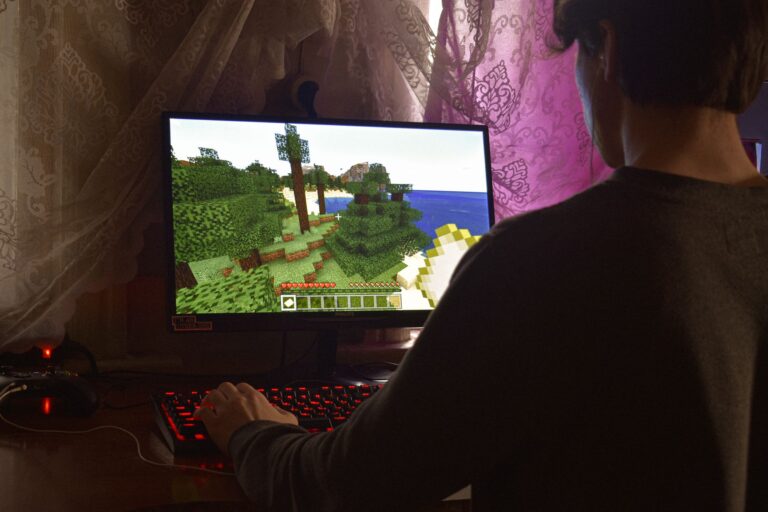
Minecraft stands as one of the most influential video games ever created, fundamentally transforming how developers approach open-ended gameplay and player creativity. Since its initial release in 2009, the game has sold over 300 million copies across all platforms, making it the best-selling video game of all time. The title’s impact extends far beyond commercial success, establishing an entirely new paradigm for sandbox games—titles that prioritize player agency and environmental manipulation over predetermined narratives.
Understanding Sandbox Game Design Before Minecraft
Sandbox games, also called sandboxes or open-world games, grant players freedom to interact with game environments in largely unstructured ways rather than following a linear progression through predetermined objectives. These games typically feature expansive virtual worlds where players can modify terrain, build structures, and pursue goals according to their own preferences rather than developer-mandated storylines. The term “sandbox” itself comes from the analogy of a child’s sandbox—a space where rules are minimal and creativity drives engagement.
Before Minecraft achieved mainstream prominence, several titles had established foundational sandbox mechanics. The Sims, released by Maxis in 2000, allowed players to construct homes and manage virtual households with significant creative freedom. Grand Theft Auto III, launched in 2001, pioneered open-world design in action games, enabling players to explore sprawling urban environments and complete missions in various orders. However, these games still operated within developer-defined constraints regarding what players could build and accomplish.
Markus Persson and the Birth of Minecraft
Swedish programmer Markus Persson, known professionally as Notch, created Minecraft as an independent project beginning in 2009. Persson drew inspiration from several sources, including Infiniminer—a voxel-based mining game released in 2009—and Dwarf Fortress, a complex simulation game known for its emergent gameplay and player-generated stories. Persson released an early version of Minecraft on May 17, 2009, initially calling it “Cave Game,” and the project quickly gained attention within indie gaming communities due to its unique block-based aesthetic and creative possibilities.
The game’s core mechanic centered on voxels—three-dimensional pixels that form the building blocks of the entire world. Players could break down these blocks and reassemble them to construct virtually anything they imagined. This deceptively simple system created extraordinary creative potential, and word-of-mouth adoption grew rapidly throughout 2009 and 2010 as players shared their creations online.
Defining Creative and Survival Modes
Minecraft’s design brilliance emerged partly through its multiple gameplay modes, each serving different player preferences and playstyles. Creative Mode, introduced early in development, provided unlimited resources and the ability to fly, allowing players to focus entirely on construction and artistic expression without resource management concerns. Survival Mode, the game’s primary experience, required players to gather resources, craft tools and weapons, manage hunger, and defend against hostile creatures called mobs—Mobile entities that move and interact with the environment.
This dual-mode approach proved revolutionary because it acknowledged that players enjoyed fundamentally different experiences within the same game world. A player interested purely in architectural design could build elaborate structures in Creative Mode, while another player might spend hundreds of hours in Survival Mode, establishing farms, mines, and elaborate bases. The flexibility meant Minecraft could appeal to casual builders, hardcore survival enthusiasts, and everyone between these extremes.
The Microsoft Acquisition and Global Expansion
Microsoft purchased Minecraft and Mojang Studios—the company Persson had founded to develop the game—in September 2014 for approximately $2.5 billion, representing one of gaming’s largest acquisition deals at that time. Despite concerns from the community about corporate ownership affecting the game’s creative spirit, Microsoft maintained Minecraft’s core design philosophy while expanding its reach across platforms. The company released versions for Xbox consoles, PlayStation systems, Nintendo Switch, mobile devices, and virtual reality platforms, making Minecraft accessible to audiences far beyond PC gamers.
This multi-platform strategy proved transformative for gaming accessibility. Minecraft became a cultural phenomenon, particularly among younger players and in educational settings. Teachers began incorporating Minecraft into classrooms to teach subjects ranging from mathematics and physics to history and environmental science, with Microsoft even releasing Minecraft: Education Edition specifically designed for classroom use.
Redefinition of Player-Generated Content and Modding
Minecraft’s impact on sandbox game design fundamentally stemmed from how thoroughly it empowered player creativity and community contribution. The game’s modding community—players who create modifications adding new features, items, and gameplay mechanics—became integral to the experience, with platforms like CurseForge hosting hundreds of thousands of mods. This wasn’t accidental; Minecraft’s relatively simple code architecture and Mojang’s permissive stance toward modifications created an environment where technical players could extend the game’s possibilities indefinitely.
Total Conversion mods transformed Minecraft into entirely different games, including fantasy adventures, space exploration simulators, and horror experiences. The Pixelmon mod added Pokémon creatures and mechanics, while Industrialcraft introduced complex machinery and automation systems. These community creations demonstrated that Minecraft functioned as a platform for creativity rather than merely a finished product, extending the game’s relevance across decades.
Influence on Subsequent Sandbox Game Development
Minecraft’s commercial and critical success prompted numerous developers to create sandbox titles, though few achieved comparable impact. Games like Terraria (2011), a two-dimensional sandbox with mining and crafting mechanics, found its own substantial audience by adapting Minecraft’s core formula to a different visual style and gameplay emphasis. No Man’s Sky (2016) attempted to merge sandbox exploration with procedurally generated—automatically created using mathematical algorithms—infinite universes, though its launch faced significant criticism before substantial post-release improvements.
Valheim, released in early access in 2021, demonstrated that sandbox design principles remained viable and popular years after Minecraft’s ascendance. These titles all incorporated Minecraft’s fundamental insight: providing players with tools to modify environments and create their own objectives generates engagement more powerful than developer-designed questlines alone. Sandbox games became an established genre rather than a novelty, with major publishers investing in titles emphasizing player agency and creative freedom.
Frequently Asked Questions
What exactly is a voxel, and why does it matter for Minecraft?
A voxel is a three-dimensional pixel—the smallest unit of space in Minecraft’s world. Every block in the game represents a single voxel, and this standardized, cubic structure enables the game’s core mechanic of breaking and placing blocks to create structures. The voxel-based system also simplifies collision detection and rendering, making the game run efficiently across diverse hardware.
How does Minecraft’s creative freedom compare to other sandbox games?
Minecraft offers arguably the most unrestricted creative sandbox available, with minimal gameplay systems constraining player building in Creative Mode. While games like The Sims and Grand Theft Auto include creative elements, they operate within stricter thematic and mechanical boundaries. Minecraft’s blocky aesthetic and absence of “correct” ways to use materials mean virtually any imaginable structure can be constructed.
Why did Microsoft’s acquisition not damage Minecraft’s popularity?
Microsoft preserved Minecraft’s design philosophy, continued platform expansion, and maintained community trust by avoiding aggressive monetization or narrative changes. The company invested in education and cross-platform accessibility rather than attempting to fundamentally alter the game’s identity. This approach contrasted with acquisitions that sometimes alienated communities through unwanted changes.
Minecraft’s journey from an independent project to a cultural phenomenon illustrates how player agency and creative freedom can generate engagement surpassing traditional game design approaches. The title’s influence reshaped sandbox game development, establishing a template where player-driven experiences and environmental manipulation form the foundation of gameplay rather than supporting elements. Developers across the industry continue studying Minecraft’s design principles to understand how systems enabling creative expression create lasting, multi-generational appeal.
