
Key takeaways
- Jetpack Cat represents a design philosophy shift at Blizzard that took nearly a decade to realize.
- The removal of “2” from Overwatch’s title carries symbolic weight beyond marketing.
- Players across forums and social media describe Jetpack Cat as “pure chaos,” highlighting her transformative impact on team strategies and map control.
- Jetpack Cat’s journey from “too absurd” concept to live hero reflects broader shifts in how Blizzard approaches hero design.
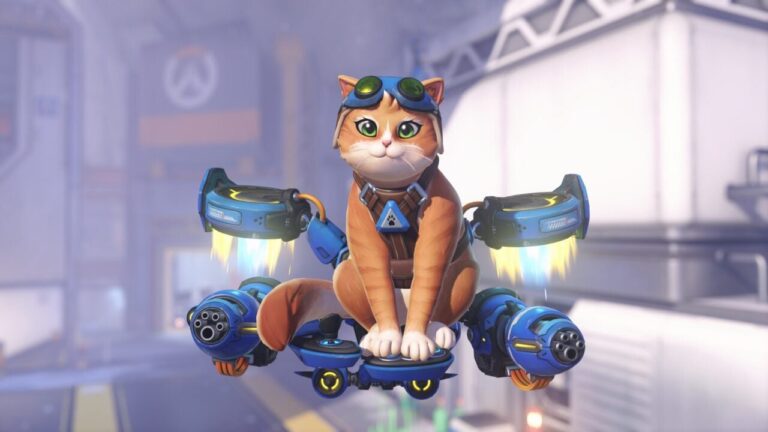
Blizzard officially dropped the “2” from Overwatch 2 and launched Season 1: Conquest on February 10, 2026, introducing Jetpack Cat (Fika), the 49th hero in the franchise and a support character capable of permanent flight, healing, and transporting teammates across maps. The rebranding marks the start of a year-long storyline called The Reign of Talon and the largest single-season hero influx since the game’s debut. Five new heroes launched simultaneously, with ten total confirmed for 2026, signaling a transformative moment for the competitive shooter.
A Flying Feline Finally Takes Flight
Jetpack Cat represents a design philosophy shift at Blizzard that took nearly a decade to realize. The studio previously considered the character “too absurd for Overwatch,” but after ten years of development, the flying feline evolved into a plausible and innovative support hero. Her introduction alongside five other new heroes—Domina (Tank), Anran and Emre (Damage), and Mizuki (Support)—signals confidence in experimental character design that prioritizes gameplay impact over traditional design constraints.
Jetpack Cat’s kit fundamentally redefines support mobility in Overwatch. As the first hero capable of tethering to teammates and transporting them across the map, she becomes the third animal character after Winston and Wrecking Ball. Her primary fire, Biotic Pawjectiles, heals allies while damaging enemies, combining support and offensive utility in a single mechanic. Her ultimate ability, Catnapper, allows her to dive onto enemies, knock them down, and tether to the nearest foe, while a secondary mode called Lifeline transports teammates across terrain and obstacles.
A Rebranding That Reflects Competitive Evolution
The removal of “2” from Overwatch’s title carries symbolic weight beyond marketing. It signals Blizzard’s commitment to treating the game as a living, evolving entity rather than a numbered sequel awaiting replacement. The launch of Season 1: Conquest establishes a narrative framework—The Reign of Talon—that will unfold across the entire 2026 calendar, creating stakes beyond balance patches and cosmetic releases.
The scale of hero releases underscores this shift. Blizzard’s plan to add ten new heroes throughout 2026, with five launching immediately and one arriving each subsequent season, represents the largest hero influx in franchise history. This cadence forces the development team to maintain rigorous design discipline while pushing creative boundaries. Jetpack Cat’s approval after years of development suggests Blizzard now views “absurdity” as a feature rather than a liability, provided the mechanic serves gameplay innovation.
Community Embraces Chaos, Developers Balance Power
Players across forums and social media describe Jetpack Cat as “pure chaos,” highlighting her transformative impact on team strategies and map control. The ability to silently carry allies—including heroes like Bastion—over roofs and deposit them behind enemy lines creates asymmetrical advantages that fundamentally alter how teams approach positioning and rotations. Competitive players recognize her potential to redefine support’s role in the meta.
Blizzard responded to early feedback by implementing mid-season nerfs to Jetpack Cat’s perks, removing one entirely and reducing shielding duration. These adjustments aim to calibrate her high mobility and team-warping potential without gutting the character’s core identity. The quick balance response demonstrates the studio’s willingness to iterate aggressively on new heroes, prioritizing long-term health over launch-window power levels.
A Decade of Development Justifies the Wait
Jetpack Cat’s journey from “too absurd” concept to live hero reflects broader shifts in how Blizzard approaches hero design. The ten-year development cycle suggests the character underwent multiple iterations, mechanical refinements, and philosophical recalibrations before reaching a state the studio deemed ready for competitive play. Her eventual release validates a patient approach to innovation, even when that innovation initially seemed incongruous with the game’s established tone.
The character joins an expanding roster of animal heroes that humanize Overwatch’s world. Winston and Wrecking Ball established precedent for non-human protagonists, but Jetpack Cat pushes further by combining animal identity with support-specific mechanics that feel thematically cohesive. Her voice acting, performed by Purr-Forming The Meows, a legendary performer known for cat vocalizations, reinforces her playful, chaotic identity while maintaining professional voice direction standards.
What Comes Next for Overwatch’s Expanded Roster
The calendar through 2026 guarantees sustained content delivery, with five additional heroes arriving after the initial launch quintet. Each seasonal release will integrate into The Reign of Talon narrative arc, suggesting story beats will unfold alongside mechanical additions. Competitive players face the challenge of absorbing five new heroes simultaneously while preparing for five more across the year, fundamentally reshaping the meta landscape.
Jetpack Cat’s success or failure in competitive environments will determine how aggressively Blizzard pursues similarly experimental designs. If the community embraces her chaotic mobility as a positive gameplay addition, expect future heroes to push boundaries further. If balance issues persist despite nerfs, the studio may recalibrate its approach to support innovation. Either way, Overwatch’s rebranding and 2026 hero roadmap signal a franchise confident in its direction and willing to challenge player expectations about what support heroes can accomplish on the battlefield.
