
Key takeaways
- The Steam Machine runs on a semi-custom AMD Zen 4 CPU with 6 cores and 12 threads paired with an RDNA 3 GPU featuring 28 compute units, all running SteamOS 3 on an Arch-based operating system.
- The Steam Machine’s journey to market was complicated by global component shortages, with the launch delayed from early 2026 to June 29, 2026 due to RAM and SSD scarcity driven by AI data center demand.
- Valve attempted to address developer concerns by announcing a streamlined verification process for the Steam Machine.
- The 2026 Steam Machine launch arrives eleven years after Valve’s first attempt at the same concept.
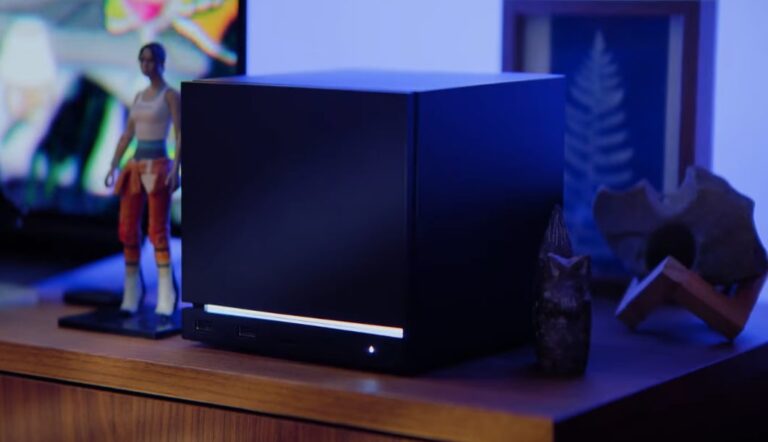
Valve officially announced the Steam Machine on November 12, 2025, with a confirmed release date of June 29, 2026, marking the company’s second attempt at a living-room PC that will compete directly with PlayStation and Xbox consoles. The device arrives with a starting price of $1,049 for the 512 GB model, positioning it $400–$450 higher than the base PS5 or Xbox Series X. Industry veterans are already questioning whether Valve’s latest hardware push represents genuine innovation or a costly step backward for PC gaming in the living room.
Valve’s Semi-Custom Hardware Falls Short Against PlayStation Power
The Steam Machine runs on a semi-custom AMD Zen 4 CPU with 6 cores and 12 threads paired with an RDNA 3 GPU featuring 28 compute units, all running SteamOS 3 on an Arch-based operating system. This hardware configuration immediately drew criticism from performance analysts, who noted that the device’s GPU setup trails significantly behind competing consoles. Digital Foundry testing revealed that in raw gaming performance, the PS5 Pro’s 60 compute unit GPU vastly outpaces the Steam Machine’s 28 compute unit setup, with PlayStation delivering measurably superior frame rates in optimized titles.
Specific benchmark data underscores the performance gap. Black Myth: Wukong averaged 9 percent higher frame rates on PlayStation, while Crimson Desert—a highly anticipated upcoming release—ran 17 percent better on the PS5 Pro compared to the Steam Machine. IGN awarded the device an 8/10 review score, calling it “the finest living room PC” but acknowledging it falls short in power compared to base consoles. The pricing structure compounds these concerns: the 2 TB version with a Steam Controller pushes past $1,400, placing the device firmly in mid-range PC territory rather than as a competitive console alternative.
Supply Chain Constraints and Library Gaps Create Launch Headwinds
The Steam Machine’s journey to market was complicated by global component shortages, with the launch delayed from early 2026 to June 29, 2026 due to RAM and SSD scarcity driven by AI data center demand. This supply constraint directly contributed to the aggressive pricing, as Valve implemented a raffle-based ordering system to prevent scalping while managing limited inventory. The company acknowledged that estimated costs of $450–$600 during development ballooned to $1,049 due to component availability and pricing pressures.
Software compatibility presents another significant barrier to mainstream adoption. While Valve confirmed that most of the Steam library is covered by the Proton compatibility layer—the same technology powering the Steam Deck—anti-cheat software in online games continues to cause issues on Linux. Major titles like GTA 6 will not be available on the Steam Machine at launch, restricting the device’s utility for competitive gamers and those anticipating next-generation blockbuster exclusives. This limitation directly contradicts the device’s positioning as a console replacement, particularly for players accustomed to the PS5 Pro’s access to the full PlayStation and PlayStation 4 library at launch.
Developer Verification Strategy Aims to Streamline Adoption
Valve attempted to address developer concerns by announcing a streamlined verification process for the Steam Machine. The company stated that titles verified on the Steam Deck will automatically qualify for Steam Machine verification, with fewer constraints than the Deck’s requirements. Yang, speaking for Valve, emphasized that “if your title is Verified on Steam Deck, it will be Verified on Steam Machine,” positioning the new hardware as a natural extension of the existing Steam Deck ecosystem rather than a separate platform requiring additional optimization work.
This strategy represents Valve’s attempt to leverage its successful Steam Deck launch—estimated at 4 million units sold with some sources citing 6 million shipments across three years—to accelerate software availability on the new platform. Steam’s massive user base of 33 million peak concurrent users worldwide in 2023 provides a potential customer pool, though the $1,049 entry price may limit mainstream adoption compared to the Deck’s more accessible price point. Industry observers note that the verification strategy is fundamentally sound, but cannot overcome the hardware performance deficit or the absence of day-one blockbuster titles.
Learning—or Repeating—the Lessons of 2015
The 2026 Steam Machine launch arrives eleven years after Valve’s first attempt at the same concept. The original Steam Machine family, released November 10, 2015, was discontinued by April 2, 2018, after failing to gain traction due to limited compatible games on the original SteamOS and widespread consumer confusion about the Linux-based system. While SteamOS 3 is vastly improved compared to its predecessor, the current device’s high price point and hardware limitations echo the criticisms that derailed the first iteration.
The comparison raises questions about whether Valve has truly addressed the fundamental challenges that plagued its 2015 effort. The original platform suffered from a perception gap—consumers did not understand what a “living room PC” offered compared to traditional consoles. Today, despite better software compatibility and brand recognition from the Steam Deck, the Steam Machine faces a different but equally formidable obstacle: a price-to-performance ratio that does not justify the premium over established console alternatives.
The PC-Plus Positioning Creates Both Opportunity and Risk
The Verge described the Steam Machine as a “PC-plus” that functions as a PC behaving more like a console, with capabilities including web browsing, app downloads, and email access via desktop mode—features unavailable on PlayStation or Xbox. This distinction represents the device’s primary selling point for users seeking the freedom of a full Linux desktop environment alongside gaming. However, for the average gamer prioritizing streamlined performance and exclusive content, industry analysts argue the PS5 Pro remains the superior answer.
The Steam Machine’s June 29, 2026 release will occur alongside the second-generation Steam Controller and the new Steam Frame VR headset, suggesting Valve is positioning the device as the centerpiece of an expanded PC gaming ecosystem. Whether this broader hardware strategy overcomes the performance and pricing concerns remains the defining question as launch approaches. The device arrives at a moment when console gaming has never been more established, and when high-end gaming PCs offer better performance at comparable price points, creating an uncertain market position for Valve’s new hardware.
