
Key takeaways
- Pragmata's developers animated Diana's hair with nearly 500,000 animation points using Capcom's RE Engine, creating a technically demanding character model.
- The team considered giving Diana a bob cut during concept development to reduce rendering strain across different platforms.
- Capcom chose to preserve Diana's flowing hair to maintain her visual identity and convey the unique aesthetic of life on the Moon.
- Pragmata's April 2025 launch achieved critical acclaim and solid sales, validating the decision to prioritize artistic vision over technical optimization.
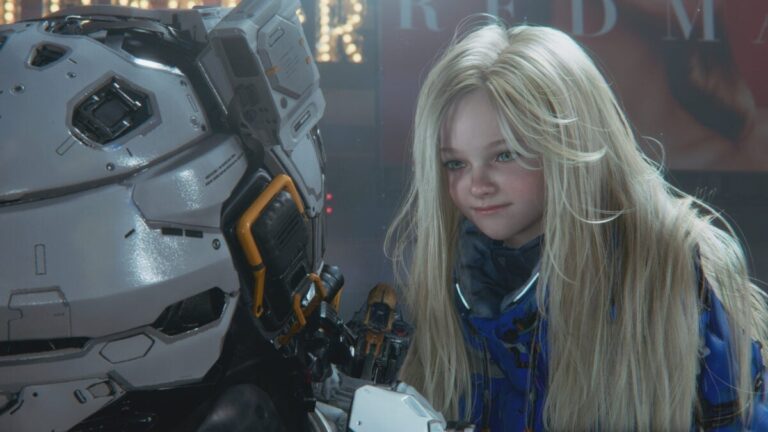
When Pragmata arrived in April 2025, the space-exploration adventure demonstrated that original concepts could still capture audiences in an era dominated by established franchises and sequels. The game, developed by Capcom, sent players and critics into a lunar odyssey with protagonists Hugh, a suited engineer, and Diana, a child-like android companion. What set Pragmata apart technically wasn’t just its old-school scope or commitment to immersive environments—it was the painstaking attention to detail lavished on one of its most visible elements: Diana’s cascading hair.
The Rendering Challenge
Half a Million Animation Points
Diana’s flowing hair presented a technical mountain to climb. The development team employed Capcom’s RE Engine to animate nearly half a million individual animation points to capture every strand’s movement and behavior. The sheer density of calculation required to execute this level of detail meant Diana’s hair wasn’t merely a cosmetic feature—it became a critical test of what the RE Engine could accomplish across multiple platforms with varying hardware specifications.
Low-Gravity Physics Complications
The challenge intensified because Diana spends the entire game riding piggyback on Hugh while exploring lunar environments. In zero or low-gravity conditions, realistic hair physics demanded constant recalculation and rendering as the two characters moved through action sequences and exploration phases. The hair required responsive, believable animation in every frame, making it simultaneously the most demanding and most visible element of Diana’s character model.
Platform Scalability Concerns
Maintaining consistent performance while rendering such complex hair animation across simultaneous platform releases created genuine optimization pressure. Development teams typically face hard choices when similar specs can’t guarantee identical visual fidelity everywhere, forcing decisions about which elements to prioritize or simplify.
Exploring the Shortcut
The Bob Cut Proposal
As early as the initial concept art phase, Capcom’s developers recognized the strain Diana’s hair could impose on system resources. At that stage, the most straightforward solution presented itself: simplify her hairstyle. A bob cut or other shorter, more styled appearance would dramatically reduce animation points required, lower GPU overhead, and streamline development across platforms. The team created and evaluated several alternative designs showing how Diana might look with significantly shorter hair configurations.
CEDEC Presentation and Deliberation
The internal debate became substantial enough that developers discussed it publicly during a presentation at this year’s CEDEC (Computer Entertainment Developers Conference). The presentation showcased various shortened and styled hair options that designers had explored as viable compromises. These weren’t throwaway concepts—they represented genuine development hours spent considering whether the performance trade-off justified the visual sacrifice.
The Vision Won Out
Ultimately, Capcom’s team rejected the efficiency-focused route. The developers concluded that Diana’s distinctive appearance, specifically her overflowing hair, was essential to conveying her character identity and the unique atmosphere of life on the Moon. The lengthy locks became inseparable from her design language and the emotional connection players would form with this android companion. Rather than treating the hair as a technical liability to minimize, the studio doubled down on making it work—demonstrating confidence in both the RE Engine’s capabilities and their own optimization skills.
This decision reflected a larger creative philosophy: visual distinctiveness and character authenticity mattered more than shaving cycles off processing requirements. The extra rendering workload didn’t derail the project or compromise Pragmata’s multiplatform release, suggesting the team found adequate optimization margins elsewhere or managed system demands effectively enough that the hair remained sustainable.
Commercial and Critical Success
Pragmata’s April 2025 launch proved the gamble paid dividends. The title achieved respectable sales figures and garnered critical praise in an environment where even established franchise entries frequently disappoint commercially. The game demonstrated that publishers willing to invest in original intellectual property, backed by solid technical execution and artistic vision, could still succeed against the industry’s gravitational pull toward remakes and sequels. Capcom’s willingness to champion an unconventional sci-fi adventure with a unique visual identity contributed to that success.
What Pragmata Represents
The decision about Diana’s hair illustrates a fundamental tension in modern game development: balancing technical constraints against artistic vision. Every detail that makes a character memorable carries implementation costs. Most optimization discussions happen invisibly, with players never knowing which visual flourishes required developers to push hardware limits or reorganize entire rendering pipelines.
Capcom’s choice to preserve Diana’s hair revealed confidence in the RE Engine’s flexibility and the studio’s ability to solve problems creatively rather than through reductive simplification. It also reflected current industry capacity—the engine proved capable of delivering the hair animation without forcing compromises elsewhere in Pragmata’s presentation. This stands in contrast to situations where developers must make painful sacrifices to meet shipping deadlines or hardware limitations.
The hair ultimately became more than an animation challenge; it became a symbol of Pragmata’s commitment to detail and character authenticity in a landscape increasingly fragmented between blockbuster sequels and indie minimalism.
Frequently Asked Questions
When did Pragmata launch and how was it received?
Pragmata launched in April 2025 and impressed critics, players, and achieved respectable sales figures, standing out as a successful original IP in a market dominated by sequels and remakes.
How many animation points were used to render Diana's hair?
Nearly half a million animation points were required to animate Diana's individual hair strands using Capcom's RE Engine, making it a significant technical undertaking.
Why did developers consider simplifying Diana's hairstyle?
The team explored giving Diana a bob cut or other shorter styles as a cost-cutting measure to reduce rendering strain and optimize performance across multiple platforms during simultaneous development.
