
Key takeaways
- Robert Downey Jr. returns to the MCU as Doctor Doom in Avengers: Doomsday, marking his first significant role since departing the Iron Man franchise after nearly 20 years.
- D23 footage revealed Doom as a multiversal threat who shocked even Mr. Fantastic with the extent of his transformation and power.
- The casting raises persistent questions about whether Downey Jr. will remain masked throughout the film, potentially undermining the value of his star power.
- Avengers: Doomsday arrives December 18 and leads directly into Avengers: Secret Wars on December 17, 2027, establishing Doom as the MCU's central antagonist for the next phase.
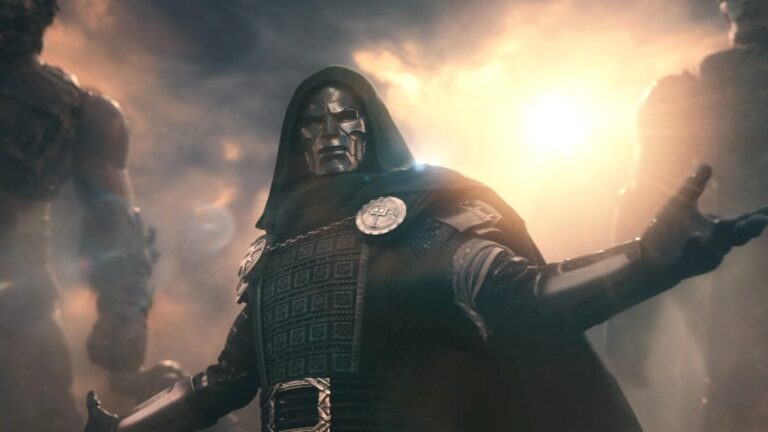
At tonight’s D23 presentation, Marvel Studios delivered one of its most significant reveals yet: an extended look at Robert Downey Jr. as Doctor Doom in Avengers: Doomsday. The footage marked the most substantial examination of the character to date, positioning Downey Jr.’s return to the MCU as its centerpiece following his near-retirement from the Iron Man role.
The D23 Showcase: What We Learned About Doom
The presentation distributed considerable screen time to Downey Jr.’s portrayal of the Latverian despot, demonstrating the scale of his power and the rationale behind his villainy. Rather than keeping the character shrouded in mystery, Marvel’s marketing strategy chose to reveal Doom in action, giving audiences their clearest window into the film’s core conflict.
What became apparent from the trailer is that Doom operates as a multiversal threat rather than a simple regional antagonist. This expansion of his scope mirrors recent trends in MCU storytelling, where conflicts have increasingly transcended single universes and timelines. The villain’s threat level extends far beyond traditional conquest or power accumulation, suggesting the film will explore consequences across multiple realities.
The Fantastic Four Confront a Changed Enemy
Mr. Fantastic’s Surprising Reaction
The Fantastic Four appear prominently in the trailer, functioning as exposition devices who brief the broader MCU roster on Doom’s identity and capabilities. Notably, Mr. Fantastic—traditionally Doom’s arch-nemesis in most comic book interpretations—expresses genuine shock at the extent of Doom’s transformation and the lengths he has gone to in his quest for power. This surprise from someone who has confronted Victor Von Doom repeatedly suggests the character has undergone significant change, indicating the MCU may be reframing their fundamental relationship.
Setting Up the Larger Conflict
By having the Fantastic Four explain Doom to the broader Avengers team, Marvel establishes these characters as essential to defeating him. They understand his motivations and weaknesses in ways that Iron Man, Thor, or Captain America cannot. The Fantastic Four serve as the narrative bridge between Doom’s personal history and the multiversal stakes at play, positioning the First Family as indispensable to the coming conflict.

The Mystery of Downey Jr.’s Mask
Will Audiences Ever See His Face?
One of the most pressing questions surrounding this casting involves Downey Jr.’s actual screen presence. Throughout the D23 footage, Doom appears heavily masked—whether the character remains masked throughout the entire film remains unclear. This raises a genuinely perplexing issue: if Downey Jr. spends Avengers: Doomsday hidden behind Victor Von Doom’s iconic armor and mask, his casting becomes functionally irrelevant from an audience perspective.
The irony is striking. Downey Jr. essentially retired from his Iron Man role after nearly two decades of MCU prominence, culminating in Avengers: Endgame in 2019. His return as another iconic character sparked significant fan excitement. Yet if the studio keeps him concealed throughout the film, much of that casting value evaporates. The decision would suggest that Marvel valued the symbolic return over the actual performance.
Nostalgia as a Marketing Engine
Marvel Studios appears to be banking on recognition value and emotional resonance rather than fresh storytelling angles. The Downey Jr. casting functions as a nostalgia magnet—a reminder of when the MCU was in its cultural prime, before the Infinity Saga’s conclusion. By bringing him back, even as a different character, the studio taps into a proven audience draw.
However, if Downey Jr.’s face remains hidden for the majority of runtime, it signals that the casting decision was primarily a marketing strategy rather than substantive casting for performance or character depth. The move has been characterized as the MCU equivalent of breaking glass in case of emergency: a high-impact intervention designed to stabilize perception after a period of mixed reception and audience exhaustion.
The Tony Stark-Doctor Doom Duality Question
Perhaps the most fascinating question raised by this trailer involves whether Avengers: Doomsday will acknowledge that both Tony Stark and Doctor Doom are portrayed by the same actor. In a traditional continuity, the MCU would require some form of recognition if audiences spent two decades watching Downey Jr. as Stark, only to suddenly encounter him as a new character. The multiverse provides convenient justification—characters could mistake Doom for Stark, or they could exist as different variants across universes.
Yet the source material provides no definitive answer. Marvel could treat the casting as pure coincidence within the narrative. They could also treat it as deliberate—a knowing wink to audiences who have invested nearly 20 years in watching Downey Jr. evolve as the MCU’s anchor character. For fans who dropped off after Endgame, this casting might serve as a hook to return. For longtime viewers, it represents the studio’s willingness to recycle previous star power in new roles.
Timeline and the Multiversal Path Forward
Avengers: Doomsday arrives in theaters on December 18, positioning itself as the entry point into Marvel’s next major saga. The film will lead directly into the events of Avengers: Secret Wars, scheduled to premiere a year later on December 17, 2027. This back-to-back structure emphasizes that Doom’s introduction and his conflict with the Avengers will set the foundation for the multiversal saga that follows.
The strategic timing suggests Marvel is committing seriously to Doom as the MCU’s primary antagonist for the next phase. Unlike previous villain-focused films, Avengers: Doomsday appears designed specifically to elevate Doom as a threat worthy of commanding two films and establishing the thematic foundation for where the MCU goes next. Whether this strategy succeeds depends partly on the quality of the film itself, but also on whether audiences are willing to reinvest in the MCU’s vision.
Frequently Asked Questions
What did the D23 presentation reveal about Doctor Doom in Avengers: Doomsday?
The presentation showed extended footage of Robert Downey Jr. as Doctor Doom operating as a multiversal threat. The Fantastic Four brief the Avengers on Doom's identity and capabilities, with Mr. Fantastic expressing shock at the extent of his transformation and the lengths he has gone to in his quest for power.
Will audiences see Robert Downey Jr.'s face in Avengers: Doomsday?
It remains unclear from the D23 footage. Doom appears heavily masked throughout the trailer, raising questions about whether Downey Jr. remains concealed throughout the entire film, which could undermine the significance of his high-profile casting.
How does Avengers: Doomsday connect to the broader MCU timeline?
Avengers: Doomsday releases December 18 and leads directly into Avengers: Secret Wars, scheduled for December 17, 2027. Doom's introduction and his conflict with the Avengers will set the foundation for the multiversal saga that follows in the MCU.
