
Key takeaways
- Cregger's Resident Evil opened at $60 million domestically and set records for both the director and the franchise, despite dividing the fan community.
- The film prioritizes the gameplay experience of Resident Evil over story fidelity, following an ordinary citizen rather than the S.T.A.R.S. team.
- A viral video from Marcus Theatres in O'Fallon, Missouri recreated the original PlayStation game's mechanics and aesthetic with assistant manager Isaac Etter.
- Director scrutiny from gamers may affect Capcom's sequel plans, potentially limiting Cregger's involvement with the franchise to a single installment.
Zach Cregger’s Resident Evil adaptation has crossed the $60 million mark at the domestic box office in its opening weekend, establishing itself as a record-breaker for both the director and the franchise. The film’s commercial triumph, however, comes alongside a sharply divided reception from the gaming community, with longtime fans expressing frustration over the movie’s departure from the source material’s established canon.
The Divergence from Canon
Rather than chronicling the exploits of S.T.A.R.S., the elite task force that serves as the franchise’s backbone, Cregger’s film centers on an ordinary citizen caught in the collapse of Raccoon City. This narrative choice—prioritizing the experience of inhabiting the game’s world over fidelity to its story—has proven contentious among hardcore enthusiasts who expected a more direct translation of the games’ plot and characters.
The disconnect between what fans wanted and what Cregger delivered has created a rift in reception. While critics have engaged with the film on its own terms, players of the original games have struggled with the film’s positioning itself as an adaptation of gameplay experience rather than a retelling of the Raccoon City incident itself.
Director’s Momentum and Previous Success
Before stepping into Raccoon City, Cregger had already cemented his standing in horror cinema. His 2025 film Weapons, a horror feature released prior to Resident Evil, earned an Oscar win, giving the director significant momentum heading into what would become one of his most high-profile assignments.
The commercial success of Resident Evil—hitting $60 million domestically in its opening weekend—extends Cregger’s winning streak and positions him as a commercially viable voice in the horror space. For a director, such a result typically opens doors to sequels and expanded opportunities within franchises.
The Fan Divide
Box Office Success Versus Community Approval
The contradiction between commercial success and fan approval has become increasingly apparent as the film’s opening weekend performance has been tallied. Despite resistance from longtime devotees of the series and the picture carrying an R rating, the movie has drawn audiences in significant numbers.
This gap between box office performance and enthusiast satisfaction raises questions about the film’s lasting impact on the franchise. Gaming communities have made their reservations known, though their volume has not translated into box office resistance.
Director’s Reaction to Criticism
Cregger himself appears to have felt the weight of gamer scrutiny in the lead-up to release. The director’s reaction to criticism from the gaming community may have affected his willingness to return for a potential sequel, potentially closing the door on his involvement with Raccoon City beyond this single installment.
Creative Theater Marketing Response
The Video Concept
While the film itself has proven divisive, one Missouri theater chain decided to lean into the franchise’s gaming roots with a tongue-in-cheek marketing response. Marcus Theatres’ O’Fallon, Missouri location produced a short video that faithfully recreated the aesthetic and mechanics of the original PlayStation Resident Evil game.
Execution and Details
Assistant manager Isaac Etter starred in the clip as a Jill Valentine stand-in, navigating the theater’s concessions area and corridors using the fixed camera angles and inventory mechanics characteristic of the classic game. The video sees Etter collecting a Resident Evil-branded popcorn bucket—merchandise available at the theater during the film’s run—and slot it into an on-screen inventory grid in the style of the 1998 original.
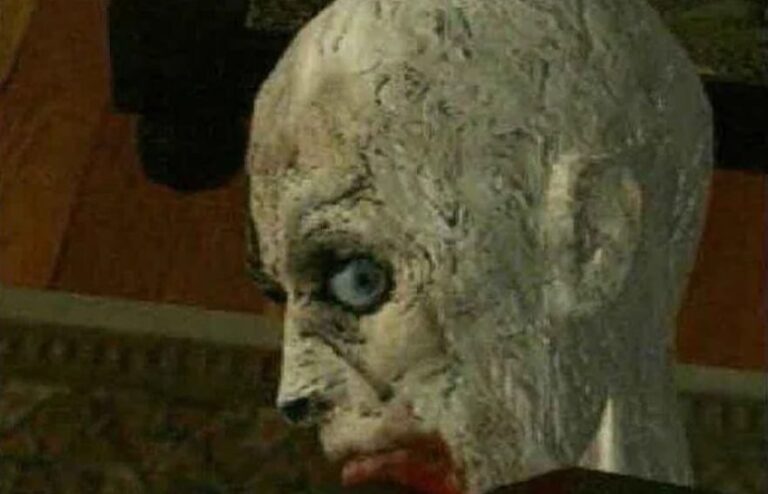
The creative execution extends to environmental details: Etter must avoid “dazed ghouls” represented by coworkers in the concessions area, proceeds to “Cinema 14” with its own animated door cutaway sequence, and eventually encounters the infamous “turn around zombie” hunched over spilled snacks on the carpet.
Theater’s Official Statement
Marcus Theatres issued a statement explaining the video’s origins: “We prioritize tapping into the talent of our associates by encouraging them to create innovative and original content at their respective locations. [Isaac Etter] came up with the brilliant idea to create this video, emulating the humor and fun of the original video game.” The theater chain framed the production as an outlet for employee creativity rather than a top-down corporate mandate.
What the Video Reveals About Adaptation
The Marcus Theatres video succeeded in what the Cregger film itself attempts: translating the interactive experience of playing Resident Evil into a different medium. By embracing the game’s mechanical language—fixed camera angles, item collection, navigation between fixed spaces—the theater staff created a piece of fan service that acknowledged what longtime players value about the original title.
The video’s approach contrasts with the film’s strategy. While Cregger chose narrative divergence to avoid direct comparison to beloved source material, the theater’s brief recreation doubled down on the mechanical and visual DNA of the 1998 game. The audience response to both pieces offers insight into what players seek from Resident Evil in different contexts.
The Sequel Question
The blockbuster opening weekend for Cregger’s Resident Evil typically guarantees sequels in modern franchise management. However, the director’s apparent souring from extended exposure to gamer criticism may complicate Capcom’s sequel plans.
If the publisher opts to move forward with another Resident Evil film and seeks a more accuracy-focused creative vision, the talent pool becomes more limited. The viral success of the Marcus Theatres video has given one O’Fallon-based assistant manager unexpected visibility—though his theater career path likely differs from directorial opportunities in major studio filmmaking.
The broader question remains: can a Resident Evil film exist that satisfies both critical appraisal and gaming community expectations, or are those two constituencies destined to remain at odds?
Frequently Asked Questions
How much did Cregger's Resident Evil make in its opening weekend?
The film opened at $60 million domestically and set box office records for both director Zach Cregger and the Resident Evil franchise.
Why are longtime Resident Evil fans criticizing the movie?
Fans are divided because the film diverges from game canon by following an ordinary citizen during Raccoon City's collapse rather than the S.T.A.R.S. team, prioritizing gameplay experience over story accuracy.
What did the Marcus Theatres viral video recreate?
The O'Fallon, Missouri theater created a video starring assistant manager Isaac Etter as a Jill Valentine stand-in, using fixed camera angles and inventory mechanics from the original PlayStation game while collecting a Resident Evil-branded popcorn bucket.
