

Key takeaways
- Zach Cregger's Resident Evil earns 96 on Rotten Tomatoes by capturing the spirit of the games rather than recreating them precisely.
- The film succeeds through gameplay-inspired structure, spatial awareness, and Austin Abrams' performance as medical courier Bryan navigating a zombie outbreak.
- Some critics note second-act pacing issues and tonal shifts that undermine the opening's tension, though the film largely avoids the pitfalls of previous game adaptations.
- Cregger trimmed jokes after test audience feedback, prioritizing focus over comedy in the final theatrical cut.
Zach Cregger’s take on Resident Evil arrives in theaters on September 18 to immediate critical acclaim. The horror film currently holds a 96 on Rotten Tomatoes, with reviewers broadly praising Cregger’s approach: instead of meticulously recreating the minutiae of Capcom’s video game franchise, the director crafted an adaptation that channels the spirit and sensibility of the games themselves. For a filmmaker best known for Barbarians and Weapons, this represents a successful navigation of one of gaming’s most distinctive properties.
A Fresh Take on Horror Gaming
Critics have settled quickly on what makes Cregger’s film distinct from previous Resident Evil adaptations. Rather than attempt a point-by-point reproduction of game mechanics or plot details, the film treats its source material as a tonal and thematic blueprint. David Ehrlich, writing for IndieWire, captured the prevailing sentiment: “This is I.P. cinema with vision and verve… This is how movies and video games can merge in a way that makes them stronger for sharing their DNA rather than disfiguring them both.” The adaptation succeeds not by copying what the games do, but by understanding why they work.
Capturing Game Spirit Without Slavish Recreation
The decision to prioritize vibe over fidelity proved decisive. Jesse Hassenger of The Guardian noted that “Resident Evil has a streamlined single-mindedness, and as it barrels through its gamified plot, the tension and entertainment value never flag.” This streamlining suggests Cregger recognized that translating a game to film requires translation—not transcription. The film doesn’t pause to explain every creature or plot point; instead, it trusts audiences to ride the momentum.
Austin Abrams Carries the Film
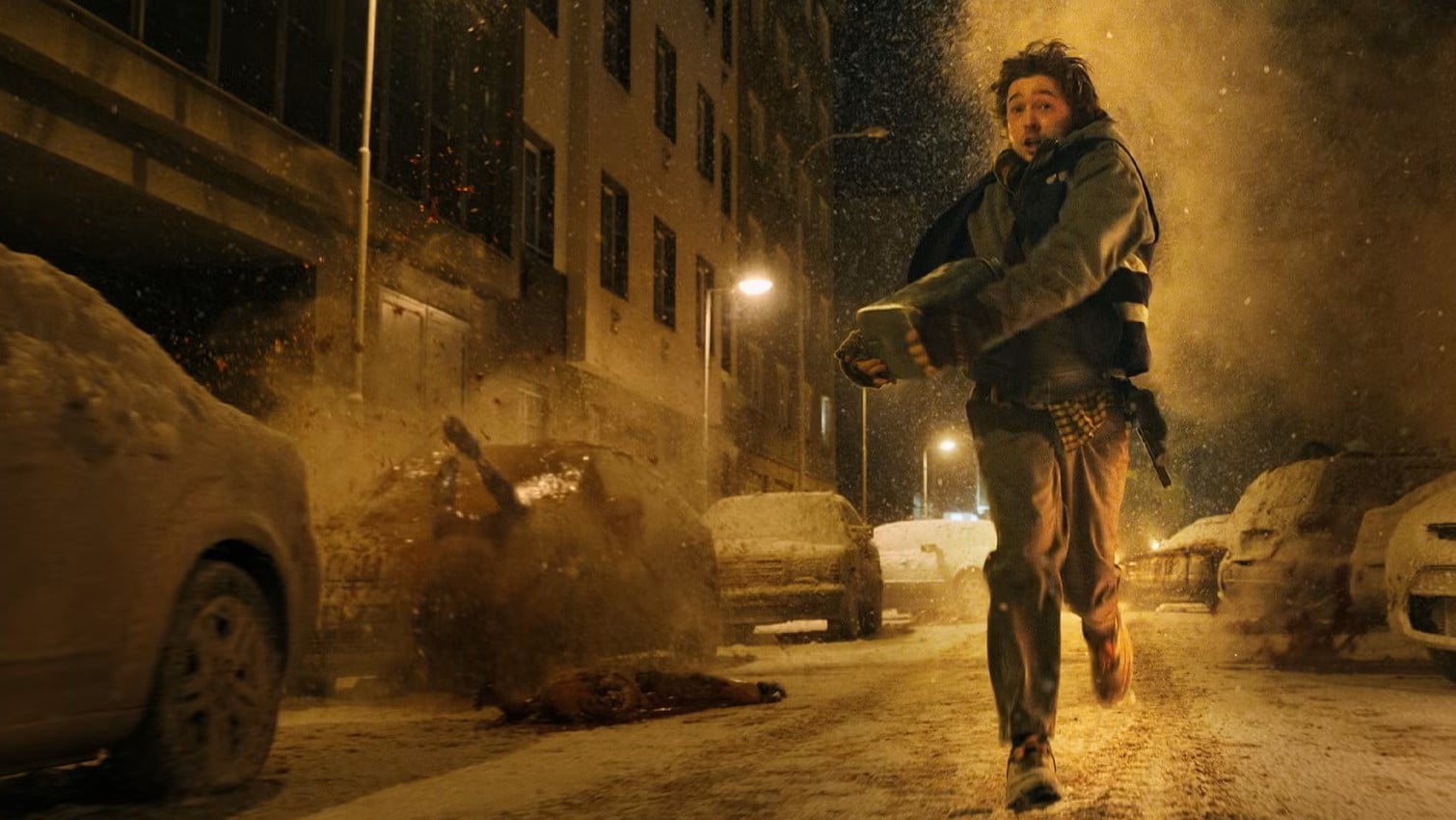
Austin Abrams, known for Euphoria and Wolfs, plays Bryan, a medical courier who finds himself trapped in a zombie outbreak at Raccoon City General Hospital. His performance anchors the entire experience. Liz Shannon Miller noted that Abrams “isn’t the only actor to appear in this film,” with fellow cast members including Zach Cherry, Paul Walter Hauser, and Kali Reis from True Detective: Night Country. However, Abrams remains on screen for nearly every moment. Miller observed that while Bryan makes poor decisions driven by fear or frustration, “he demonstrates a genuine urge to be a good person,” giving audiences reason to invest in his survival.
The Plot and Cregger’s Approach
The film’s premise is straightforward: Bryan arrives for a routine hospital delivery and finds himself navigating a zombie-infested facility during what escalates into a world-altering crisis. From there, the movie becomes “a simple and exciting survival horror story,” according to Tom Jorgensen’s review, driven by Cregger’s sensibilities around creature design, mounting tension, and his signature humor. The director approached the material with intention, even trimming comedic moments after receiving feedback from test audiences during early screenings.
Where Critics Find Strength
Gameplay-Inspired Structure
The most sophisticated praise centers on how Cregger translated gameplay mechanics into cinematic language. David Ehrlich highlighted a key achievement: “As if creating an invisible mini-map for the audience in real-time, Cregger ensures that we’re always acutely aware of where Bryan is in relation to where he’s going and whatever’s trying to kill him.” This spatial awareness—”per the rhythm of the games”—means the film derives its scares not from jump cuts or sudden reveals, but from the process of navigating through hostile space. Ehrlich noted that while the movie features “some of the grossest monsters you’ll ever see on screen,” Bryan’s “most terrifying nemesis might be the padlocks that block his progress at every gate.” That detail matters: solving puzzles under pressure is a core Resident Evil experience, and Cregger embedded it into his filmmaking.
Balancing Horror and Absurdity
William Bibbiani argued that the film succeeds not merely as a video game movie, but as a movie. “It’s an explosive horror experience which, unlike every other Resident Evil adaptation, captures the strange dichotomy of this popular video game series. It starts out terrifying, gradually becomes ridiculous, and totally gets away with that tonal shift.” This tonal progression—from dread to absurdity—mirrors the games themselves. Bibbiani added: “It may not be a faithful adaptation of a classic Resident Evil storyline but it’s a faithful adaptation of what it feels like to play a classic Resident Evil game.”
Criticism and Second-Act Struggles
Not every critic emerged entirely satisfied. Several reviewers flagged pacing and tonal issues as the film progresses.
Tonal Issues and Lost Focus
Jacob Oller observed that while the first section maintains focus, the film “threatens to get away from its creator” as Bryan reaches Raccoon City proper. “The momentum hitches and idles, making too much time for extended riffing, unearned emotion, and embodied sub-Cronenbergian themes.” Oller noted a visual regression: effects start as “sinewy, Thing-adjacent organic messes” before morphing into “unwieldy blobs of pixels.” Immersive details—such as snow muffling the sound of a crashing car—give way to “over-designed set pieces.” Cregger’s confident camera work loses clarity in escalating spectacle.
Jesse Hassenger raised a character concern: while Cregger spends over 90 minutes making audiences care about Bryan, “he seems to abandon him a few steps shy of completing any real journey.” Hassenger wondered if a final “level up” never arrives, asking whether “bringing a video game sensibility to the big screen while keeping any gamer cheesiness on the margins is journey enough.”
Matthew Orozco criticized the unrelenting humor. “I don’t dislike that Resident Evil is funny, but I also don’t jive with how unserious the whole movie is. The moments of tension are often interrupted with a zinger of some sort that not only takes you out of the moment, but often doesn’t land with the intended impact.” He praised the setpieces in the opening location but felt things “become more absurd and messy” as the plot escalates, with insufficient worldbuilding to anchor the chaos.
Harry Stainer identified a structural problem: the second act “lacks real direction, leaning heavily into horror-comedy—weighted more to the comedy—while getting a little too meta for its own good.” Stainer acknowledged Cregger’s skill at translating game mechanics—including gun upgrades and a “literal video game-esque skill tree”—but felt the film undercut itself by spelling out its own jokes.
Behind the Scenes: Test Audiences and Joke Cuts
Cregger’s willingness to revise after test screening feedback shaped the final product. The director stated that he “liked the movie a lot more” following audience input and doesn’t “miss a single joke” that was removed for the theatrical cut. This suggests the original version leaned even harder into comedy—and that trimming some of that material tightened the film’s focus.
What Makes This Game Adaptation Work
The 96 Rotten Tomatoes score reflects broad critical consensus that Cregger solved a persistent problem in game-to-film adaptations: the trap of literalism. By treating Resident Evil as an experience to capture rather than a narrative to replicate, he created something that honors the source material while functioning as a standalone horror film. Austin Abrams delivers a compelling protagonist, the creature effects impress, and the spatial structure keeps the pacing tight through much of the runtime.
Whether the second-act struggles represent a significant flaw or a minor stumble appears to depend on individual critic tolerance for tonal whiplash and meta-humor. What remains clear is that Cregger understood the assignment—and delivered the rare video game adaptation that critics and audiences can both recognize as a success on its own terms.
Frequently Asked Questions
Who stars in Zach Cregger's Resident Evil?
Austin Abrams plays the lead role of Bryan, a medical courier, with supporting cast including Zach Cherry, Paul Walter Hauser, and Kali Reis from True Detective: Night Country.
What makes this Resident Evil adaptation different from previous versions?
Cregger prioritized capturing the spirit and gameplay sensibility of the video games over recreating specific plot details or mechanics, focusing on spatial awareness and tonal progression rather than literal translation.
