
Key takeaways
- Sombra transitions from Damage to Support in Overwatch Season 5 (October), retaining invisibility and Translocator but losing direct hack access outside her EMP Ultimate.
- Designer Scott Kennedy explained the rework as necessary to prevent all three of her DPS pillars—invisibility, ability lock, and damage—from operating at high levels simultaneously.
- She was the most banned hero last year when Hero Bans were introduced, particularly in lower ranks, suggesting the rework prioritizes counterplay experience over specialist satisfaction.
- The new Cyberspace ability preserves her saboteur identity through healing allies and weakening enemies, but removes her ability to make game-changing reactive plays like interrupting Ultimates.
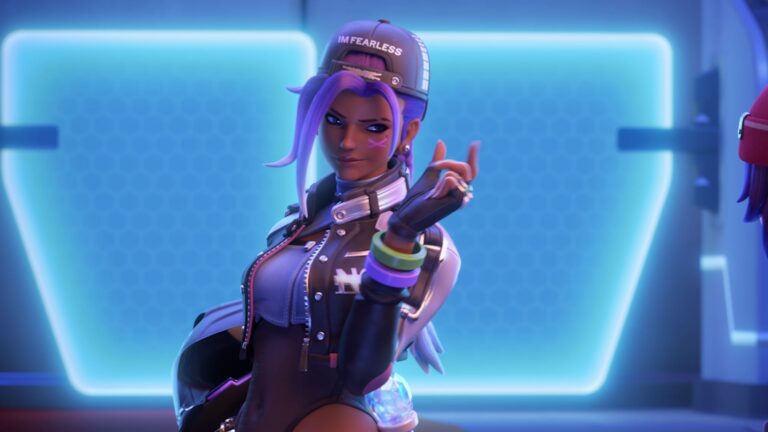
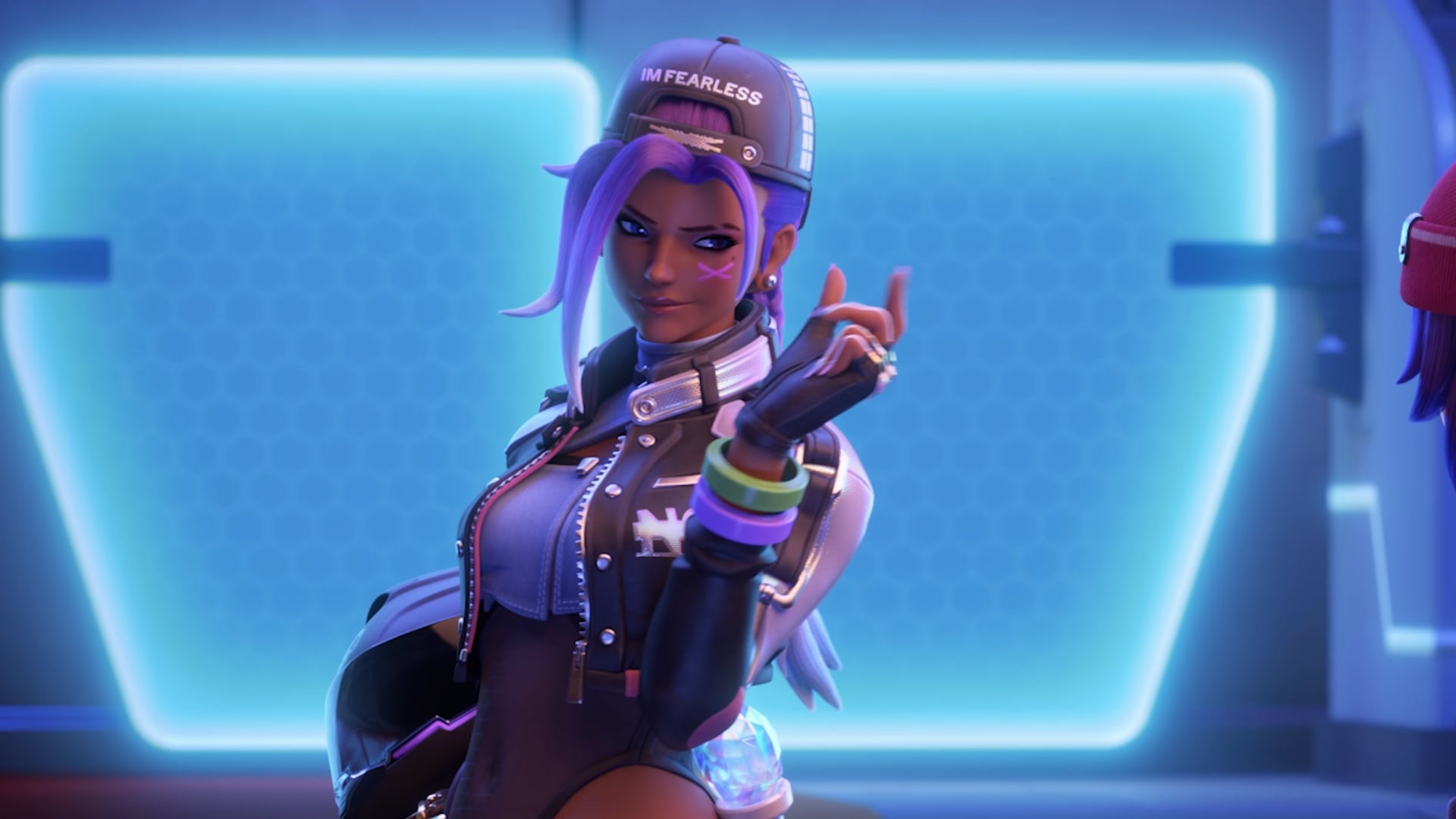
After nearly a decade anchoring Overwatch’s Damage roster, Sombra is making the transition to Support when Season 5 arrives in October. The shift represents one of the most fundamental changes to the character’s identity since her debut at Blizzcon 2016, and reactions from the community have been divided on whether the rework addresses legitimate balance concerns or simply capitulates to players who struggle against her signature invisibility and hacking abilities.
The Role Swap and Its Scope
Sombra’s conversion to Support marks a deliberate departure from what Overwatch Hero Designer Scott Kennedy described during a Blizzcon Q&A as her previous “three pillars as a DPS hero: the invisibility, the ability lock, and damage that she can do.” According to Kennedy, the combination of all three operating at a high level created persistent balance headaches for the development team, making the role transition a way to preserve her core identity while removing damage output from the equation.
The new Support Sombra retains several recognizable tools: the Translocator teleport remains functionally identical, invisibility is preserved, and the ability lock mechanic still exists, though now exclusively as part of her EMP Ultimate rather than as a standalone cooldown. In exchange, her combat focus shifts toward utility for allies, with a fresh ability called Cyberspace that creates a targeted area of effect capable of healing teammates while simultaneously reducing both damage output and healing effectiveness for opponents caught within it.
Kennedy framed the rework as an expansion rather than a gutting. “If you move her into a Support role, she doesn’t need to do damage, she doesn’t need to be able to quickly execute oppositions,” he told Kotaku at Blizzcon. “You heal your allies, you’re allowed to move around the battlefield invisibly, and then sort of interact with the opposition and your allies at the same time. We’re really confident, and really happy with the way that the Support change came through.”
A Decade of Constant Iteration
The Hack Ability Through the Years
Sombra’s path to the Support slot was paved with repeated reworks that progressively stripped away the elements that first defined her as a playable character. Her hack ability alone has undergone multiple philosophical shifts: early versions could disable shields long enough for a coordinated team to breach defensive positions, while later iterations compressed the effect into a one-second window where precise timing could interrupt ultimate abilities or save allies from incoming burst damage. The contrast between these approaches meant that the mechanical skill floor required to pilot Sombra effectively shifted with each patch.
Stealth and Assassination Phases
Beyond the hack mechanic, Sombra’s stealth mechanics themselves have contracted over time. Originally designed as a hit-and-run character who could infiltrate enemy positions, land a hack, and withdraw to safety before retaliation, she later transitioned toward a more committed assassin archetype capable only of short-range teleportation. The removal of her consistent invisibility—replaced with a cooldown-based stealth system—further altered how players approached engagements, requiring a complete recalibration of positioning instincts developed over years of play.
Community Perception and Response
Each rework, justified by designers as necessary balance corrections, seemed to respond to one demographic: players struggling to counter Sombra rather than those who had invested hundreds of hours mastering her. When Overwatch implemented Hero Bans last year, Sombra became by far the most banned character, particularly in lower competitive ranks. Despite what some long-time Sombra players characterize as nerfs to her utility, players unfamiliar with counterplay—turning to locate her from audio cues, positioning defensively against hacks, or maintaining team awareness—found shutting her out entirely easier than adapting their own playstyle.
The Design Philosophy Behind the Shift
Kennedy’s explanation revealed how Blizzard weighted the competing demands of game balance. Creating a playable Sombra for dedicated mains and a non-frustrating opponent for casual players represented an increasingly impossible needle to thread. By moving her into Support, the design space opens differently: she no longer competes for kills, so her invisibility becomes a tool for positioning and protection rather than predation, and her hack access narrows to moments of ultimate deployment rather than persistent harassment.
Whether intentionally or not, this philosophy prioritizes the experience of players facing Sombra over the experience of playing her. The distinction matters because it suggests that future reworks will continue favoring approachability for the broader playerbase over satisfaction for specialists who spent years developing game sense specific to the character’s original design.
What the New Cyberspace Kit Loses and Gains
The Cyberspace ability, which forms the mechanical centerpiece of Support Sombra, does carry forward a degree of her saboteur fantasy—weakening enemy output while strengthening teammates creates a form of indirect disruption. But the loss is substantial: Sombra can no longer preemptively disable a Sigma’s defensive shield mid-ultimate, denying him the protection he needs while exposed in the air. She cannot cut short a Cassidy’s High Noon as he aims from elevated ground, potentially saving her team from a fight-ending barrage. She cannot disrupt Moira’s Fade ability by locking her down, forcing the enemy support into a commitment rather than granting her unrestricted mobility and healing throughput.
These moments—the high-stakes, game-sense-dependent plays that separated experienced Sombra players from novices—depend on the hack ability as a persistent, proactive tool. The EMP-only restriction means such plays now require an ultimate charge, converting what was once a tactical skill into a strategic resource decision.
Legacy and Debut Context
Sombra’s entrance into Overwatch carried a theatrical flair that set expectations for her character trajectory. At Blizzcon 2016, she introduced herself by breaching the event’s press conference itself, with voice actor Carolina Ravassa delivering a line that became iconic within the community: “I thought this was supposed to be the most advanced security system on the planet.” That cocky declaration of her ability to infiltrate and disrupt has defined both her mechanical identity and her narrative arc, making the shift toward a support-focused, EMP-gated hack mechanic feel fundamentally at odds with the character’s established persona.
The Rework’s Reception and Outlook
Blizzcon attendees offered mixed assessments. Some acknowledged that Sombra’s Support abilities serve practical purposes and carve out a distinct niche within the role, while others—particularly existing Sombra mains—experienced the rework as a loss rather than a lateral move. The divide itself illustrates the challenge: players who selected Sombra for her disruptive potential view the changes as diminishing, while those frustrated by facing her view them as overdue rebalancing.
When Season 5 launches in October, the full impact of the rework will become apparent only through extended ranked and competitive play. For now, Sombra’s transition from Damage to Support represents an inflection point where Blizzard chose to reshape a character’s entire mechanical and narrative identity around the preferences of players who never selected her in the first place.
Frequently Asked Questions
When does Sombra become a Support hero?
Sombra will transition to Support when Overwatch Season 5 launches in October.
What abilities does Support Sombra keep from her Damage kit?
She retains her Translocator teleport, invisibility, and hacking ability, though the hack is now exclusive to her EMP Ultimate rather than available as a standalone cooldown.
Why did Blizzard move Sombra to Support?
According to Scott Kennedy, Sombra's combination of three pillars—invisibility, ability lock, and damage—became too problematic to balance when operating at high levels simultaneously. Moving her to Support removed the damage requirement while preserving her core identity.
