
Key takeaways
- Splatoon Raiders provides 20 hours of satisfying single-player shooting with extensive build customization, marking Nintendo's first dedicated campaign in the decade-old franchise.
- Flat level design prioritizes aggressive action over defensive positioning, with 50 stages split between obstacle courses, objective-based missions, and enemy-wave encounters.
- Exceptional gunplay feel and enemy variety overcome repetitive aesthetics and disappointing fashion/music options, delivering consistent enjoyment throughout the campaign.
- Excellent co-op mode allows nearly complete story completion with friends, plus substantial post-game content extends engagement well beyond the initial playthrough.
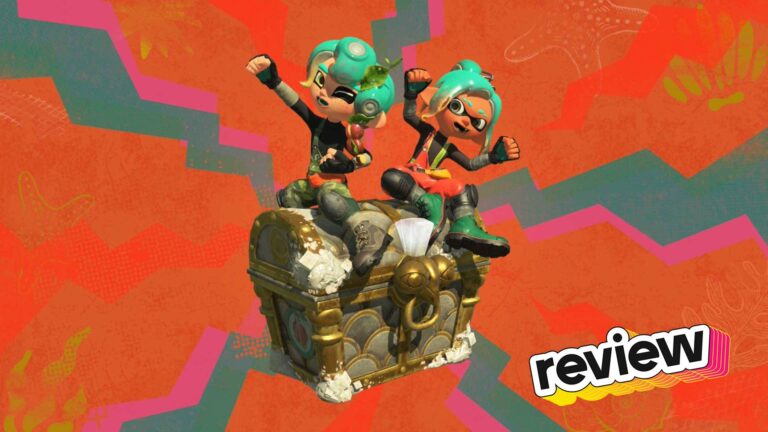
After more than a decade and three major multiplayer-focused installments, Nintendo has finally committed to what a meaty, story-driven shooter campaign looks like with Splatoon Raiders. While previous Splatoon games included single-player modes alongside their competitive multiplayer, Raiders marks the franchise’s first genuine attempt to craft a substantial, mission-based campaign as the centerpiece rather than a secondary feature. The result is a testament to Nintendo’s refinement of the genre it essentially created for console audiences.
A Treasure Hunt Across Deserted Islands
The premise is deliberately lighthearted: a trio of treasure hunters who also function as a band, accompanied by a pilot-turned-mechanic, venture to a set of deserted islands rumored to hold valuable plunder. The expedition becomes an extended combat operation against the Salmonids, a sapient species that occupies the same world as the franchise’s Inklings and Octolings. The narrative framing raises some uncomfortable questions—the developer team has discussed internal discomfort about the wholesale slaughter of sentient creatures with apparent culture, art, and society—yet Raiders commits to treating them as obstacles to overcome rather than exploring moral complexity.
The story itself remains predictably shallow, anchored by three main companions: Shiver, Frye, and Big Man. These characters bring enthusiastic personalities and carry the campaign toward a satisfying finale, though their interactions with the player remain surface-level. For players invested in Splatoon’s expanded lore, the campaign supplies hidden collectible scrolls that expand the world’s fictional history, though the connections between these pieces require additional research to fully understand.
Level Design and Environmental Limitations
Repetitive Aesthetics Across 50 Stages
The campaign spans approximately 50 stages, though the environmental variety struggles to match this scale. The islands present five primary aesthetic themes: sandy beaches, glaciers, volcanoes, caves, and temples. These settings repeat across stages without sufficient differentiation to create the impression of exploring a lived-in world. Instead, progression feels like cycling through a defined set of visual templates rather than discovering genuinely distinct locations.
Flat Terrain Forces Aggressive Positioning
Unlike the previous Splatoon trilogy’s emphasis on vertical design—where players could hide behind, climb up, and use multi-level obstacles for tactical advantage—Raiders abandons this approach entirely. Most stages are flat or gently sloped, with minimal natural cover. While players can create temporary protection by spraying ink, enemies maintain line of sight and deal damage while targets are swimming through the ink. Some enemy types, particularly the annoying pot lid snipers positioned on towers, can shoot through walls entirely, making defensive positioning unreliable. This design choice explicitly pushes players toward constant engagement rather than methodical, cover-based tactics.
Mission Structure and Gameplay Variety
The campaign compensates for design simplicity through diverse mission objectives. Beyond the obstacle-course segments that defined earlier single-player campaigns—complete with their reputation for brutal difficulty—Raiders incorporates objective-based missions, time-limited enemy-wave scenarios, and large open spaces requiring players to fill meters through combat. Boss encounters range from modest individual fights to challenging climactic battles, with late-game stages stacking increasingly problematic enemy combinations that force difficult decision-making about engagement priorities.
The enemy design deserves particular credit. Each creature type demands different responses, from the aforementioned pot lid snipers to swarms that require crowd control. The visual creativity extends to weapons and equipment—characters fashioning functional gear from human garbage creates a charming aesthetic that extends from a dish soap bottle ink gun to salvaged armor pieces that communicate both utility and personality.
Combat Feel and Weapon Customization
Satisfying Mechanics Define the Experience
Regardless of other design choices, the fundamental act of movement, jumping, and firing feels exceptionally polished. Ink disperses beautifully across surfaces with appropriate audio feedback. Speed of traversal and fluidity of combat create momentum that consistently rewards aggressive positioning. The series’ strength as a shooter—something Nintendo proved controversial but capable of executing at launch over a decade ago—only intensified through this campaign’s pacing.
Build Variety Through Weapons and Gadgets
The customization system offers meaningful progression through weapon selection, gadgets, and equipment modifications. The tactical-themed ink tank encourages defensive-minded builds that remain viable alongside the power and speed tank variants. Long-range chargers provide legitimate alternatives to aggressive close-range tactics. As the campaign progresses, acquired upgrades compound—the reviewer’s late-game setup included equipment that set touched surfaces on fire while swimming and a defensive gadget creating protective rings of damage. These combinations demonstrate the system’s depth and capacity for experimentation.
The Joy of Escalating Power
By the campaign’s final sections, fully-upgraded loadouts create satisfying moments of overwhelming force. Deploying multiple gadgets simultaneously before unloading heavy firepower delivers genuine catharsis. The system’s design supports months of optimization and experimentation for players pursuing specific builds or discovering undocumented interactions between equipment combinations.
Aesthetic and Audio Disappointments
Two elements disappoint more than expected given the franchise’s historical emphasis on both. Fashion options remain limited compared to the series’ identity-expression focus, which surprised considering how central customization has been to Splatoon’s appeal since the beginning. The soundtrack, described as fundamentally made from people striking pots and pans together, sounds intentional and carries developer reasoning, yet most pieces fail to engage. The notable exception—the final boss theme—demonstrates what the score could achieve with varied instrumentation and composition. This inconsistency stands out as uncharacteristic for a series where music and visual identity rank among its primary strengths.
Minor Issues Within an Engaging Framework
Several smaller frustrations accumulate without substantially damaging the experience. Stages lack retry buttons, forcing players to restart from save points after failures. Companions never learn the protagonist’s name despite extended interaction. Roller weapons feel underpowered compared to other options. The game prevents stealth by swimming slowly through ink despite design logic that might support it. Certain stages lack backtracking options for retrieving missed collectibles. Relationship dialogues between the main character and companions maintain minimal depth regardless of interaction frequency.
The reviewer acknowledges these issues would dominate a more negative assessment, yet the core gameplay loop continually overpowers any individual frustration. The experience remains an energizing mood-lift that accommodates both solo play and a surprisingly excellent co-op mode permitting completion of almost the entire campaign cooperatively.
Substantial Campaign Meets Post-Game Depth
Finishing the campaign and most available side missions requires approximately 20 hours, a respectable length for a shooter campaign. Substantial post-game content remains untouched, suggesting the overall experience extends significantly beyond the initial playthrough. The progression from start to finish consistently maintains enjoyment, with difficulty escalation and enemy variety preventing fatigue or excessive repetition.
Nintendo’s confidence in this formula proves justified. The Splatoon franchise remains among the best-feeling and most accessible shooters available, a distinction maintained consistently throughout a substantial 15-20 hour campaign structure. If Nintendo continues at this trajectory, the fourth major installment should further refine a formula already demonstrating remarkable polish.
Frequently Asked Questions
How long does it take to complete Splatoon Raiders?
Finishing the main campaign and most side missions requires approximately 20 hours, with substantial post-game content remaining for extended engagement.
Can you play Splatoon Raiders with friends?
Yes, the game features a co-op mode that permits completing nearly the entire story campaign together cooperatively.
What makes Splatoon Raiders different from previous Splatoon games?
It is Nintendo's first proper single-player-centric, mission-based campaign. While previous Splatoon games included single-player modes, Raiders makes the campaign the primary focus rather than a secondary feature alongside multiplayer competition.
