
Key takeaways
- Star Trek: Elite Force 2 originally featured a shuttle crashing into a building at Starfleet Academy, a sequence removed after the September 11 attacks in 2001.
- The game arrived on PC in June 2002, less than a year after 9/11, requiring significant creative revisions to its opening and story structure.
- Despite commercial failure at launch, Elite Force 2 became a fan-favorite through strong puzzle design, combat mechanics, and Patrick Stewart's voice work as Captain Picard.
- Grand Theft Auto 3 faced similar post-9/11 revisions, and its redesigned cover art inadvertently established the visual template for every GTA game released since.
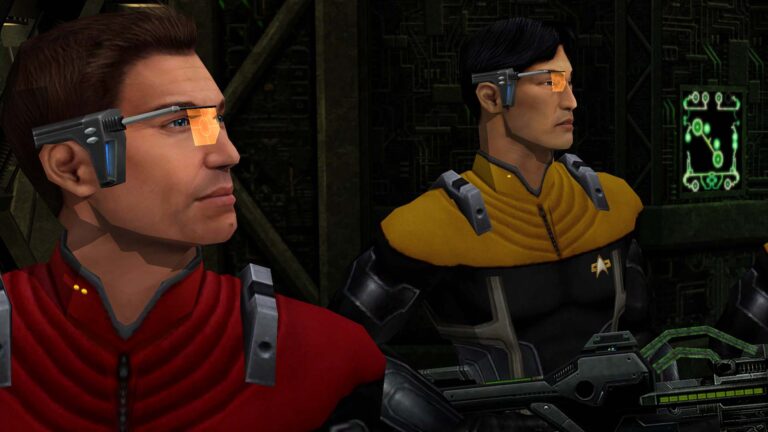
Star Trek: Elite Force 2 arrived on PC in June 2002 as a first-person shooter that seemed destined to vanish into gaming obscurity. The game failed commercially, disappearing from retail shelves with minimal fanfare. Yet more than two decades later, it has transformed into something far more valuable to fans: a beloved piece of Star Trek gaming history. The experience blends puzzle-solving, tactical combat, and character-driven dialogue, all powered by the id Tech 3 engine. The game even features Patrick Stewart providing the voice for Captain Jean-Luc Picard, lending legitimacy and gravitas to an otherwise modest shooter. But Elite Force 2’s path to this cult status involved a dramatic revision to its core story—a creative surgery performed because the world changed on September 11, 2001.
The Original Concept That Never Was
During development, the team envisioned a far different opening for the Starfleet Academy prologue. According to Benson Russell, who served as lead scripter and level designer, the sequence included an attack on the academy that would have left permanent marks on players’ minds—not metaphorically, but through a visceral act of terrorism embedded in the narrative.
“I remember, we were making Elite Force 2, and 9/11 happened at that time,” Russell explained in a recent interview with FRVR. “One of the original scenes was, when you were at Starfleet Academy, it was supposed to get an attack, and we actually had a shuttle fly into a building and stuff like that.”
The conceptual image is chilling in retrospect: a Starfleet vessel plummeting into an academy structure in an act of sabotage or violence that would mirror the tragedy unfolding in real-world New York City just as development was underway. For a game centered on exploration, camaraderie, and Starfleet values, this opening would have created a jarring tonal shift—one designed to ground the player in stakes and danger from the moment the campaign began.
When the Calendar Changed Development
The Timing of Tragedy
The attacks of September 11, 2001, struck less than a year before Elite Force 2’s June 2002 launch. In that compressed timeframe, Raven Software and Activision faced an unprecedented decision: maintain artistic vision or respond to a fundamentally altered cultural moment. The studio chose the latter.
“That was a no-no for understandable reasons, of course,” Russell said of the decision to scrap the shuttle-into-building sequence. The sentiment captures the difficult calculus facing developers in late 2001 and early 2002. An attack sequence depicting a flying vessel crashing into a building—regardless of the fictional context—would have read as insensitive at minimum, potentially offensive to millions of grieving Americans and families of victims.
The Scope of Changes
Beyond the Starfleet Academy opening, other elements of the story and design had to be reconsidered or removed entirely. The source material and design documents that referenced similar scenarios were reviewed and revised. Developers worldwide faced this reckoning simultaneously, forcing creative compromises across the industry in ways unprecedented in video game history.
A Game That Survived Its Cuts
Despite the necessity of removing and reworking these early sequences, Elite Force 2 maintained its identity as a competent, engaging shooter. The puzzle design remained inventive, the combat encounters still demanded tactical thinking, and the narrative still grounded itself in Star Trek lore and character relationships. The presence of Patrick Stewart’s voice work gave weight to scenes involving Picard and the broader Starfleet context.
That the game managed to retain its appeal after such significant surgery speaks to how much substance lay beneath those removed opening moments. Fans discovered a well-crafted experience that honored the source material while delivering tight FPS gameplay. The “low-poly Picard moments” that players reference fondly were enough to sustain interest, proving that 9/11-prompted cuts, while painful to creators, did not hollow out the entire project.
Industry-Wide Reckonings
Grand Theft Auto 3’s Parallel Crisis
Elite Force 2 was not alone in facing post-9/11 revisions. Rockstar Games’ Grand Theft Auto 3, released in 2001 just weeks before the attacks, occupied a far more precarious position. The game’s setting—a contemporary New York City-style open world—became immediately fraught. The studio made numerous alterations to reduce the resonance with real-world tragedy.
Police vehicles originally designed to resemble actual NYPD cars were made more generic. The game’s cover art underwent revision before the United States release, though the European version retained the original design that Rockstar had planned. This decision inadvertently shaped gaming history: the cover concept developed in response to 9/11 became so iconic that it established the visual template for every Grand Theft Auto cover that followed. Nearly 25 years later, that grid-based aesthetic still defines the series, including the upcoming Grand Theft Auto 6.
Broader Cultural Impact
The changes made to Elite Force 2 and GTA 3 represented only the most visible examples of post-9/11 creative recalibration. Game studios across the industry quietly removed, softened, or reworked content depicting destruction, terrorism, and attacks on infrastructure. Some decisions became public; many remained internal, invisible to players who never knew what had been cut or revised.
The Legacy of Compromise
More than two decades later, Star Trek: Elite Force 2 occupies an unusual position in gaming history. It is celebrated not in spite of its compromises but partly because of them. The game represents a moment when an industry chose sensitivity and restraint in response to collective trauma. That such a choice would feel remarkable today speaks to how much gaming culture has evolved.
For fans who have discovered Elite Force 2 through emulation, Steam releases, or archival efforts, the original shuttle-into-building concept exists only as a historical footnote—interesting trivia rather than a tangible memory. Benson Russell’s account preserves this small piece of development history, a reminder that creative decisions in games are rarely made in isolation from the broader world.
The game succeeded on its own merits once the narrative trauma was removed. Players encountered a competent action experience with solid puzzle design, voiced by one of television’s most recognizable actors, set in a universe with decades of established lore. What might have been defined by its spectacular tragedy instead became known for its solid craft and surprising depth.
Frequently Asked Questions
What was the original opening scene in Star Trek: Elite Force 2?
The original Starfleet Academy prologue featured an attack in which a shuttle would fly into a building, a sequence that was removed after the September 11, 2001 attacks made such imagery culturally inappropriate.
When was Star Trek: Elite Force 2 released?
The game launched on PC in June 2002, less than a year after the September 11 attacks forced the development team to revise its opening and story.
Who voiced Captain Picard in Star Trek: Elite Force 2?
Patrick Stewart provided the voice for Captain Jean-Luc Picard, lending authenticity to the game's dialogue and character interactions.
