
Key takeaways
- Yankovic was initially pitched the commercial as promotional material for “business software that would increase productivity,” a vague description that masked the product’s actual purpose.
- Despite the historical rarity of official Yankovic gaming projects, fan enthusiasm for interactive Weird Al content has persisted into the contemporary era.
- Yankovic’s 2025 “Bigger & Weirder” tour continues through multiple markets, with his first appearance on The Daily Show alongside host Ronny Chieng occurring on May 21, 2026.
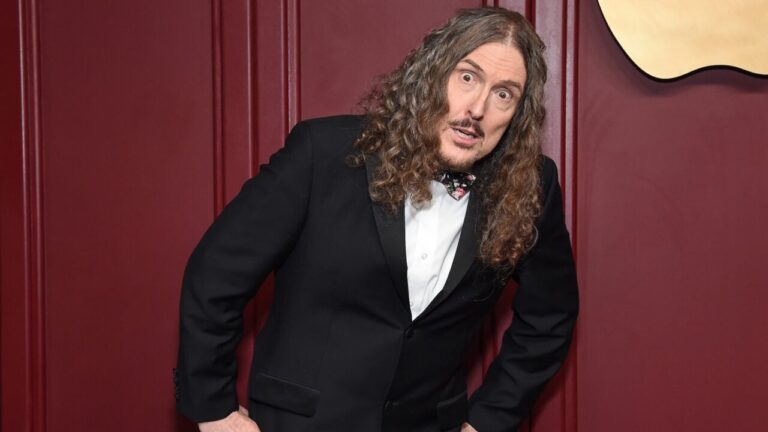
Weird Al Yankovic turned down a $5 million endorsement deal to star in an artificial intelligence commercial, pulling out just one week before filming after discovering the product’s true nature. The decision, made ahead of his 2025 “Bigger & Weirder” tour, underscores the comedian’s long-standing commitment to integrity and alignment with his fanbase in an era when AI partnerships have become increasingly lucrative—and controversial.
The $5 Million Rejection That Defined a Career
Yankovic was initially pitched the commercial as promotional material for “business software that would increase productivity,” a vague description that masked the product’s actual purpose. One week before scheduled shooting, he discovered the endorsement was explicitly for an AI product. He declined immediately, stating plainly: “I can’t be the poster boy for AI. I’m not down with that.”
The timing placed this decision squarely in 2025, as Yankovic prepared to launch his current tour alongside special guest Puddles Pity Party. The scale of the rejected offer—reported as a substantial “pile of money” in the seven-figure range—demonstrates how aggressively technology companies have pursued celebrity partnerships to legitimize AI products during a period of intense public skepticism.
Why This Matters in Gaming and Entertainment
Yankovic’s refusal carries particular weight in entertainment industries where AI voice cloning, synthetic performances, and algorithmic content generation have sparked heated debates over copyright, artist compensation, and creative authenticity. The rejection signals that established creators with significant cultural capital are willing to forgo major paydays rather than lend credibility to technologies many view as existential threats to their livelihoods.
The comedian has a documented history of declining advertising partnerships that conflict with his values and demographic alignment. He previously turned down endorsements for alcohol and other products deemed misaligned with his audience. This AI rejection fits that pattern while addressing a distinctly modern concern: the technology industry’s attempt to normalize AI through celebrity association during a period when the public remains deeply divided on the ethics and implications of the tools.
A Stance Rooted in Industry Awareness
Yankovic told the Syracuse Post-Standard he is “not a fan of AI” and willing to “put his money where his mouth is”—language that reflects both personal conviction and practical awareness of the technology’s current trajectory. The comedian is acutely conscious of the irony embedded in his own name, as the “Al” in Weird Al has become shorthand in certain circles for artificial intelligence. He views neither the joke nor the technology favorably.
The broader context surrounding Yankovic’s decision includes documented controversies over AI voice cloning and copyright violations. A 2023 deep dive into voice cloning technology highlighted how platforms like Discord have taken action against AI-driven copyright infringement, banning services like AI Hub just two days after major reporting on the issue. These developments underscore why established artists like Yankovic view AI partnerships with caution rather than opportunity.
Gaming’s Intersection With Yankovic’s Legacy
Yankovic’s cultural footprint extends into video game history through an unreleased, ultra-rare 8-bit NES action game developed by Ocean Software titled “Weird Al: The Video Game.” The game chronicled Yankovic’s career through 8-bit action sequences and was never commercially released, representing a forgotten artifact of 1980s gaming culture when celebrity tie-in games were standard industry practice.
Ocean Software, the developer and publisher behind the NES project, had begun development on a sequel before shelving it in 1989 when the company pivoted to console gaming platforms. The cancelled sequel marked a transitional moment in gaming history, as developers shifted focus away from 8-bit systems toward the emerging 16-bit and console-based markets that would define the 1990s.
Modern Fan Engagement and Digital Legacy
Despite the historical rarity of official Yankovic gaming projects, fan enthusiasm for interactive Weird Al content has persisted into the contemporary era. A fan-made video game about Weird Al Yankovic was released on May 15, 2025, gaining traction through social media sharing on Reddit and Facebook. Yankovic himself acknowledged this fan engagement through an Instagram reel posted on July 5, 2025, demonstrating awareness of and appreciation for grassroots creative efforts within his community.
The fan project contrasts sharply with the unreleased Ocean Software game from four decades earlier, illustrating how digital distribution and community platforms have democratized game development and enabled direct creator-to-fan relationships that bypass traditional publishing gatekeepers.
What Comes Next for Yankovic and AI in Entertainment
Yankovic’s 2025 “Bigger & Weirder” tour continues through multiple markets, with his first appearance on The Daily Show alongside host Ronny Chieng occurring on May 21, 2026. These high-profile engagements provide platforms for the comedian to articulate his position on AI and technology ethics to broader audiences beyond his traditional fanbase.
The AI endorsement rejection establishes a clear precedent: major entertainment figures are willing to sacrifice significant financial opportunities rather than legitimize technologies they view as ethically problematic. As AI companies continue seeking celebrity partnerships to build consumer trust, Yankovic’s $5 million “no” will likely be referenced in discussions about artistic integrity versus corporate opportunity—a conversation that will shape entertainment industry partnerships for years to come.
