
Key takeaways
- Peter Berg's Call of Duty film is scheduled for June 2028 release within the Modern Warfare continuity, with the director promising nuanced exploration of war's cost on soldiers.
- The Call of Duty franchise has repeatedly marketed itself with claims of serious war commentary, but its sustained popularity relies primarily on multiplayer gameplay rather than thematic depth.
- Call of Duty's past attempts at moral seriousness have produced problematic content, including a waterboarding sequence and dehumanizing portrayals of Muslim and Arab characters.
Paramount Greenlights Call of Duty Film for 2028 Release
Paramount Pictures is developing a Call of Duty film directed by Peter Berg, set to release in June 2028. Berg is co-writing the screenplay with Taylor Sheridan, creator of the television series Yellowstone. The film operates within the Modern Warfare continuity, drawing on that subseries’ characters and setting for its narrative foundation. Beyond these particulars, information about the project has remained limited, though Berg has begun articulating his creative intentions.
Director Emphasizes Nuance Over Spectacle
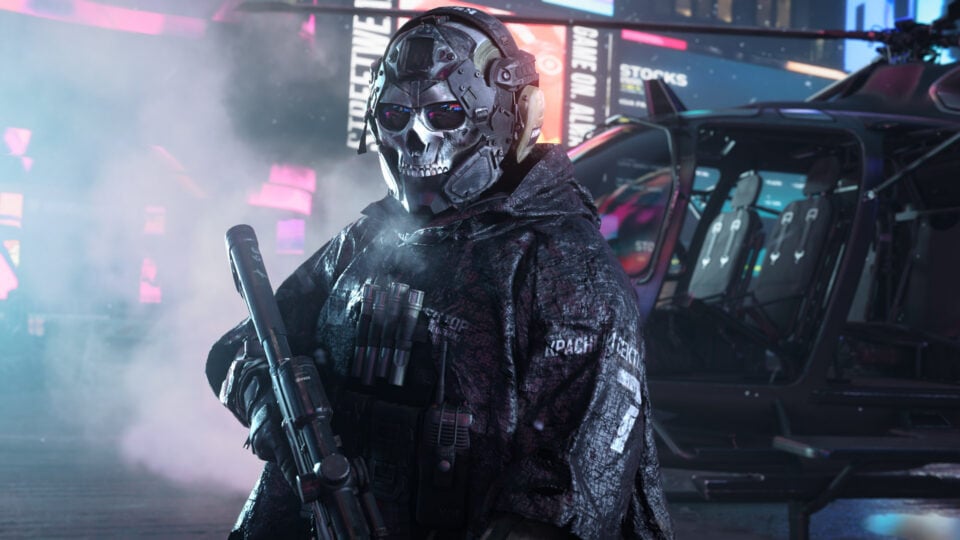
During a press junket for The Mosquito Bowl, his military-focused drama arriving this year, Berg discussed his approach to the Call of Duty adaptation. He explicitly rejected the notion that the film would resort to caricature or comic book logic. Instead, he pointed to the Modern Warfare games’ protagonist roster, including Captain Price, Soap, Ghost, and Alex, as evidence of thematic depth worth exploring on screen.
According to Berg, these characters embody complexity that elevates them beyond typical action-movie archetypes. He described the franchise’s narrative as fundamentally concerned with “the cost of war, the cost of having to be a warrior who’s, for whatever reason, chosen to put himself between real danger and the rest of us, and the burden that these guys carry.” Berg positioned this as serious storytelling with underlying emotional and philosophical substance, which he termed the “soul” of the Modern Warfare universe. He suggested the film would maintain this thematic gravity while employing less graphic violence than The Mosquito Bowl.
Call of Duty’s Established Pattern of Marketing Moral Seriousness
Cyclical Positioning Around Authenticity and Consequence
Berg’s rhetoric closely mirrors a long-standing approach that defines Call of Duty’s marketing strategy. The franchise has historically oscillated between two positions: positioning itself as an exhilarating military fantasy offering escapist action, and framing itself as a vehicle for exploring the authentic, often difficult realities of military service. This pendulum swings based on which angle serves the current game’s positioning.
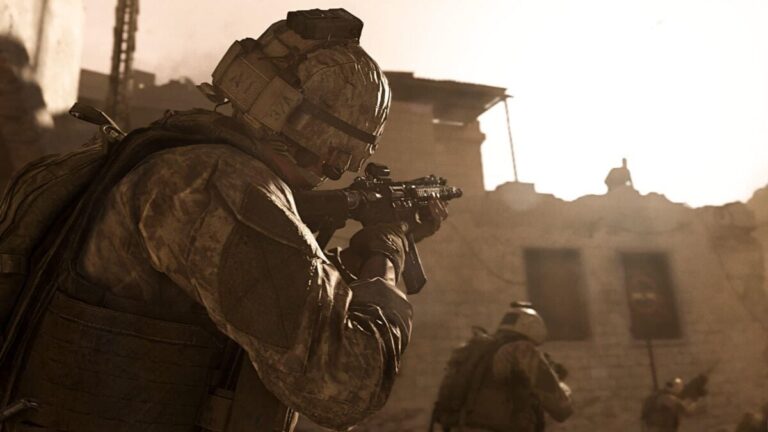
The 2019 Modern Warfare installment exemplified the “serious commentary” swing. During its promotional campaign, developers publicly discussed designing scenarios that would cultivate moral ambiguity. A widely repeated anecdote involved a civilian woman whose gesture of reaching for an object, revealed to be her child rather than a weapon, could result in accidental player violence that should trigger regret. Beyond this, marketing materials suggested the game functioned as an educational experience comparable to civics-oriented children’s programming, teaching players genuine truths about military operations and their consequences.
Consistency of This Messaging Across Titles
This rhetorical framework has not been confined to a single entry. Call of Duty: World War II and Vanguard both arrived with marketing emphasizing realism and the human cost of armed conflict. Each subsequent Modern Warfare release reinforced this positioning. The pattern extends beyond Activision’s franchise as well, with competitor titles like Battlefield, and smaller projects including Six Days in Fallujah, deploying essentially identical language about delivering authentic military narratives with moral weight.
Divergence Between Marketed Intent and Franchise History
The source material supporting Berg’s vision presents a complicated picture. While 2019’s Modern Warfare marketed itself around moral ambiguity and player guilt, the actual game’s effectiveness in delivering on these promises remains debatable. More significantly, the franchise’s real strength and primary appeal has consistently resided in elements entirely divorced from philosophical inquiry about warfare’s ethics: the multiplayer mode, where players compete in match-based combat scenarios without reference to any narrative framework or thematic purpose.
Call of Duty’s attempts at serious military storytelling have paradoxically generated some of the franchise’s most ethically troubling content. A waterboarding sequence that appeared in one entry, presented with apparent seriousness, exemplified how the pursuit of “realism” can cross into material that appears to endorse torture. The franchise’s documented history with racial representations, particularly dehumanizing portrayals of Muslim and Arab characters, reflects how military realism can function as cover for problematic stereotyping. Beyond content-level concerns, critics have identified the franchise’s role in promoting U.S. military ideology and the military-industrial complex itself, with some analyses suggesting it functions as informal recruitment material.
What Actually Sustains the Franchise
The Call of Duty series maintains its annual audience retention primarily through multiplayer excellence rather than narrative substance. Players return for competitive matches where reflexes, positioning, and weapon familiarity determine outcomes. The appeal is straightforward: accessible, responsive gunplay combined with progression systems and social competitive structures. Activision’s practice of rotating between development studios has generally succeeded in maintaining this core experience at a high level, refining maps and mechanics without fundamentally disrupting the formula.
This reality reveals a disconnect in the franchise’s positioning. The multiplayer success operates independently of any framework concerning the moral or ethical dimensions of warfare. Players are not drawn to these modes because Call of Duty uniquely illuminates military ethics or the psychological toll of combat. They engage because the shooting mechanics feel satisfying and the competition provides measurable progression. The franchise’s most damaging decisions have typically occurred when developers prioritized thematic “seriousness,” not when they straightforwardly delivered the enjoyable power fantasy that actually sustains player engagement.
The Film’s Credibility Challenge
Berg’s promises of nuanced war storytelling follow a script that Call of Duty has repeatedly performed. Each version of this script involves familiar rhetorical gestures: honoring soldiers’ sacrifice, acknowledging the psychological weight of military service, presenting oneself as thoughtfully exploring difficult subject matter. The franchise wraps itself in this language of gravitas while operating a business model that treats military action as entertainment for pleasure and social engagement, not as an occasion for moral reflection.
Whether a film bearing the Call of Duty name can transcend this contradiction remains an open question. The franchise’s track record suggests that audience engagement ultimately depends not on thematic depth but on the execution of compelling action sequences and character development. These are valuable elements in their own right. Whether they require additional justification through a narrative about the costs of war, and whether Call of Duty is the appropriate vehicle for that narrative, represents a separate consideration entirely.
Source: Kotaku
Frequently Asked Questions
When will the Call of Duty movie release?
The film is scheduled for June 2028 through Paramount Pictures, directed by Peter Berg with the screenplay co-written by Berg and Taylor Sheridan, creator of Yellowstone.
What continuity does the Call of Duty film take place in?
The movie operates within the Modern Warfare continuity and will feature characters including Captain Price, Soap, Ghost, and Alex.
What has Call of Duty been criticized for in the past?
The franchise has faced criticism for jingoism, dehumanizing portrayals of Muslim and Arab characters, promotion of U.S. military ideology, and instances like a waterboarding sequence presented without ethical questioning.
