
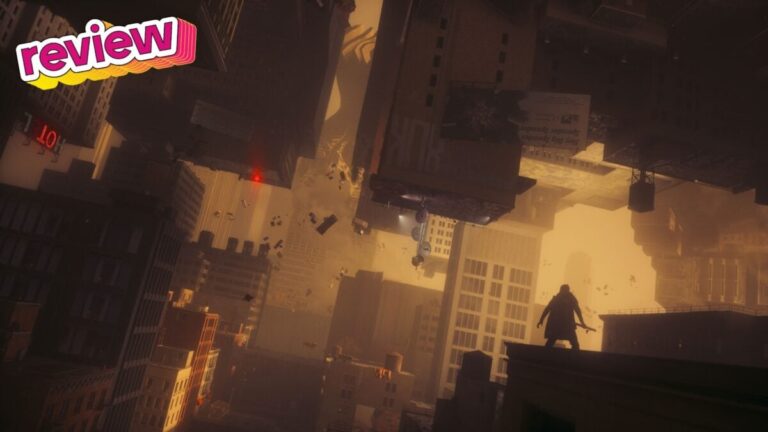
Key takeaways
- Control Resonant abandons input complexity and parry mechanics in favor of direct, responsive combat focused on timing, spacing, and aggression rather than mechanical skill.
- Director Mikael Kasurinen's game marks Remedy's first sequel where formal narrative ambitions align completely with demanding mechanical design philosophy.
- The game structures itself after classic Zelda with themed zones, platforming, and dungeons, using three-dimensional space as a core combat and traversal element.
- Dialog occasionally lacks nuance and themes arrive overtelegraphed, but Control Resonant remains Remedy's most mechanically rigorous and uncompromising work to date.
Remedy Entertainment has built a reputation for upending its own design frameworks between sequels. Alan Wake presented players with an arcade-style shooting gallery; Alan Wake II pivoted to methodical survival horror. Control functioned as a third-person shooter Metroidvania. Now, seven years later, Control Resonant arrives as something altogether different: a melee-focused action RPG that channels the mechanical demands of Devil May Cry, trading the methodical detective work of Jesse Faden for Dylan Faden’s direct, reckless escape from the Oldest House.
The audacity of this shift would be unexpected from most studios. Remedy, however, has consistently demonstrated faith in its creative instincts over franchise consistency, prioritizing what each individual project demands over what fans expect. Control Resonant represents the culmination of this approach: the studio’s first sequel built with full confidence that its protagonist’s story requires this specific kind of game to be told.
Dylan’s Desperate Flight
Set seven years after the original Control, Resonant follows Dylan Faden—the troubled sibling of Jesse Faden—as he breaks free from his confinement in the Oldest House, a federally sanctioned paranormal research facility. The Hiss, extradimensional entities that previously besieged the Oldest House, have now infiltrated New York City itself, forcing Dylan into combat armed primarily with a supernaturally augmented melee weapon.
The narrative avoids easy sentimentality. Where Jesse’s journey was defined by gradual discovery and increasing authority within institutional structures, Dylan’s is about reclaiming autonomy that organizations both supernatural and governmental have systematically stripped away. Every encounter carries personal weight: he fights enemies that previously held power over him for the sake of an organization currently doing the same. This thematic core—autonomy, control, the cost of resistance—permeates the game’s design rather than existing separate from it.
Remedy enforces a strict embargo on plot details, and deliberately so. The studio recognizes that Control Resonant’s emotional power derives not from narrative revelation alone but from the active participation required to experience it. Story and design function inseparably; the player’s understanding of space, timing, and consequence directly reinforce the narrative’s assertions about struggle and agency.
Combat Built on Immediate Response
Rejecting Complexity
Control Resonant abandons the input complexity that defines much of modern action game design. There are no context-sensitive aerial finishers, no elaborate input sequences that trigger signature moves like Izuna Drops. Primary weapons execute simple chains: square, square, square to finisher. Secondary weapons follow identical logic. Psychokinetic abilities, mapped to shoulder buttons, fire on demand when meter allows, without requiring precise input windows. Aerial and grounded attacks differ minimally; the game cares little for the traditional distinction between combat states.
This restraint reflects deliberate philosophical choice by the development team. Director Mikael Kasurinen cited Sekiro: Shadows Die Twice as inspiration, yet Control Resonant conspicuously omits parry mechanics—a design decision that speaks to genuine mechanical understanding. Parries have become so prevalent in contemporary action games that their absence reads almost as radical: a combat system fundamentally hostile to mechanics that ask players to wait, to respond defensively, to neutralize three-dimensional space negotiation through a single protective button.
The Desperation Loop
Instead, Remedy built Control Resonant around timing, spacing, and aggression. The challenge emerges not from mastering complex inputs but from maintaining momentum while constantly negotiating threats from multiple angles. The sensation that emerges—a constant negotiation between player and opponent competing to maximize damage output while hazards assault from all sides—creates what the game calls righteous desperation.
Enemy design enforces this philosophy precisely. Heavy enemies, each with distinct strengths and weaknesses, cannot be stunlocked easily and must be defeated before progression. Smaller enemies spawn endlessly but pose minimal individual threat and can be ignored entirely. This wrinkle creates constant, high-stakes decision-making: prioritize major threats for guaranteed progress, or thin the crowd for resource gains and breathing room. Each approach carries its own risks and rewards, and when Control Resonant executes this design at full throttle, every square inch of its arenas becomes an active combat zone.
Sound and Feedback
Sound design amplifies this intensity throughout. Every hit registers as a deep, resonant bass drop, providing the sensory confirmation that every button press produces exactly the impact intended. This commitment to immediate feedback—the assurance that input produces tangible, audible consequence—anchors the entire combat philosophy.
Movement as Language
Dylan gains access to his most mobile movement abilities immediately: flight, double jump, sprint, and air dash unlock before the first boss encounter. Later abilities—long-distance grappling and situational gravity manipulation—arrive as challenges escalate. This frontloaded approach mirrors classic action game design more closely than typical open-world progression, granting players mechanical mastery early and trusting them to synthesize those tools against increasingly sophisticated encounters.
The z-axis becomes genuinely important. Arenas stretch vertically and horizontally, with walls and ceilings serving as active combat zones rather than environmental boundaries. Dylan arcs between targets like electricity, his mobility blurring the distinction between traversal and combat. Fighting airborne enemies that exploit this same three-dimensional freedom creates a lavish, abundant sense of spatial possibility. Mastering movement for traversal puts players well on their way to mastering combat encounter navigation, creating gratifying synergy between these traditionally separate systems.
Manhattan as Dungeon
Control Resonant structures its world after classic Zelda design: the map fragments into discrete, thematically coherent zones, each containing combat encounters, puzzles, platforming challenges, and dungeon-like spaces burrowing into the city’s shifting architecture. Skyscrapers transform into massive jungle gyms, their facades studded with hidden areas and alternative pathways. This approach contrasts sharply with the original Control’s Oldest House—a meticulously, deliberately designed space with clear spatial limitations.
Resonant’s Manhattan sometimes feels less considered than its predecessor, more a leisurely open-air environment where quest markers guide exploration. Yet its dungeon areas showcase Remedy at its most confident, knitting narrative, visual art, and level geometry into cohesive spectacles. The Pattern, a warping antagonistic force that transforms environments into kaleidoscopic recursion, anchors much of the game’s most inventive aesthetic and mechanical design, using space manipulation as both storytelling device and combat challenge.
Where Writing Falters
Control Resonant’s dialogue trends toward snark—clever-by-half banter masquerading as characterization. Some themes arrive so explicitly telegraphed that the game struggles to actualize them with nuance or grace. Where Control’s narrative drew power from mystery and gradual revelation, Resonant sometimes announces its own ideas with such confidence that it undermines their elegance through overemphasis.
These remain forgivable shortcomings within a fundamentally thoughtful story, though the writing never quite reaches the sophistication of the design supporting it. Better this imbalance than the reverse, which would render technical excellence hollow.
A Studio Finding Its Rhythm
Control Resonant marks a pivot point for Remedy. For the first time, the studio’s signature formal ambitions align completely with a design philosophy equally demanding and uncompromising. The result is Remedy’s most mechanically rigorous game—imperfect but relentlessly, characteristically interesting. In an industry saturated with blockbuster releases whose storytelling instincts range from atrophied to nonexistent, Control Resonant stands apart as a game designed by developers fundamentally committed to understanding why video games should be video games at all.
Frequently Asked Questions
How does Control Resonant differ from the original Control?
Control Resonant shifts from third-person shooter Metroidvania to melee-focused action RPG, changes protagonist from Jesse Faden to her brother Dylan, and moves gameplay from distant detective work to direct combat set in New York City rather than the Oldest House.
Why did Remedy remove parry mechanics from Control Resonant?
Director Mikael Kasurinen deliberately omitted parry systems to create a combat design fundamentally opposed to making players wait defensively. Remedy focused instead on timing, spacing, and aggression, avoiding mechanics that could reduce three-dimensional space negotiation.
What movement abilities does Dylan have access to?
Dylan gains flight, double jump, sprint, and air dash before the first boss, with long-distance grappling and situational gravity manipulation abilities arriving later in the game as challenges escalate.
