

Key takeaways
- Blood of the Dawnwalker's deadliest encounters come from ambushing wildlife, not its vampire enemies.
- Directional blocking mechanics require players to read attacks and respond with precision, penalizing button-mashing gameplay.
- Animals trigger encounters through exceptionally wide aggro zones, often interrupting existing fights with overwhelming numbers.
- Rebel Wolves applies Dragon Age: Inquisition's Hinterlands difficulty philosophy to the entire game world.
Blood of the Dawnwalker, the vampire-focused action RPG from Rebel Wolves—a studio founded by former CD Projekt Red developers—draws inevitable comparisons to The Witcher series. Yet the game’s actual design philosophy bears a stronger resemblance to Dragon Age: Inquisition’s approach to open-world encounters, particularly how it handles random wildlife encounters as genuine threats to player progression. The twist is that in Dawnwalker, these animal encounters aren’t occasional surprises—they’re the primary source of difficulty, often more lethal than the game’s namesake vampires.
Beasts as the Real Antagonist
False Security Through Early Success
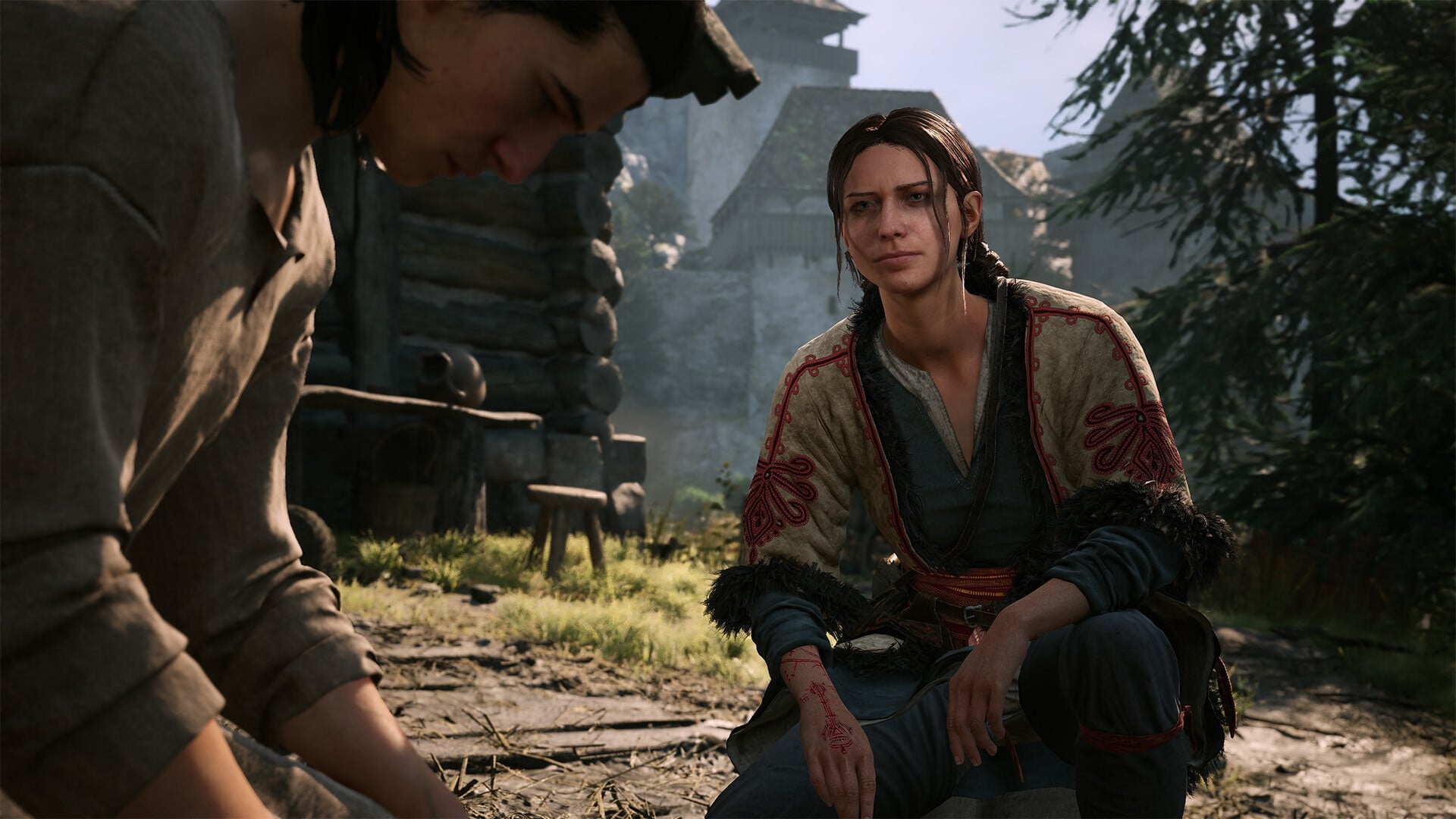
The opening hours of Dawnwalker establish clear expectations through its difficulty markers and weapon variety, suggesting a careful balance between accessibility and challenge. Early encounters with human enemies—bandits, soldiers, and other humans—present manageable threats that reinforce a sense of growing competence. Finding a treasure map leading to an underground cave felt like natural progression, a reward for clearing out a bandit-filled house. The guardian of that cave was a single bear.
When Expectations Meet Reality
The game’s color-coded health bar system indicates threat level through visual markers, with red and orange indicating genuine danger. The bear carried no such warning—it appeared manageable compared to the human group just defeated. That assumption lasted until the first swipe, which revealed the bear as an entirely different category of threat. Multiple attempts to overcome this encounter ended in failure, forcing a retreat and a return only after substantial character progression.
How the Aggro System Becomes the Challenge
The danger in Dawnwalker doesn’t stem primarily from individual animal strength, though bears certainly possess that. Instead, the threat emerges from how animals behave within the game world’s wider combat ecosystem. Each creature has an exceptionally wide aggro radius, extending far beyond where a player might reasonably expect engagement to begin. A scouting party of wolves might lurk at the edge of a forest clearing, waiting for any player action to trigger engagement.
More critically, these encounters compound when animals interrupt existing fights. A player might manage a skirmish with soldiers or other human opponents, but if the melee drifts too close to a wolf den or boar’s territory, the encounter escalates catastrophically. Combat suddenly expands from controlling five enemies to managing dozens simultaneously—social media communities reference the specific horror of encountering 30 to 50 feral hogs while already overwhelmed. The jump from controlled conflict to absolute chaos happens without warning.
This design creates a tension absent in many RPGs. Players cannot simply walk toward objectives and expect to resolve encounters through preparation alone. Environmental awareness becomes essential, as does the awareness of how wide territories overlap and where multiple threat types converge.
Combat’s Directional Blocking Innovation
The Mechanic Itself
Rebel Wolves has built a combat system that sidesteps traditional action-RPG design through its emphasis on directional defense and reading opponent behavior. Rather than buffering attacks through standard hit-stun animation chains, the game requires players to observe where attacks originate and block in corresponding directions. The UI system indicates incoming attack vectors, allowing players to respond with precision rather than hoping defensive frames trigger.
The payoff for this precision extends beyond mere defense. Directional blocking actually weakens opponents while simultaneously charging the player’s ability meter faster than standard blocking. This creates a skill expression gap—players who master the reading and direction input gain meaningful mechanical advantages. Combat becomes less about absorbing hits and more about engagement cycles that resemble fencing duels or choreographed sequences rather than button-mashing endurance tests.
Cognitive Demands Under Pressure
The cognitive load this system creates becomes apparent during chaos encounters. Tracking directional inputs while maintaining situational awareness—health status, enemy positions, ability meter charge, incoming attacks from multiple angles—demands constant attention. Focus narrows toward the immediate combat choreography, and environmental awareness collapses. Deaths attributed to wolves often trace back not to the wolf’s inherent lethality but to the player’s absorption in managing immediate directional blocking patterns while unaware of their own health depletion or how many enemies actually surround them.
The Dragon Age Precedent
The comparison to Dragon Age: Inquisition’s design isn’t thematic but structural. Inquisition’s Hinterlands region became infamous for featuring significantly stronger wildlife than the questgivers’ difficulty ratings suggested. Entering without preparation could result in sudden encounters with creatures that vastly outmatched assumed progression curves. Blood of the Dawnwalker expands this concept across the entire game world—every region applies Hinterlands rules rather than containing it to a single opening zone.
Rebel Wolves’ pedigree from CD Projekt Red might suggest a design philosophy mimicking The Witcher’s monster contract structure, where Geralt hunts specified creatures. Dawnwalker inverts this dynamic. The protagonist doesn’t hunt animals by choice; animals hunt the protagonist through systems designed to create cascading encounters and force continual reassessment of threat management.
Learning Through Repeated Failure
The bear encounter exemplifies Dawnwalker’s teaching methodology. Despite color-coded warnings and difficulty indicators, players can attempt encounters beyond their capabilities through simple misreading. The game doesn’t prevent failure so much as it structures failure as information. The bear encounter at treasure map difficulty demands either higher character stats or developed pattern recognition around its attack sequences.
Multiple deaths to wolves reveal similar truths. The mechanic causing death might be the directional blocking system’s cognitive demands, revealing that the player hasn’t yet internalized how to track health while maintaining focus on incoming attack vectors. Or the deaths might result from understanding that a specific animal’s territory overlaps with an intended path, and the required solution is traveling elsewhere first.
Dawnwalker trusts players to extract meaning from failure states and adjust accordingly. The early difficulty spike isn’t a barrier so much as a calibration tool, teaching where the game’s real threats originate and what preparation styles the encounter design actually demands.
Balancing Overwhelming Odds with Engagement
The fun of Dawnwalker emerges precisely from this chaotic encounter design. Being overwhelmed by large numbers isn’t inherently entertaining—it’s the specific combination of directional blocking’s skill expression, the precision of environmental threat management, and the game’s willingness to create genuinely dangerous encounters that transforms overwhelming odds into engaging challenges. A player surrounded by 30 to 50 enemies faces an impossible scenario by traditional game design logic, yet Dawnwalker’s mechanics allow for genuine success through reading, blocking, and precision.
This is where the game’s design choices crystallize. The color-coded markers, the directional blocking feedback, the ability meter charging system—all of these exist to make chaotic encounters readable and survivable through player skill rather than stat management alone. The bear that appeared manageable became a teacher. The wolves that cause more deaths than vampires do so because they teach players what Dawnwalker actually demands: constant environmental awareness, precise directional input, and the acceptance that preparation is as much about routing and positioning as it is about equipment.
Frequently Asked Questions
Why are animals more dangerous than vampires in Blood of the Dawnwalker?
Animals possess exceptionally wide aggro zones and interrupt existing fights by adding their numbers to ongoing combat. Additionally, the directional blocking system demands constant cognitive focus, causing players to lose track of health and overall enemy counts.
How does the directional blocking system work?
A UI indicator shows where incoming attacks originate, prompting players to block in corresponding directions. Directional blocking weakens opponents while charging the ability meter faster than standard blocking, creating skill expression through precision defense rather than button-mashing.
What game influenced Blood of the Dawnwalker's encounter design?
The game applies Dragon Age: Inquisition's Hinterlands design philosophy—where wildlife is significantly stronger than expected—across the entire world, rather than confining it to a single region.
