
Key takeaways
- The Undertale Determination Symphony in Kansas City delivered well-performed orchestral arrangements across two acts but puzzled attendees with its song selection and ordering.
- The concert skipped major map themes like 'Another Medium' while including novelty pieces like 'Temmie Village,' raising questions about the programmer's priorities.
- Notable omissions included 'Enemy Approaching' (the basic battle theme), credits sequences, and 'A Hallowed Descent,' each of which carried more narrative weight than some included selections.
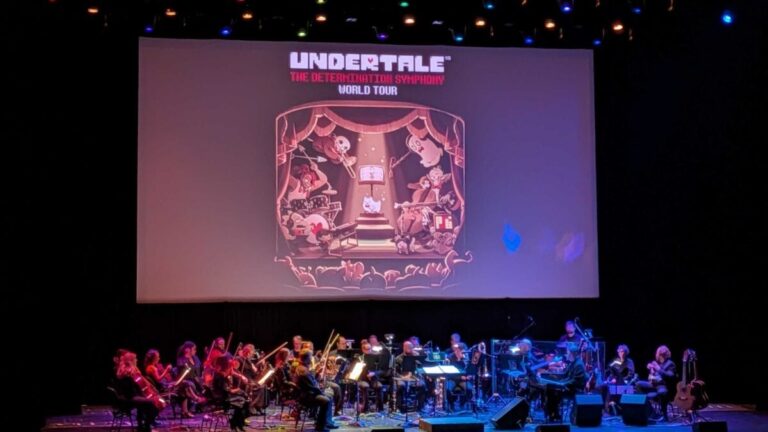
The Undertale Determination Symphony concert at Kansas City’s Kauffman Center drew devoted fans ready to experience Toby Fox’s iconic soundtrack performed live by an orchestra. Attendees arrived in cosplay, the crowd proved enthusiastic and well-behaved, and the musicians delivered clean performances of carefully arranged pieces. Yet beneath the positive atmosphere lay a structural puzzle: the selection and ordering of the 30-plus songs performed across two acts raised questions about what guided the programmer’s choices.
The Concert Structure and Performance Quality
The 90-minute first act opened in familiar territory. Songs proceeded chronologically through the early game—”Once Upon a Time,” “Your Best Friend,” “Fallen Down,” “Ruins,” “Home,” “Heartache,” “sans,” and “Snowy” arrived in the sequence a player encounters them while progressing through the Underground. The orchestra’s arrangements conveyed the emotional arc, from the gentle piano of “Once Upon a Time” through the unsettling transition into darker areas. Musicians executed these pieces cleanly, and the conductor showed visible enthusiasm—notably during “Megalovania,” which closed the concert with energy from the podium.
When the Order Broke Down
The programming logic fractured midway through Act 1. Rather than continue the chronological path through Snowdin, the concert skipped vast portions of the game’s content. “Snowdin Town” arrived, followed by “Waterfall,” then “Memory”—a choice that puzzled from the audience perspective. “Bird That Carries You Over A Disproportionately Small Gap” received a full orchestral treatment, proceeding into “Dummy!” and then, confusingly, “Temmie Village” and “Spooktune” occupied stage time. Neither song seemed to warrant symphony orchestration; “Spooktune” isn’t even in the base game.
The act recovered near the finale with “NGAHHH!!!” and “Spear of Justice” appearing in approximately the right narrative position. Then it leaped over Hotland entirely and moved straight to end-game material: “Undertale,” “Small Shock,” “Bergentruckung,” and “ASGORE” closed the first act. As a structural bookend, this choice made sense—”ASGORE” delivered the dramatic punctuation needed to end Act 1 without a proper climax emerging from a strictly chronological approach.
Act 2 and the Scattered Finale
The second act followed a similarly scattered path, reaching back to sections skipped in Act 1 and leading toward the true ending. This approach allowed the concert to include content from mid-game areas without disrupting the build toward the final confrontation. The concert closed on “Megalovania,” the definitive endpoint for any Undertale performance.
Inclusions That Raised Questions
Some choices defied easy justification. “Temmie Village” and “Spooktune” stand as the prime examples—both are novelty tracks that gain meaning in their game context through isolation and specificity. Transplanting them to an orchestra removed that context while adding no obvious musical value. The concert had limited runtime, making every selection a choice to exclude something else. That two minor comedic pieces used up available slots illustrated the puzzling priorities embedded in the programming.
The logic likely reflected a desire to showcase variety and offer fun moments for the dedicated fan base, who would recognize and appreciate even marginal pieces. Yet this reasoning collided directly with obvious omissions elsewhere on the soundtrack.
Notable Absences: The Core Soundtrack Left Behind
The Shortest Omissions
“Enemy Approaching” clocks in at 32 seconds. For comparison, the concert found time for material far less substantial. The piece would have fit cleanly as a transition or bumper between other segments—it could have bridged “Heartache” into later content or served as punctuation elsewhere in the program. Its exclusion makes the inclusion of longer but less musically distinctive pieces seem like simple oversight.
The Map Themes
“A Hallowed Descent,” the Waterfall region theme, represents one of two major area tracks omitted entirely. This haunting, atmospheric composition would have given an orchestra genuine material to expand upon. Paired with “Amalgam” for additional unsettling texture, it could have provided a unique color in the program. More striking still was the complete exclusion of “Another Medium,” Hotland’s defining theme. This piece isn’t merely a background track—it represents an entire major section of the game. The decision to skip it while including “Temmie Village” and “Spooktune” stands as perhaps the single most questionable call in the concert’s programming.
“Another Medium” belonged in Act 2’s arc, logically positioned to reintroduce the areas Act 1 had bypassed. Following “Battle Against A True Hero” as an encore would have given Undyne a proper orchestral showcase—a fitting back-to-back with “Megalovania” before the final notes.
The Battle Themes
The concert omitted “Battle Against A True Hero,” one of the soundtrack’s most celebrated combat pieces. Equally striking: “Enemy Approaching,” the game’s foundational normal battle theme, never played. This is the core combat music players hear repeatedly throughout the Underground. Its absence is remarkable given that more niche tracks received stage time.
The Ending Sequences
The credits music didn’t appear in the program. The likely reasoning—uncertainty about what visual material to display during these reflective pieces—doesn’t overcome the loss. The credits theme carries particular weight, as Toby Fox performed the final piano melody for the game version. Both credits tracks represent the emotional resolution of the entire narrative, yet they fell outside the concert’s scope.
The Structural Trade-offs
Sound programming logic exists for some of these omissions. A strict chronological approach leaves no natural peak for Act 1’s conclusion—no finale moment to end on if the concert simply proceeded through the game in order. Selecting “ASGORE” as the act break solves this problem, and the choice proves defensible. Three hours of continuous music also becomes impractical; cuts were inevitable.
Yet the specific selections made—favoring minor novelty tracks over major themes, basic combat music, and credited finale sequences—created a program that confused the listening order while abandoning some of the soundtrack’s strongest material. A concert programmer faces genuine constraints, but the trade-offs suggest either different priorities than what served the source material best, or oversight regarding which pieces carry weight in the game’s architecture.
What an Ideal Program Might Have Looked Like
A tighter second act could have incorporated the omitted map themes without extending runtime significantly. “Another Medium” runs long, but “Enemy Approaching” takes 32 seconds. Swapping comedic novelties for these core pieces would have shifted the program closer to the soundtrack’s actual importance hierarchy. The menu theme reimagined with layered instrumentation—beginning sparse and building to full orchestral versions—would have offered an elegant structural element. The credits sequences, placed strategically, would have provided reflective bookends.
These aren’t criticisms of the performers or the arrangements, which deserved praise. They’re observations about selection logic in a concert with finite resources and infinite potential material to draw from. The Undertale Determination Symphony succeeded in entertaining its audience and demonstrating that game music commands orchestral legitimacy. The programmer’s choices simply left room to wonder what different priorities might have yielded.
Frequently Asked Questions
What venue hosted the Undertale Determination Symphony concert?
The concert took place at the Kauffman Center in Kansas City.
How many acts did the concert have, and what ended the first act?
The concert had two acts. The first act ended with 'ASGORE,' which provided a dramatic climax rather than proceeding strictly chronologically through the game.
Which song closed the entire concert?
The concert ended with 'Megalovania,' the soundtrack's traditional finale.
