
Key takeaways
- Fields of Mistria systematically refines farming sim mechanics, improving crop variety, animal breeding, and mining while eliminating friction points like constant watering-can refills.
- The game's pacing balances three main questlines—mining, resource collection, and town ranking—so players never feel rushed or behind on critical story moments.
- Extensive contextual dialogue with minimal repetition across 40+ hours of gameplay creates a townspeople cast far more fleshed-out than comparable farming simulators.
- The 1990s anime aesthetic and shojo narrative framing create a distinctive tonal identity that complements rather than contradicts the core farming simulation mechanics.
Fields of Mistria represents a methodical refinement of the farming simulator genre, taking the established template of games like Stardew Valley and Harvest Moon and executing it with systematic improvements across nearly every element. The game asks players to take on the role of an Adventurer hired by a town to revitalize a neglected farm following an earthquake, immediately grounding the protagonist’s motivation in something more tangible than inheriting a grandfather’s legacy.
The foundational gameplay loop—waking each morning to tend crops, care for animals, pursue mining expeditions, befriend townsfolk, and pursue optional relationships—registers immediately as familiar to anyone versed in the genre. Yet within this recognizable structure, Fields of Mistria makes consistent, deliberate choices that amplify what works about farming simulators while smoothing away friction points that have persisted across the genre’s history.
Mechanical Refinement
Crop and Farming Systems
The roster of available crops expands significantly beyond what comparable titles offer. The watering system undergoes a fundamental change: players never need to refill their watering can, a streamlined approach that eliminates one of the genre’s recurring maintenance chores without sacrificing the sense of tending to the farm. This design philosophy—keeping core activities engaging while reducing busywork—extends throughout the game’s systems.
Animal Husbandry and Breeding
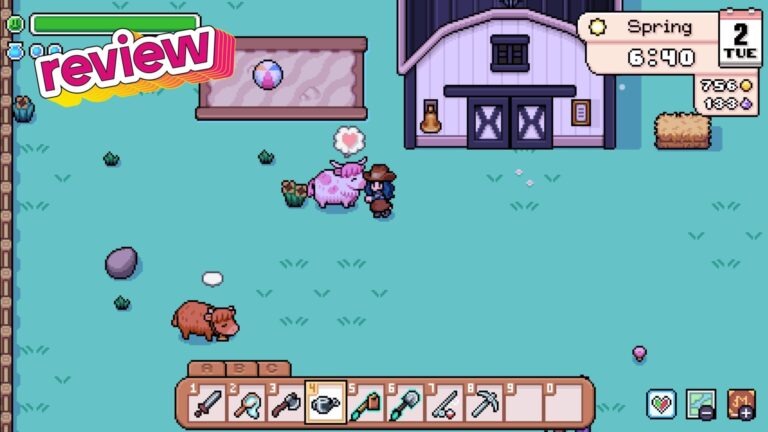
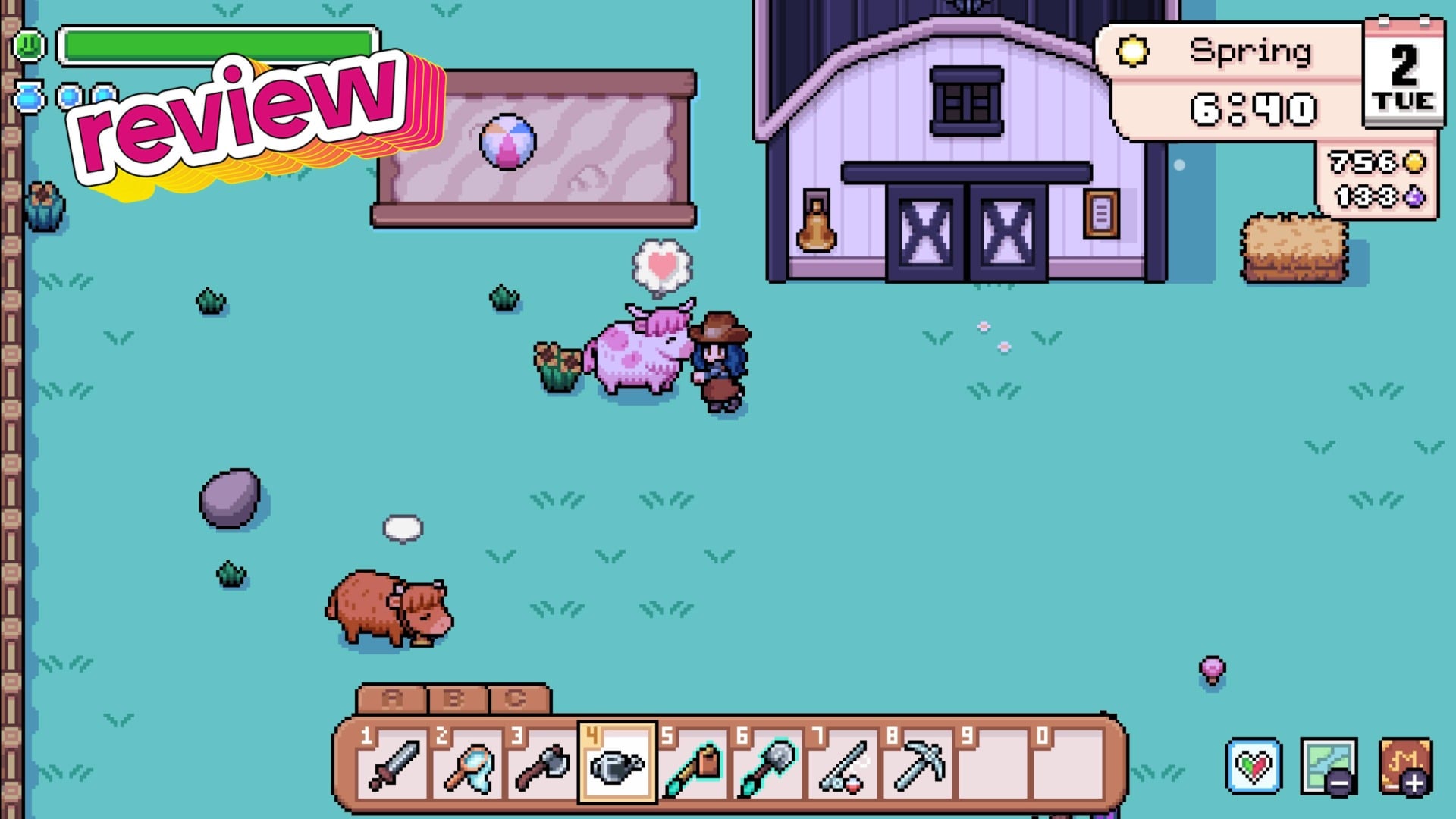
Raising livestock gains new depth through a breeding system that allows players to cultivate animals in rare colors and varieties. The game expands the roster of available animals beyond what earlier farming sims provided, giving players more meaningful choices about which creatures to focus on and how to develop their herds toward personal goals.
Mining and Combat
The mine system becomes more narratively central than in previous entries in the genre, with expanded environmental storytelling integrated into the descent through layers. Combat mechanics receive additional options beyond the basic tools available in earlier farming sims, giving players more tactical flexibility when encountering creatures inhabiting the mines.
Quality-of-Life Integrations
Fields of Mistria systematizes several convenience features that fundamentally change how the game feels moment-to-moment. Players can craft directly from their storage systems rather than carrying materials, eliminating inventory juggling for crafting sessions. Swimming, diving, and treasure hunting open additional activities beyond the traditional farming-mining-socializing triangle. Character appearance remains customizable at any time, with a substantial cosmetic collection available for those interested in personalizing their avatar across all seasons and special occasions—including distinct seasonal outfits and formal wear for wedding celebrations.
The game’s approach to its museum and donation system merges what Stardew Valley and Harvest Moon kept separate. Rather than maintaining two distinct collections, Mistria consolidates the museum and community center into a unified space with more bundle options and correspondingly better rewards for completion. This organizational clarity makes progression feel more structured and purposeful.
Narrative Pacing and Quest Structure
The game operates three primary questlines simultaneously without creating a sense of obligation or deficit. The first centers on mining progression, the second on resource acquisition, and the third on raising the town’s ranking through completing smaller community tasks. This architecture allows players to chip away at all three as their farm grows, without requiring constant attention to any single thread.
Main Quest Pacing
Each of the three questlines maintains a scale appropriately calibrated for gradual advancement. Players who complete their first spring with several spring-themed tasks incomplete need not feel they’ve fallen behind or missed critical story moments. The design actively accommodates playstyles that vary in intensity and focus without punishing exploration or relaxation.
Contextual Side Content
Side quests, numerous throughout the experience, supplement the main questlines by deepening individual character arcs. These missions provide flavor for the townspeople and supply additional reasons to engage beyond the treadmill of farming and mining. The weekly gathering at the local inn establishes its own narrative thread, with evolving storylines appearing week after week and supplying additional motivation to participate in community life rather than remaining isolated on the farm.
Dialogue and Character Development
The game distinguishes itself through the sheer volume and variation of character dialogue. Most farming simulators implement minimal dialogue systems where characters cycle through a handful of lines, delivered once per day upon interaction. Fields of Mistria approaches dialogue as a substantial element, assigning contextual variants based on weather, location (walking down the road versus at the tavern versus at the store), and recent quest completions. Characters respond to players who talk to them multiple times daily, preventing the repetitive nature typical of dialogue systems in the genre.
After approximately forty hours of play—sufficient to advance through one full in-game year and partway into a second—the reviewer encountered only one or two repeated lines, a remarkable achievement in a game designed to be played across multiple years. The second year also introduces dialogue specifically referencing that the player has been in town for two years, suggesting the writing systems extend further than immediately apparent. This expansive approach to character voice creates a townspeople cast that feels substantially more fleshed-out than any comparable farming simulator, encouraging genuine emotional investment in the community rather than treating relationships as checklist items.
Visual Presentation
The game commits to a consistent aesthetic rooted in 1990s anime character portraiture. The style carries a distinctly shojo sensibility, particularly once romantic storylines develop in tandem. Character portraits receive seasonal-specific outfits and special variants for weddings and other formal occasions, with distinct swimwear illustrations for summer events. While additional expression variations might have provided even greater character animation, the existing visual approach succeeds in establishing an appealing, cohesive world identity. This aesthetic choice proves inseparable from the game’s broader appeal, creating a tonal consistency between visual representation and the pacing, writing, and systems throughout.
Recommendations and Positions
For anyone with established affection for farming simulators—whether drawn to Stardew Valley, Harvest Moon, Story of Seasons, or Rune Factory—Fields of Mistria presents a strong value proposition. The game systematically addresses pain points accumulated across the genre without abandoning what makes the form compelling. Players seeking the fundamental loop of planting, harvesting, and crafting will find the same core experience elevated through execution and thoughtful refinement.
The game’s particular achievement lies not in inventing new mechanics but in recognizing which elements of the genre’s established template warrant friction and which benefit from streamlining. The result is a farming simulator that preserves genre familiarity while generating a distinct atmosphere that distinguishes it from comparable titles. This combination of respectful emulation and subtle innovation creates something that justifies playing through multiple in-game years despite already understanding the fundamental systems at work.
Frequently Asked Questions
How is Fields of Mistria different from Stardew Valley?
Fields of Mistria improves on Stardew Valley across nearly every system—more crops, watering cans never need refilling, animal breeding for rare colors, condensed museum and community center, more combat moves in mines, ability to craft from storage, swimming and diving, extensive cosmetics, and more quests spanning longer periods of time.
What are the three main questlines in Fields of Mistria?
The three main quests are mining progression, resource collection, and raising the town's ranking by completing smaller community tasks. All three operate simultaneously and are scaled to allow gradual advancement without creating a sense of obligation.
How much dialogue content does Fields of Mistria have?
The game features extensive contextual dialogue for weather, location, quest completion, and other situations. Players can talk to characters repeatedly each day, and after 40 hours the reviewer encountered only one or two repeated lines, suggesting the dialogue systems extend across multiple in-game years.
