
Key takeaways
- Gitaroo Man in 2002 proved rhythm games could be creatively different and commercially viable without standardization.
- Designer Keiichi Yano's mechanics simulated real guitar playing and influenced later titles like Elite Beat Agents.
- The game's refusal to help players figure out timing and its remixed song sections created challenge that rewarded genuine musical skill.
Rhythm games once inhabited a space of beautiful chaos. Before Guitar Hero and Rock Band solidified the genre into a standardized formula of plastic guitars and falling lanes, rhythm games explored fundamentally different approaches to synchronizing player input with music. Gitaroo Man, released on PlayStation 2 in 2002, stands as one of the final examples of that pre-standardized era—a game that didn’t just present music rhythmically, but wrapped it in a narrative so absurd and charming that the game itself became a complete experience.
The Weird Era Before Standardization
Setting the Stage for Musical Combat
For years before 2007, when Guitar Hero launched and reshaped the entire industry, rhythm games had pursued wildly different visions. Some were abstract. Some were narrative-driven. Some barely made sense by modern standards. But each brought genuine creativity to the question of how to make matching music with mechanics feel engaging. Gitaroo Man arrived near the tail end of this creative period, representing the last generation of rhythm games willing to be genuinely strange.
Enter Gitaroo Man and Its Transformation Narrative
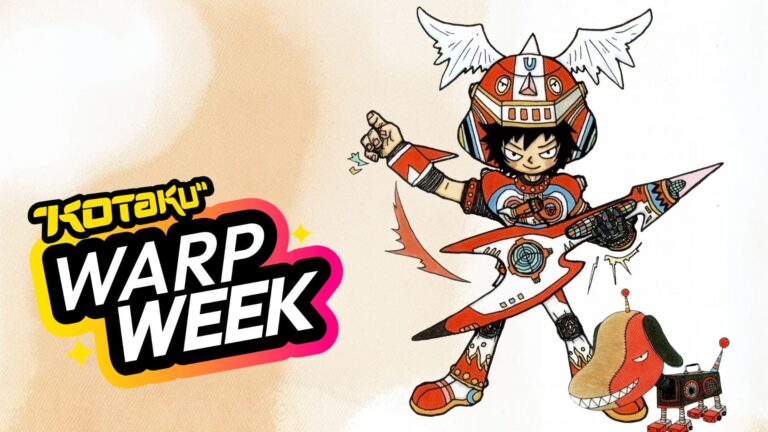
The game commits to its Sailor Moon-inspired premise without irony or hesitation. U-1, known as Yuichi in the Japanese version, is an ordinary teenage boy—dorky, frequently bullied by his rival Kazuya, hopelessly in love with Pico from next door. His only friend is Puma, a talking dog. When aliens suddenly attack the town, Puma transforms into a robot and grants U-1 a guitar-like weapon that triggers his own transformation into Gitaroo Man: taller, more confident, more powerful. The narrative exists purely to justify why U-1 must fight enemies with music. The game embraces this absurdity completely.
A Story That Shouldn’t Work But Does
Each song in Gitaroo Man functions as a battle sequence with distinct stages. Gitaroo Man powers up, defends against enemy attacks, and delivers a finishing blow—all synchronized to the music. The narrative framing makes every song feel purposeful. You’re not performing a concert. You’re fighting aliens with sound. That distinction, however small, transforms how the gameplay feels.
The character designs, the anime aesthetic, the complete commitment to the transformation sequence format—these elements combine to create something that modern rhythm games have largely abandoned. Contemporary titles prioritize simulation of musical performance. Gitaroo Man prioritized being weird and wonderful.
Mechanics That Simulate Real Guitar Playing
The Line and The Notes Working Together
The actual mechanics are elegant in their simplicity. As each song plays, a line travels across the screen that players track with the joystick, making it squiggle and dance. Overlaid on this line are notes that must be hit and held with button presses. Together, these systems create the genuine sensation of playing a guitar. The joystick represents the fretboard, moving between notes. The buttons represent strumming. Both hands engage as they would on a real instrument.
Compared to what Guitar Hero and Rock Band would eventually demand, this approach seems straightforward. Yet the execution proves remarkably clever. The interaction feels natural in a way that pressing five buttons in lanes never quite manages.
Visual Design That Demands Attention
Even now, playing Gitaroo Man on PS5, the visuals remain striking. Colorful characters constantly perform in the background, their animations frequently more distracting than the actual gameplay elements. Rather than the typical lane-based rhythm game interface, Gitaroo Man presents music battles as genuine confrontations. After years of playing nearly identical rhythm games that differ only in song selection, Gitaroo Man’s distinct presentation feels revelatory.
Defiantly Difficult and Uncompromising
The UI Refuses to Help
Because Gitaroo Man operates so differently from rhythm game conventions, it presents a significant challenge to modern players. The user interface doesn’t pulse in time with the beat, a standard rhythm game convention for decades. Instead, buttons must be pressed when they reach a reticle at the screen’s center. The game never explains whether the timing should be on the beat or offset. It’s a design choice that feels almost hostile to accessibility, yet it forces players to develop genuine rhythm sense.
The visual complexity amplifies this difficulty. During defense stages, face buttons zoom toward the center from all four cardinal directions nearly simultaneously. Tracking which button to press and when requires constant visual processing. Then the game switches back to the line mechanic without warning, demanding players recalibrate their focus in milliseconds. One lapse in concentration leads to failure.
Remixed Sections Prevent Pure Memorization
The cruelest design decision ensures that songs never play exactly the same way twice. Battle stages remix their sections, so players cannot memorize a song’s structure from start to finish. Instead, they internalize small chunks and piece them together during play. This approach feels deliberately antagonistic—and it works brilliantly. Players improve over time, but improvement comes from genuine musical understanding rather than rote repetition.
The Visionary Behind the Vision
Gitaroo Man’s existence becomes more significant when considering its designer: Keiichi Yano. The same person later created Elite Beat Agents for Nintendo DS, a game that leveraged the touch screen to accomplish nearly identical objectives—creating a vibrant, fundamentally different rhythm game experience. Both games rejected the idea that rhythm games must simulate being rock stars. They could tell stories, use unusual mechanics, and prioritize cleverness over accessibility.
The contrast with what followed is stark. Guitar Hero and Rock Band brought undeniable enjoyment—the satisfaction of playing favorite songs with friends, the spectacle of plastic instruments, the community appeal. But by dominating the market, they essentially froze rhythm games into a single template. Thousands of games since have simply copied that formula with different song lists.
What Commercial Success Cost the Genre
Playing Gitaroo Man 24 years after release reveals something uncomfortable: the rhythm game genre converged on a formula that sacrificed creativity for marketability. Modern rhythm games are technically accomplished and commercially viable. They’re also largely indistinguishable in their fundamental approach.
Gitaroo Man demonstrates that rhythm games didn’t need standardization. Games can be bizarre, uncompromising, and commercially successful. They can ask unusual questions about how music and gameplay interact. They can tell stories that justify their mechanics rather than serving as window dressing.
The genre could accommodate more experiments like Gitaroo Man—more willingness to be strange, more commitment to clarity of vision, more respect for player intelligence. Guitar Hero was fun. Rock Band was enjoyable. But Gitaroo Man was genuinely creative, and that rarity demands recognition.
Frequently Asked Questions
What year was Gitaroo Man released and for which platform?
Gitaroo Man was released in 2002 for PlayStation 2.
Who designed Gitaroo Man and what other game did they create?
Keiichi Yano designed Gitaroo Man. He later created Elite Beat Agents for Nintendo DS using similar creative principles.
How does Gitaroo Man differ from Guitar Hero and Rock Band?
Instead of lanes, Gitaroo Man uses a joystick-controlled line with button notes. The UI doesn't pulse with the beat, and songs remix sections during play, preventing simple memorization.
