
Key takeaways
- Mortal Shell II is an exceptionally atmospheric Soulslike that commits fully to its dark, oppressive aesthetic in ways that exceed genre conventions.
- The removal of the stamina meter and flexible shell-swapping system create accessible yet skill-rewarding combat that differs meaningfully from Dark Souls tradition.
- Mid-to-late-game resource scarcity creates grinding friction that occasionally undermines the otherwise excellent character progression system.
- The game's densely packed world of dungeons and secrets rewards thorough exploration as much as combat mastery, supporting 40+ hours of campaign content.
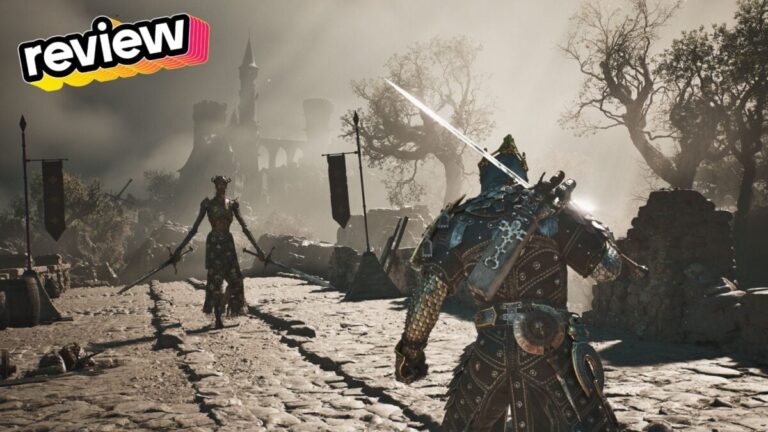
Cold Symmetry’s Mortal Shell II announces itself immediately with imagery steeped in religious dread. Robed cultists dance in unison, their movements exaggerated and fervent, their devotion to an unspeakable cause absolute. The tone arrives before the mechanics, and it never relents. This is not a Soulslike that borrows the trappings of darkness for aesthetic effect; it is, perhaps, the most genuinely metal video game ever created. Not in the sense of skeleton imagery or impalement, but in the actual philosophy: everything here exists to push atmosphere and tone into the absolute extreme, demanding players sit in darkened rooms, candles burning, while biblical thunderstorms rage outside. This is a game with no brakes, only double bass kick drums.
The sequel to Cold Symmetry’s 2020 original Mortal Shell, this follow-up takes the core hook of the first game—shells that function as character classes with unique abilities and can be swapped at rest locations—and expands it into something far more ambitious. Where the original was praised for its tightness and compact design, Mortal Shell II sprawls across an open environment filled with weapons, small dungeons, and Tarstones that augment your build. The comparison to the Blasphemous series is apt: a game that takes itself so seriously, with such deliberate heaviness, that it teeters on the edge of unintentional comedy. Yet that tone is precisely the point.
The Shell System: Constant Tactical Flexibility
How Shells Drive Playstyle Variation
Each shell in Mortal Shell II comes with its own skill tree that unlocks in tandem with the game’s narrative progression. This is not a system of bland statistical increases; there is genuine robustness to how your character can develop depending on which shell you inhabit. You might occupy one shell for its stagger damage output, another for its defensive capabilities. The shells are your primary tool for variation, and their ability to be swapped at rest locations means the game never locks you into a single approach. A snail wearing a bell on its back might demand one build; a black-robed woman wielding twin knives might require another.
The Slayer Seal and Accessible Difficulty
For players who find Soulslike combat’s reputation for punishing difficulty intimidating, Cold Symmetry offers elegant solutions. The Slayer Seal, discovered early in the campaign, is a defensive item that augments your abilities in crucial ways: it increases stagger damage to enemies, enables special attacks that heal you, and does neither of these things on any other shield in the game. This is not a difficulty slider that fundamentally changes the experience; rather, it is a single, well-implemented path for players who need assistance. You still engage with combat on the game’s terms, but the Slayer Seal gives you genuine breathing room.
Combat Unshackled: The Stamina Meter Removal
Perhaps Mortal Shell II’s most controversial decision is its elimination of stamina, a system so fundamental to Soulslike design that its removal feels almost heretical. In this game, you can attack, run, and dodge without limitation. In early sections, this creates an almost catch-like dynamic: overwhelm smaller enemies by landing well-timed hits before they reach you first. On first impression, removing stamina felt like backward design thinking, a rejection of one of the genre’s core pillars. Yet over hundreds of enemy encounters and constant refinement of character builds, the philosophy becomes clear: movement and spacing matter more than managing another meter on screen. For Mortal Shell II’s lumbering protagonist, this is the correct choice, even if it is not a decision that should become industry standard.
This design decision, paired with the variety of abilities unlocked through shells and the numerous weapons and augmentation items scattered throughout, allows Mortal Shell II to straddle an interesting line. It captures the essence of Soulslike combat while incorporating elements of more traditional action games. Near the endgame, with the right combination of abilities and weaponry, you can move through the environment with devastating momentum. The game rewards optimization and experimentation; there is no single correct approach.
Dungeons as Puzzles, Not Mere Skill Tests
Dense Checkpoint Design and Exploration
Nearly every checkpoint in Mortal Shell II has a small dungeon attached to it, with many more scattered across the landscape. These are not mere filler or simple enemy gauntlets. The best of them function as small brain teasers, environmental puzzles that reward thorough searching with forging materials and experience dumps. There is genuine satisfaction in outsmarting the game’s level design, discovering a secret chamber precisely because you noticed something slightly off about a wall or floor. This combines two kinds of gaming pleasure: the intellectual satisfaction of solving a puzzle and the visceral joy of executing combat well.
A World That Begs to Be Explored
Mortal Shell II offers minimal direction regarding where particular treasures or encounters lie. A hilltop might hide a snail boss with a bell on its back. A strange warp might lead to the black-robed knife wielder mentioned earlier. This density of content, paired with limited guidance, creates powerful motivation to explore every corner. The vistas themselves, painted in the style of Wayne Barlowe’s hellscapes, are beautiful enough to justify simply walking around and looking. The world drips with visceral atmosphere; every location feels designed to unsettle and intrigue.
Character Progression Hampered by Resource Scarcity
Over 40 hours of gameplay—completing the main campaign, clearing several dozen dungeons, and discovering every shell in the game, though missing a handful of weapons—one consistent friction emerges. By midgame, both currency and upgrade materials for Tarstones become frustratingly scarce. This scarcity forces grinding. It creates a grinding incentive that feels at odds with the game’s natural pace of discovery and combat. The robust character building system, with its genuine build variety and meaningful choices across shells, gets undermined when resource restrictions prevent you from exploring multiple paths. It is not a fundamental flaw, but it is a notable one.
Challenge Calibration and Replayability
Compared to other Soulslike titles, Mortal Shell II presents a somewhat reduced challenge curve overall. Whether this is intentional or subject to balance changes via patches remains to be seen. Players who breeze through the normal campaign have recourse: a dedicated Night (Hard) mode cranks the difficulty and adds additional content for those seeking greater punishment. This flexibility ensures the game scales across player skill levels without compromising its identity.
The endgame loop involves collecting MacGuffins that unlock later activities, but that mechanical structure is secondary to the experience itself. What drives repeated playthroughs is the desire to uncover every mystery: what lies behind every locked door, what the knife lady defends, what the snail with the bell truly wants. The game compels exploration through atmosphere and design, not through arbitrary quests or directive markers.
The Experience Is the Reward
Mortal Shell II succeeds not because it executes traditional Soulslike mechanics better than its competition, though it holds its own in combat design and world building. It succeeds because it commits so thoroughly to a singular artistic vision that everything in the game reinforces that vision. Every animation frame, every color choice, every sound effect exists to conjure something genuinely unsettling and alluring. The cult that opens the game—those robed, dancing zealots—finds its spiritual match in the player, drawn deeper and deeper into this nightmare realm by sheer atmospheric magnetism. There is nothing else like this, and that alone makes it worth your time.
Frequently Asked Questions
What are shells in Mortal Shell II?
Shells are character classes with unique abilities that can be swapped out at rest locations throughout the game. Each shell has its own skill tree that unlocks alongside narrative progression, allowing varied playstyles and build options.
Does Mortal Shell II have a stamina meter?
No. Mortal Shell II removed the stamina meter entirely, allowing you to attack, run, and dodge without limitation. The developer made this controversial choice to emphasize movement and spacing over resource management.
How long is Mortal Shell II?
The reviewer completed the main campaign and explored several dozen dungeons in 40 hours, discovering all shells but missing some weapons. Additional content exists in Night (Hard) mode and endgame activities.
