

Key takeaways
- Hamaguchi designed Revelation with the philosophy that it may be the last Final Fantasy VII game ever made, channeling complete creative ambition into the finale.
- Revelation addresses Rebirth's pacing criticisms by separating reward structures, so players choose which content matters to them rather than feeling obligated to complete everything.
- The game shifts thematic focus from Rebirth's emphasis on party bonds to individual character resolution, with side quests offering dramatic story changes based on which party member you send.
- Hamaguchi positioned the remake trilogy as proof that Final Fantasy can succeed as a global action RPG, expanding the franchise beyond traditional JRPG conventions.
At Gamescom 2026, Naoki Hamaguchi sits relaxed and reflective. The director of the Final Fantasy VII remake trilogy is just months away from completing a decade-long project that has reshaped how the industry approaches remaking gaming classics. Unlike his demeanor three years prior, when discussing Final Fantasy VII Rebirth, he now offers lengthy, thoughtful answers delivered with visible pride—the relief of someone who knows a monumental task is nearly complete.
Hamaguchi, a decade younger than co-director Tetsuya Nomura, grew up playing the original 1997 Final Fantasy VII at university. That formative experience gives him a perspective few developers could claim: he is simultaneously a custodian of the franchise and a devoted fan. As he prepares to bring the trilogy to its finale with Revelation, his energy suggests not exhaustion but liberation.
A Decade of Intentional Growth
The path from Final Fantasy VII Remake to Revelation has not been accidental. Each entry in the trilogy was designed to deepen and expand the gameplay experience—a deliberate philosophy born from necessity as much as vision.
When asked if the trilogy’s growing scale was planned from the outset, Hamaguchi offers an honest answer. The team did not map out the entire arc years in advance. Instead, they focused completely on whichever game was in development at any given time, moving sequentially from Remake to Rebirth to Revelation. What remained constant across all three projects was a singular directive: the gameplay experience had to evolve. Stagnation, he believed, would alienate fans and fragment the player base. This approach explains Revelation’s position as the trilogy’s largest installment—not a predetermined inevitability, but the natural result of continuous evolution.
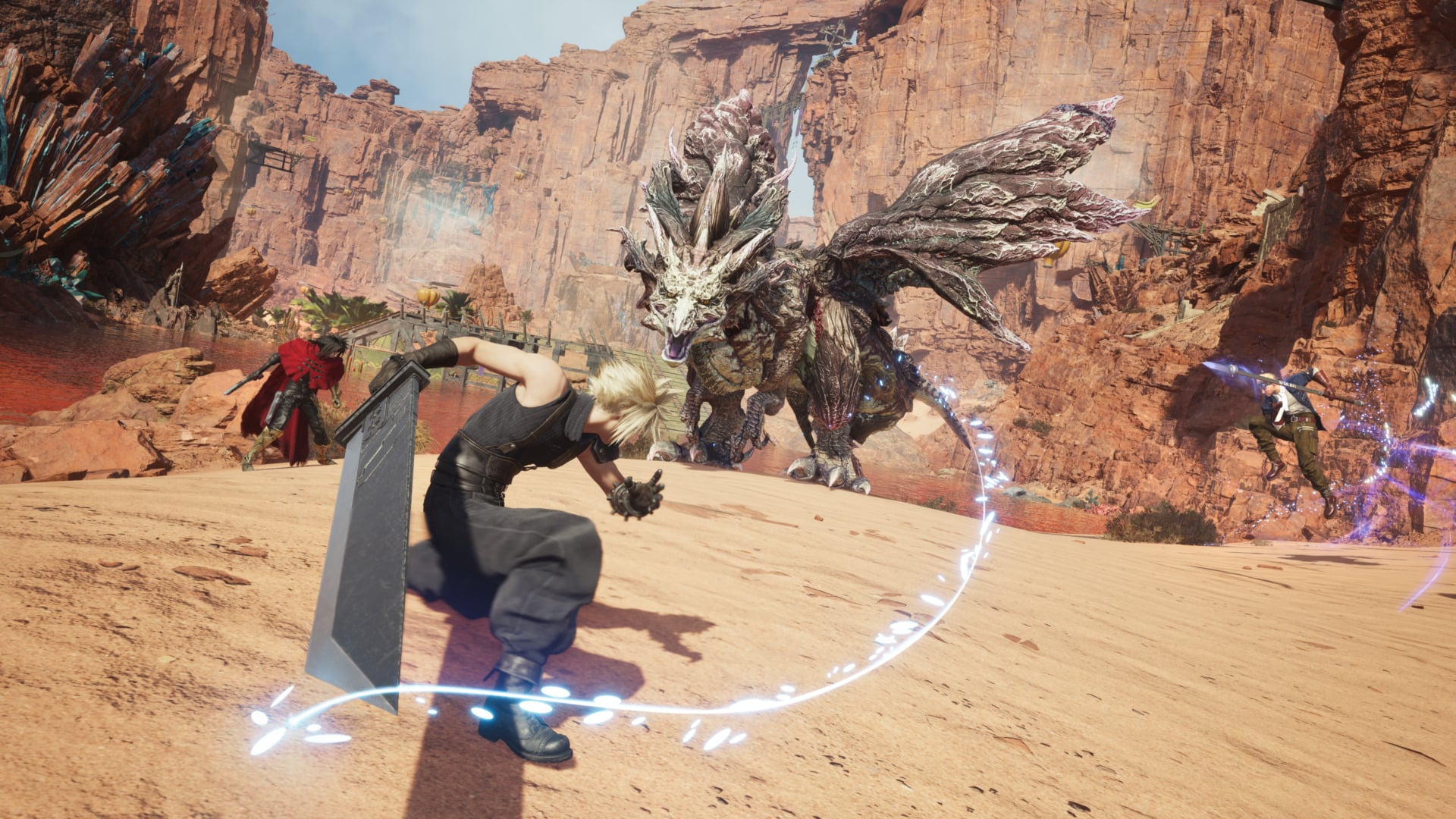
Addressing the Rebirth Feedback Loop
Final Fantasy VII Rebirth earned both acclaim and criticism. While praised for its scope and generosity, some players felt the main story pacing suffered beneath the weight of side content. Hamaguchi does not dismiss this feedback as a design flaw. Instead, he reframes it as a matter of player agency and communication.
The Materia Problem
In Rebirth, the progression system inadvertently forced engagement with all available content. Almost every side quest and activity rewarded Materia—the items that powered up party members for combat. This created a psychological pressure: players who wanted their characters fully equipped felt obligated to complete every side mission. Completion, in this system, became conflated with optimization.
Revelation takes a different approach. The reward structures are now segregated by activity type. Battle-related content grants party power-ups exclusively through combat-focused tasks, while mini-games reward cosmetics, character skins, and weapon appearances. This separation allows players to see the reward clearly before deciding whether an activity merits their time.
Choice Without Obligation
Hamaguchi acknowledges this redesign is not a perfect solution to the open-world design problem—a challenge that has confronted games across the industry. But it represents a crucial lesson: how developers communicate value to players directly affects whether massive content libraries feel generous or burdensome. By making reward structures transparent and segmented, Revelation invites players to construct their own experience rather than follow a predetermined path.
Thematic Progression: From Bonds to Determination
The emotional core of the trilogy has shifted with each entry. Rebirth centered on the bonds between party members, exploring how relationships deepen under pressure. Revelation pivots to individual resolution and determination—the internal strength each character must summon as they prepare for the final confrontation.
Resolution Through Choice
This thematic focus manifests directly in game design. Nearly every side quest presents the player with a choice: which party member should undertake this mission? The consequences extend far beyond minor dialogue variations. Depending on the character selected, the quest’s events, required gameplay actions, conclusion, and impact on the overarching story change dramatically. Players face genuine dilemmas about whose storyline to pursue, knowing that each choice shapes both personal character arcs and the narrative’s direction.
The Ambition of Planetary Scale
The original 1997 Final Fantasy VII allowed players to traverse its full world in seconds once the Highwind airship became available. Revelation operates at a vastly larger scale—an open-world planet rather than a compressed region. The design challenge is immediate: how do developers maintain pacing and engagement when flying across an entire world?
Hamaguchi expresses particular pride in the Highwind’s implementation. Few open-world games attempt to depict an entire planet; most confine themselves to a single region within a larger fictional geography. Revelation commits to a planetary scope. The key to making this work lies in maintaining a psychological sense of scale without the mechanical tedium of realistic travel times. Players experience the sensation of journeying around the world without hours of airship flight. The balance, Hamaguchi notes, is difficult to achieve, but Revelation succeeds by making traversal feel neither rushed nor exhaustingly slow.
Final Fantasy’s Competitive Future
Hamaguchi has used the remake trilogy as a vehicle for a larger message to the industry: Final Fantasy does not have to be a traditional JRPG. The franchise built its identity on linear storytelling, character development, and turn-based combat—a formula that remains valid. But the trilogy has demonstrated that Final Fantasy can compete as a global, action-focused, open-world experience on the same stage as any other major franchise.
This is not a criticism of JRPGs or turn-based games. Rather, it is a statement of capability. The remake trilogy established that Final Fantasy can operate in multiple genres and gameplay styles. Each individual project should choose what serves the game best, not what tradition demands. By planting this flag, Hamaguchi hopes to free future Final Fantasy titles to pursue diverse directions without feeling obligated to return to established conventions.
Everything Into One Game
As Revelation nears completion, Hamaguchi frames his approach with unusual finality: he is developing the game as if it will be the last Final Fantasy VII project ever made. No spin-offs, no future DLC expansions. Whether this prediction holds true or not, he declines to say. What matters is that every ambition, every system, every narrative thread has been channeled into this single culmination.
This absolute commitment to closure explains his confidence. Revelation is not positioned as a stepping stone or a setup for future installments. It is framed as a replacement—a new legend to supersede the original 1997 game’s enduring cultural position. That is the scale of ambition guiding development as the trilogy prepares to conclude.
Frequently Asked Questions
How does Revelation address criticism that Rebirth had too much side content?
The reward structure is now segmented—battle content grants combat power-ups, mini-games grant cosmetics. Players can see rewards upfront and choose what to engage with rather than feeling obligated to complete everything for optimization.
What is Revelation's main theme compared to Rebirth?
Rebirth focused on bonds between characters, while Revelation emphasizes individual resolution and determination as each character prepares for the final battle, with player choices directly affecting how each character's internal journey unfolds.
Will there be DLC or spin-offs after Revelation releases?
Hamaguchi is developing Revelation as if it will be the last Final Fantasy VII game ever made with no spin-offs or future DLC, but he declined to confirm whether such projects will actually occur.
