
Key takeaways
- Focus Entertainment filed formal legal complaints against players who threatened its staff and developers on September 15.
- The escalation reflects a broader pattern of harassment affecting gaming studios; Sony recently took similar protective measures for its support staff.
- Publishers are increasingly treating online threats as legal matters requiring law enforcement involvement rather than purely community management issues.
On September 15, Focus Entertainment announced that it has filed formal legal complaints against players who have directed threats at its staff and developers. The publisher, known for titles such as Space Marine II and Plague Tale, posted the statement across social media platforms and in Discord communities, including the Space Marine II server.
The message issued by Focus Entertainment addressed the escalating pattern of toxic behavior it has observed among its player base. While the company acknowledged that it has dealt with hostile comments over the years, it characterized the recent surge as a qualitative shift in severity. The statement reads: “Focus staff have sadly seen their share of toxic messages over the past years, but a recent escalation has led Focus Entertainment to file formal legal complaints against players directly threatening team members.”
Focus Entertainment Files Legal Complaints Over Employee Threats
What the Statement Says
The announcement framed the issue as a matter of community standards and workplace safety. Focus Entertainment reminded players of the conduct expectations within its communities, stating that members should contribute to an environment where “everyone feels welcome, respected, and included.” The publisher emphasized that this applies to fellow community members, moderators, development teams, and Focus staff alike.
In the statement, Focus Entertainment made clear that it views the threats and violent rhetoric as unacceptable. The company stated: “We are proud of our team and will not tolerate violent or sexist comments.” It also signaled a willingness to pursue further action, noting that it reserves “the right to take all necessary legal action to protect our staff.”
Unclear Catalyst
Focus Entertainment did not specify what prompted the recent escalation in threatening messages. The statement offers no contextual details about particular incidents, statements, or decisions that may have triggered the uptick in hostile communications. When Kotaku reached out to the publisher for additional information about what circumstances led to the complaints, the company had not responded at the time of reporting.
This lack of specificity leaves open questions about whether the threats were directed at particular individuals within the company, whether they were tied to specific game decisions or announcements, or whether they represented a generalized intensification of hostility across multiple areas of the community.
A Recurring Pattern in Gaming
Focus Entertainment’s situation is not isolated. The gaming industry has faced repeated instances where online communities have subjected developers and support staff to harassment, threats, and abuse. These incidents have become frequent enough that major publishers now view managing them as a standard operational concern.
Sony recently implemented new protective measures for its support staff after they experienced an increase in threats and hostile messages. The spike in aggression toward Sony employees followed the company’s decision to discontinue physical game production in 2028. This timing suggests that major announcements or policy shifts can serve as catalysts for harassment campaigns, though the underlying toxicity within gaming communities remains a persistent baseline condition.
The Broader Problem
The pattern extends beyond isolated incidents. Communities centered around competitive and popular games routinely generate hostile environments where developers and community managers become targets for abuse. The anonymity afforded by online platforms, combined with the passionate attachment many players feel toward their games, has created spaces where unfiltered hostility becomes normalized.
The fact that established publishers now regularly issue statements reminding players about basic conduct standards indicates the severity of the problem. These reminders serve as both a statement of values and a warning that companies are willing to enforce consequences for violations, including legal action.

Legal Action as a Response
The decision by Focus Entertainment to pursue formal legal complaints represents a more aggressive response than community moderation or account bans alone. By escalating to legal complaints, the publisher signals that it considers the threats serious enough to warrant involvement from law enforcement or the legal system.
This approach also reflects a broader shift in how gaming companies are responding to harassment. Rather than treating hostile online behavior as an inevitable feature of gaming communities, publishers are increasingly treating credible threats against employees as criminal or civil matters rather than purely community management issues.
The viability of such legal action depends on factors such as the jurisdiction involved, the specificity of the threats, the identity of the individuals making them, and the platforms hosting them. Discord, as a privately moderated space associated with official game communities, may facilitate the tracing and reporting of users to authorities more readily than dispersed social media platforms.
Focus Entertainment’s Affected Franchises
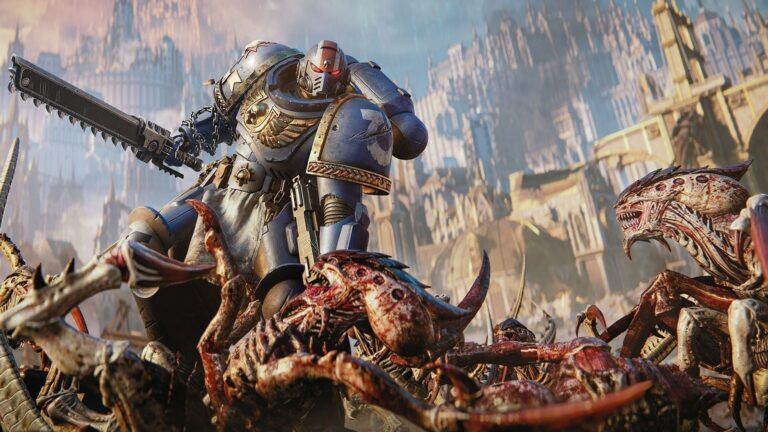
Space Marine II, one of the communities specifically mentioned in Focus Entertainment’s statement, represents a significant franchise for the publisher. The game carries the weight of decades of Warhammer 40,000 lore and a legacy of previous entries in the series. As an online multiplayer title with an active community, it likely generates substantial daily interactions that require moderation and management.
The Plague Tale series, also published by Focus Entertainment, has built a reputation for narrative-driven experiences. While the games generate passionate fan engagement, they do not carry the same competitive multiplayer environment that Space Marine II does, suggesting that the hostile dynamics may originate from different community contexts.
Looking Ahead
Focus Entertainment’s statement and legal action indicate that the company views the current situation as urgent enough to require a public stance. The decision to communicate directly with players across multiple platforms suggests the publisher is attempting to establish boundaries and deter future conduct of this nature.
Whether legal complaints result in meaningful consequences for individual players remains to be seen. The practical outcomes will likely depend on the specific details of the threats, the cooperation of platform operators, and the jurisdiction of the legal system involved. Regardless of the legal process, the statement itself serves to reinforce that Focus Entertainment recognizes harassment as unacceptable and is prepared to act on that conviction.
The situation underscores a broader challenge facing the gaming industry: how to maintain thriving, engaged communities while protecting the people who work within them from credible threats and systematic abuse. As gaming continues to attract larger and more diverse audiences, the scale of this challenge only grows.
Frequently Asked Questions
Why did Focus Entertainment file legal complaints?
The publisher received an escalation of threatening messages directed at its staff and developers, beyond the toxic comments it had dealt with in previous years.
Which games were affected by this issue?
Focus Entertainment's announcement specifically mentioned Space Marine II and implied Plague Tale communities, though threats affected the publisher's staff broadly across multiple projects.
Has similar harassment happened at other game studios?
Yes. Sony recently implemented new protective measures for its support staff after experiencing increased threats following its decision to discontinue physical game production in 2028.
