
Key takeaways
- Stardew Valley's two-button simplicity and intuitive design directly shaped how Shatterverse approaches accessibility despite being a violent arcade shooter.
- Both games feature immediate couch co-op with no mandatory single-player prologue, letting friends jump in together without lengthy tutorials or prerequisites.
- Shatterverse applies Stardew Valley's philosophy that player satisfaction matters more than performance outcomes, making any time investment feel valuable regardless of success.
- Producer Nic Duchesne has worked at Behaviour Interactive for almost ten years and spent three years developing Shatterverse, which launched August 31.
When developers discuss their influences, the connections aren’t always obvious. Nic Duchesne, a producer at Behaviour Interactive working on Serious Sam: Shatterverse, offers one of the more surprising pairs: a farming simulator and an explosions-focused arcade shooter. Stardew Valley—the cozy, meditative game about rural life—has shaped how Shatterverse, which launched August 31, approaches design philosophy, player accessibility, and the experience of playing together.
How a Farm Became a Tradition
Duchesne’s relationship with Stardew Valley began as a personal ritual. Five years ago, he and his wife established a Christmas tradition: selecting a single game to play together for a few days, unplugged from the outside world. Stardew Valley fit perfectly. “We select one game that we can play together, and we zone out of the world for a couple of days,” Duchesne explains. The couple, both millennial, shared a fantasy about country life and small-scale farming. What started as a one-time winter choice became a recurring commitment.
They’ve now played through the game together for three consecutive Christmases, always starting a new farm. In fact, Stardew Valley has become their default winter selection. “I think it’s going to be very great because they keep updating the game. There’s always a little something that changed from year to year. So it’s a yearly tradition, like watching all The Mummys or The Lord of the Rings,” Duchesne says.
The couple discovered an unexpected dynamic in their playstyle. During their first playthrough, his wife took the farming responsibilities seriously, insisting they water crops together each day. Once those chores were complete, Duchesne pursued his own interests—primarily fishing. “I don’t fish much in my life,” he notes. “But it’s just like, I’m going to be like a regular man and just go fishing. So living the fantasy of being a regular man.” They started each day together with essential tasks, then split their time as they wished. This rhythm appealed to them because it mirrored a lifestyle they couldn’t maintain in their working lives: structured time shared with someone you care about, followed by personal pursuits.
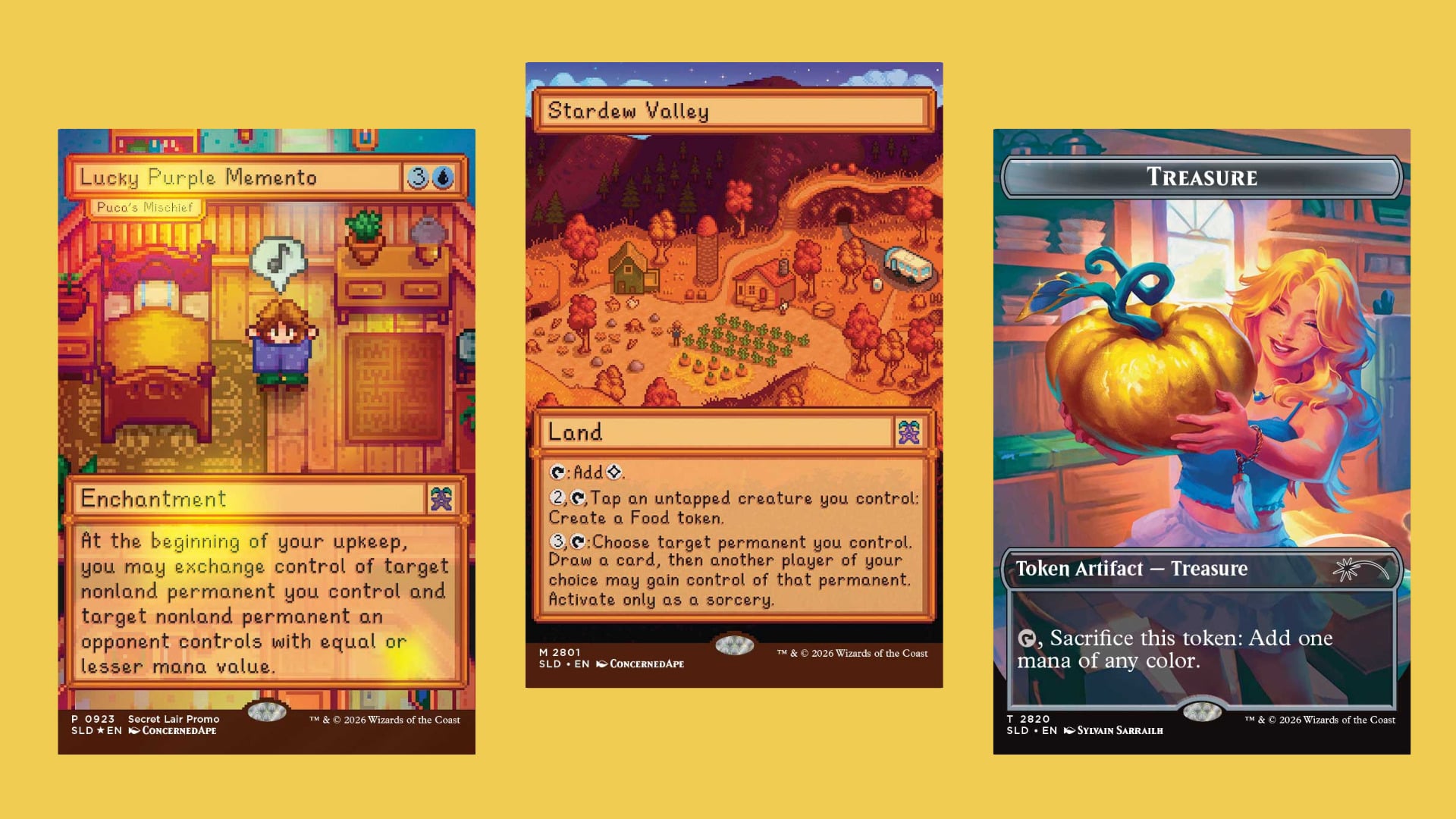
In-game, they always marry each other, a feature his wife didn’t even realize was possible until Duchesne surprised her with the Mermaid Pendant on their first playthrough.
Design Lessons From a Quiet Game
Duchesne brings nearly ten years of experience at Behaviour Interactive to Shatterverse, which he’s been developing for around three years. His previous projects span mobile titles like Assassin’s Creed: Rebellion and Giblins: Fantasy Builder, plus two unannounced PC and console games alongside Shatterverse. Yet the game that most influences his thinking about design comes from a completely different register: farming, meditation, and zero violence.
Simplicity Over Complexity
Stardew Valley’s greatest design strength, in Duchesne’s assessment, is its refusal to overwhelm. “Stardew Valley is very simple. It tries to be complex in what you can do in the sandbox. But on the tin, anyone, like, a young audience can also pick up the game because it’s, like, two buttons.” The mechanics match their visual presentation and function. “A pickaxe does what you think a pickaxe does. And a shovel does what you think a shovel does. I’m a very big fan of simple designs that have interesting interaction.”
This philosophy runs counter to modern game design, which often layers complexity atop complexity, then compensates with tutorial pop-ups and on-screen explanations. Duchesne contrasts this with Stardew Valley’s approach: players start on a single screen with two buttons and figure out the world through exploration, learning systems organically rather than reading instructions. “I think a lot of games, modern games, have become very complex and very complicated. And usually our answer to that is to add a tutorial pop-up or something, and tell the player this information. It’s a lot of: read, don’t tell, and don’t show.”
Learning from the Classics
The parallels to classic Zelda didn’t escape him. When he first played Stardew Valley, the design structure felt familiar—the starting screen where players can move left, up, right, or down, with no hand-holding. “I got this feeling in the back of my mind, like this is really like the original Zelda or the first couple of Zeldas. Then I read online that it was actually inspired by some of the original Zeldas.” Stardew Valley applies that same principle: exploration of both the physical space and the game’s systems becomes the primary learning mechanism.
Accessibility Without Sacrifice
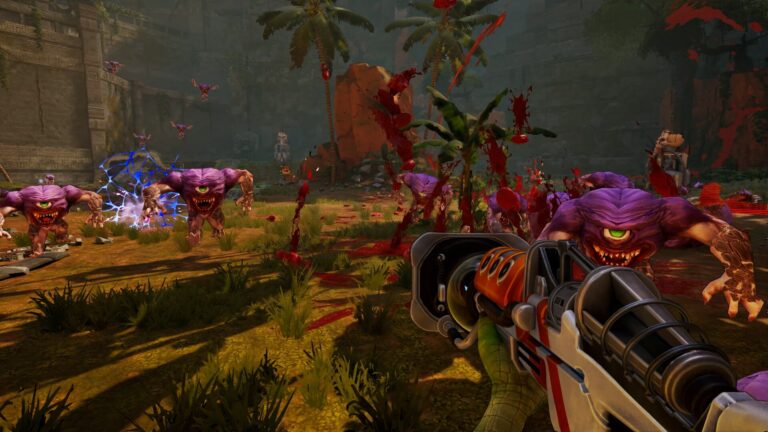
These design principles carry directly into Shatterverse, despite the radical tonal difference. The game is a cooperative roguelike arcade shooter for one to five players, with each run spanning three levels and culminating in boss encounters. It’s packed with enemies and explosions—the Serious Sam series core DNA. Yet Shatterverse maintains a streamlined entry point. A brief 5-10 minute tutorial exists at the start, but players can bypass it entirely and jump into cooperative play immediately.
This low barrier to entry reflects what Duchesne learned from Stardew Valley: make the fundamentals clear without gatekeeping the experience behind mandatory tutorials or complex prerequisites.
The Power of Playing Together
Coming of Age with LAN Parties
Duchesne comes from a generation shaped by LAN parties, StarCraft, and Diablo—experiences built for shared enjoyment. Both Stardew Valley and Shatterverse prioritize this ethos, though they express it differently.
Immediate Multiplayer Without Prerequisites
Stardew Valley allows full solo play or full cooperative play from the moment you start; there’s no forced single-player prologue. Shatterverse echoes this philosophy as closely as a 1-5 player shooter can.
The practical value of this approach shouldn’t be underestimated. Coordinating gaming sessions among busy adults is already difficult. Adding mandatory solo content before cooperative play even becomes available wastes precious shared time. Duchesne describes the frustration: “I cannot count the number of times that I scheduled with my friends to sit down and play a game. And it’s super hard because everybody’s super busy. We get to the game and it’s like, oh no, we need to play solo for like an hour before we can play together. And then half of the evening is wasted.”
The Beer-and-Pretzel Philosophy
Shatterverse instead targets what he calls the “beer-and-pretzel” experience: low barrier to entry, affordable, immediately playable together. “You see it on Steam, you see it on PlayStation and you’re like, I don’t know what to do between my season of Call of Duty, League, whatever. But like we have three hours together. Let’s get this game, just enjoy our time. It’s part of our rotation.”
Satisfaction Over Performance
Perhaps the most surprising lesson Stardew Valley imparts isn’t mechanical but philosophical. In Stardew Valley, players cannot truly fail. The Community Center completion—or the Joja Mart route—remains available regardless of how much time passes. While Shatterverse, as a roguelike shooter, includes failure states (you can die), Duchesne applies the underlying principle: players should feel satisfied with their time invested, regardless of whether they achieved the stated objective.
“The goal doesn’t matter because you’ve been playing for a hundred hours,” Duchesne reflects. Modern games often demand extensive grinding toward specific milestones; falling short feels wasteful. He’s learned to respect a different value: “Anything you do in a game should bring you something. I think it’s very, very important. And Stardew Valley taught me that.”
The Unlikely Crossover
Serious Sam and Stardew Valley seem to occupy opposite poles of gaming: one celebrates tranquility and self-directed progression, the other thrives on chaos and explosions. Yet both, Duchesne argues, share a fundamental clarity. “Your love language is violence. And shooting. And when you shoot, things go boom, because that’s what you would expect them to do.” Expectations met. Systems that behave intuitively.
This Christmas, Duchesne plans to introduce Shatterverse to his wife and friends, replacing Stardew Valley in their annual tradition—though possibly supplementing it. Not all his friends enjoy shooters, but the game’s accessibility means they can enjoy three hours together without prerequisites or lengthy tutorials. “I think that’s very powerful for a co-op game. Because we all were in that situation where you’re very excited for a game, but nobody cares. And then it’s a very big ask for your friends to play with you. It’s almost like a transaction. Just kick back, I’m going to buy it for you because it’s cheap. And play three hours. You’re going to enjoy it.”
Playfully, Duchesne muses about a future crossover between the two franchises. Given that Serious Sam already embraces alternate-universe versions of its protagonist, a farming-themed universe seems within reach. “You could have a universe that’s just farming and you need to go in and the objective of the mission is to water your crops while hordes of Mental are attacking your farm. Everything is possible.”
Frequently Asked Questions
What game inspired Nic Duchesne when designing Serious Sam: Shatterverse?
Stardew Valley inspired his design philosophy. Duchesne and his wife played it together over three consecutive Christmases, teaching him lessons about simplicity, couch co-op accessibility, and player satisfaction regardless of performance outcomes.
How does Shatterverse incorporate Stardew Valley's design principles?
Shatterverse maintains minimal tutorials (5-10 minutes, skippable), enables immediate co-op play for 1-5 players without single-player prerequisites, and prioritizes player satisfaction so any time investment feels rewarding regardless of win-loss results.
When was Serious Sam: Shatterverse released?
Serious Sam: Shatterverse launched August 31 as a cooperative roguelike arcade shooter for one to five players.
