
Key takeaways
- Short horror games reward precise exits: thirteen titles spanning 20 minutes to three hours demonstrate why the genre thrives in brevity.
- From interface-bound scares in Stories Untold and Anatomy to investigative mysteries in Devotion and Paratopic, modern horror exploits uniquely digital forms of unease.
- Clock Tower's 2024 remaster and ongoing influence of Playdead's Limbo show how survival horror and artistic games both continue shaping what players fear.
With Halloween just over a week away, there remains time to experience some final digital scares before autumn’s darkness passes into November. The appeal of horror games lies partly in their brevity. Unlike many genres where players expect hundreds of hours of engagement, horror thrives on precise pacing and knowing exactly when to stop. For those seeking to build a last-minute playlist of unsettling experiences, a robust collection of shorter titles stands ready to deliver, spanning from 20-minute encounters to three-hour affairs.
Intimate Mysteries
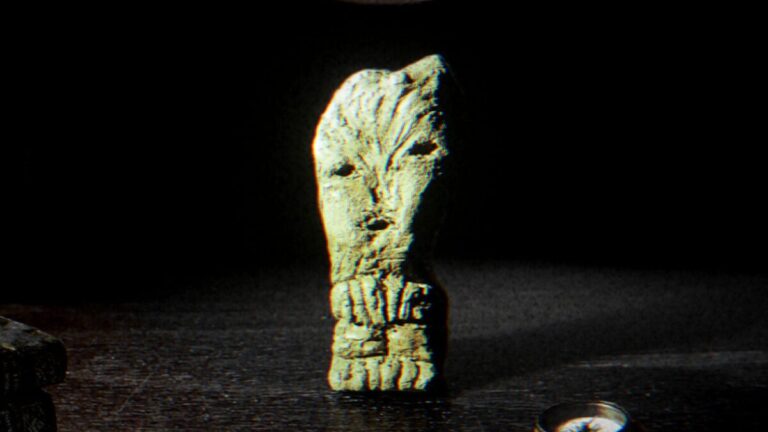
Some of the most unsettling horror emerges from the mundane transformed into something deeply wrong. Balazs Ronyai’s Children of Clay accomplishes in minutes what larger games struggle to achieve across entire campaigns. The premise is deceptively simple: study an uncanny figurine in a dimly lit parlor, consulting notes to unravel its secrets while shadows gradually encroach upon the space. The game channels the narrative DNA of M.R. James’s short story “A Warning to the Curious,” embodying that same sense of intimate violation, the creeping dread attached to certain objects that were never meant to be disturbed.
Narrative Disorientation and Conspiracy
Jessica Harvey’s Paratopic operates on an entirely different principle. Drawing structural inspiration from David Lynch’s approach to narrative, the game cycles through three distinct perspectives—a hired killer, a smuggler, and a birdwatcher—allowing the player to inhabit their mundane moments in real time. Conversations and highway drives gradually unravel into something far stranger, revealing disturbing creatures, cursed video tapes, and a conspiracy that deliberately resists complete understanding. The experience achieved enough recognition to warrant a remake titled Overdub, released last month.
Cult, Superstition, and Supernatural Consequence
Red Candle Games’ Devotion explores how disappointment and superstition can transform abstract family demons into tangible supernatural presence. Set in the apartment of the Du family, players uncover their pursuit of stardom through their daughter’s entry into a singing contest, followed by a devastating spiral into cult worship when that ambition evaporates. The critical acclaim that followed was complicated by the game’s removal from Steam, an action attributed to imagery perceived as disrespectful toward Chinese political leadership. The developers have since made Devotion available directly from their website, preserving access to what remains one of the genre’s most thematically substantial works.
Screen-Based Horrors
A particularly effective subset of modern horror exploits the interface itself as a vector for unease. No Code, now operating under the name Screen Burn, developed Stories Untold, a collection constructed around the principle that events occurring within a computer monitor can physically invade the surrounding space. The foundational piece, “The House Abandon,” presents itself as a retro text adventure. Within its narrative, the game’s events progressively blur into the player’s actual environment. The 2020 expansion bundled additional stories, each exploring the distinctive horror possibilities of different screen types and technological interfaces.
Audio Isolation and Environmental Destruction
Anatomy, created by Kitty Horrorshow, pushes isolation to extremes. The player occupies an empty, darkened house furnished only with white noise and archival recordings. As a false sense of familiarity establishes itself, the game methodically dismantles that comfort, literally shaking the structure apart and challenging players to descend into the basement. It demonstrates something unique to video games, fears impossible to generate in film or literature, created through the specific combination of audio emptiness and environmental transformation.
Bureaucratic Strangeness and Cosmic Dread
Home Safety Hotline borrows structural elements from Papers, Please but redeploys them toward a call center receiving reports of genuinely unusual circumstances. Players sort through an index of cryptic clues and bizarre phenomena, attempting to provide guidance to callers describing situations that resist rational explanation. The framing mechanism of helping strangers navigate impossible situations through bureaucratic means echoes decades of unexplained reports fielded by conspiracy theorist Art Bell.

Survival and Evasion
Survival horror developed through several competing evolutionary paths. While Resident Evil ultimately dominated the mainstream evolution, Clock Tower represents an alternative lineage that might have proven equally influential. Developed by Human Entertainment for the Super Famicom, Clock Tower drew direct inspiration from Dario Argento’s giallo films, specifically Phenomena and Deep Red. The narrative follows four orphans arriving at the Barrows estate seeking adoption, only to discover the arrangement conceals a deadly trap. Players must uncover the house’s secrets, protect their companions, and outrun the Scissorman through the night. WayForward released a faithful remaster in 2024 for contemporary hardware.
Ecstatica traces yet another survival horror evolution. Set in a medieval village besieged by werewolves and trolls, the game commits fully to an intentionally absurd aesthetic, with all characters rendered as enormous ellipsoids, while maintaining genuine tension throughout. Its brief length combined with relentless pacing creates something distinct from both atmospheric contemplation and action-heavy spectacle. Both Ecstatica and its sequel will receive modern ports arriving tomorrow.
The Unconventional and Subversive
Certain games resist traditional horror classification entirely. Horse Master, constructed in Twine, initially masquerades as a straightforward simulation about breeding and training horses. Further interaction reveals premises far more disturbing than first impressions suggest, as the fundamental relationship between player and subject warps into genuine unease. The game proves horror can emerge from subverted expectations rather than explicit scares.
An unnamed game builds its entire experience from photographs of an expansive doll repository, an enormous cavity containing dolls, dioramas, and dust. Players navigate a drone through a child-constructed maze designed to trap whatever lives under the mattress. As the labyrinth deepens and shadows intensify, the possibility emerges that the original trap succeeded beyond intention.
Yames has created several brief, free horror experiences over the years. One positions the player as a religious scientist descending into ocean trenches seeking angels, confronting divinity in absolute darkness while deciding how much faith one will literally allow to become part of oneself.
Limbo, created by Playdead, continues captivating players years after its release. The game casts players as a young boy navigating a desaturated world drained of color and human presence. Platforming through shadows containing hostile figures, mind control installations, and spectral creatures, Limbo resists definitive interpretation despite extensive analysis. Frequently imitated but never matched, it remains central to artistic horror game design.
Seasonal Play
The Annual Ghost Town Pumpkin Festival, created by Adam Robinson-Yu of A Short Hike, operates on entirely different principles. Up to 20 players can participate in a multiplayer pumpkin carving simulator, featuring a pumpkin patch visit, a haunted hay ride, and autumnal discoveries. The crucial limitation: the game operates on a yearly cycle, with servers shutting down as the season ends. Play it this week or wait 365 days for the next opportunity.
Frequently Asked Questions
How long are these horror games to complete?
The games range from 20-minute experiences to three-hour nightmares, with most falling somewhere in between, making them suited for quick play sessions before Halloween.
Why did Devotion disappear from Steam?
Red Candle Games' Devotion was pulled from Steam due to imagery believed to be disrespectful toward Chinese political leadership. The developers made it available on their website instead.
Which game received a remaster in 2024?
Clock Tower, originally developed by Human Entertainment for the Super Famicom, received a faithful remaster from WayForward in 2024 for modern hardware.
