
Key takeaways
- Netflix offered Xbox $500 million for seven-year exclusive adaptation rights but withdrew when Xbox's CEO Asha Sharma counter-offered $800 million.
- Xbox is creating a new cross-media department called XP to coordinate adaptation projects with multiple partners instead of pursuing exclusive arrangements.
- Recent successes like the Fallout series and Minecraft movie have made gaming IP more attractive to major studios and streaming platforms.
- Xbox's adaptation track record includes successful Warner Bros. Minecraft movie and Amazon Fallout series but the underperforming Paramount Halo series.
According to reporting by Matthew Belloni at Puck News, negotiations between Xbox and Netflix for an exclusive adaptation partnership ended without a deal. Netflix had proposed $500 million to acquire the exclusive right to develop television and film projects based on Xbox’s game library over a seven-year period. Xbox CEO Asha Sharma counter-offered $800 million for the same arrangement. Netflix rejected the counter-proposal and withdrew from negotiations entirely, leaving the two companies without a long-term exclusive framework.
The Numbers Behind the Breakdown
The $300 million gap between Netflix’s opening offer and Xbox’s counter-proposal proved insurmountable. Netflix’s initial $500 million represented a significant financial commitment for streaming rights to a portfolio spanning multiple decades of gaming history. When Xbox demanded an additional $300 million, bringing the total to $800 million, Netflix calculated that the exclusive arrangement no longer justified the expense and chose to walk away.
The failed negotiation does not mean the companies have severed their relationship entirely. In a statement to Puck, Xbox characterized Netflix as “a valued partner” and claimed to have “received record-breaking interest” in adapting its intellectual property from other production partners. The company specifically highlighted upcoming animated adaptations of Minecraft and Diablo with Netflix as evidence of continued collaboration outside an exclusive framework.
Why Publishers Are Doubling Down on Game Adaptations
Industry Economics Driving the Trend
The video game industry is increasingly turning to screen adaptation as a revenue model and strategic asset. Game development budgets continue to climb toward historically unprecedented levels, while the consumer base for premium games has evolved and fragmented. The traditional business model of developing a game and selling copies, or managing a subscription service, no longer generates all the revenue a major publisher needs to sustain growth and justify investment in large studios. Adaptation deals offer a pathway to monetize existing intellectual property without the substantial cost of developing new games from scratch.
Recent Adaptation Successes
The recent track record of video game adaptations has strengthened publishers’ expectations for what these deals should command financially. HBO’s The Last of Us television series demonstrated that faithful adaptation of gaming narratives could attract mainstream television audiences and actively regenerate interest in the source material years after release. Illumination’s Super Mario Bros. Movie transcended typical video game film expectations and became a cultural phenomenon, grossing over a billion dollars worldwide. Amazon’s Fallout series, based on Bethesda’s long-running franchise, drew significant audience engagement and critical recognition.
Xbox’s Uneven Results
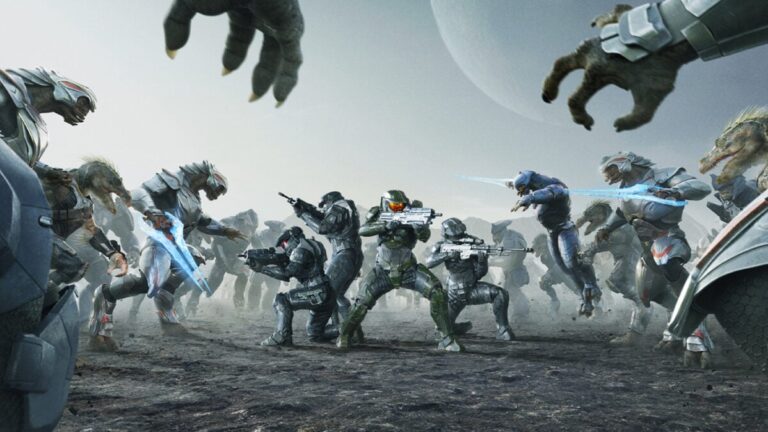
Xbox’s own track record with adaptations reveals how unpredictable the conversion from games to screen can be. The Warner Bros. Minecraft movie performed strongly at the box office and demonstrated that a game property known primarily for creative freedom could translate to film effectively. Amazon’s Fallout series achieved both critical recognition and substantial viewership among streaming audiences. Yet Paramount’s Halo series, developed from one of Xbox’s most recognizable and commercially important franchises, failed to achieve comparable cultural penetration or the robust viewership figures that the Fallout adaptation generated.
What Does Xbox’s IP Portfolio Actually Contain?
Microsoft’s game library spans hundreds of titles across multiple decades of console and PC gaming. The company owns franchises including Doom, The Elder Scrolls, Gears of War, Call of Duty, Space Quest, Minecraft, and Diablo, among many others. That portfolio breadth might reasonably suggest substantial negotiating leverage for any adaptation partner seeking exclusive rights to develop multiple projects.
However, that breadth did not guarantee Netflix’s commitment. The streaming market itself remains crowded with adaptation projects from multiple gaming publishers. Netflix has already developed content based on Cyberpunk, League of Legends, The Witcher, and Castlevania, each representing either a direct game adaptation or adaptations based on source material also explored in gaming form. Additionally, the company has secured streaming rights to a live-action Zelda series arriving next year. A production company can source content from multiple gaming publishers rather than committing exclusively to one library, reducing any single publisher’s leverage.
The Strategic Pivot to Multiple Partners
Rather than pursue another single mega-deal following the Netflix failure, Xbox is attempting a fundamentally different approach to adaptation partnerships. The company announced a new cross-media department called XP, designed to coordinate adaptation projects across multiple production partners and studios. This represents a deliberate move away from seeking exclusive arrangements and toward developing non-exclusive partnerships with various studios and streaming platforms.
This strategy reduces Xbox’s individual negotiating power in conversations with any single partner, as no production company receives exclusive rights to the entire portfolio. However, it potentially increases the total number of adaptation projects in active development simultaneously across different platforms. The company’s claim of receiving “record-breaking interest” in its intellectual property from multiple sources suggests that sufficient market demand exists to sustain relationships with multiple partners without an exclusive arrangement.
How This Shapes the Broader Industry
The Xbox-Netflix negotiation collapse illustrates the challenges publishers face in monetizing their intellectual property during a period of rising development costs and persistent market uncertainty. Netflix’s decision to reject an $800 million offer for exclusive rights suggests the streaming platform either believes it can acquire sufficient adaptation content from other publishers or calculated that the terms did not justify the exclusive commitment to a single IP holder.
For Xbox, the creation of the XP department signals organizational commitment to the adaptation strategy despite this significant setback. Whether coordinating projects across multiple partners generates financial returns comparable to what a comprehensive exclusive deal might have provided remains an open question. As other major gaming publishers pursue their own adaptation strategies and negotiate with streaming platforms, the outcome of Xbox’s new multi-partner approach may influence how similar negotiations unfold across the entire industry.
Source: Kotaku
Frequently Asked Questions
How much did Netflix originally offer Xbox for exclusive adaptation rights?
Netflix offered Xbox $500 million for exclusive rights to develop television and film projects based on Xbox's game library over a seven-year period.
Why did the Xbox-Netflix deal fall through?
Xbox CEO Asha Sharma counter-offered $800 million, which Netflix rejected. Netflix subsequently withdrew from negotiations entirely.
What is Xbox's new strategy after the failed Netflix negotiation?
Xbox created a new cross-media department called XP to pursue non-exclusive partnerships with multiple production partners instead of seeking exclusive arrangements.
