
Key takeaways
- Eiji Aonuma received the Knight of the Order of Arts and Letters from the French Ministry of Culture this week.
- As producer of The Legend of Zelda since Ocarina of Time, Aonuma has shaped game design across multiple console generations.
- Other game creators including Shigeru Miyamoto (2006) and Peter Molyneux (2007) have received the same honor from France.
- Sandfall Interactive, creators of Clair Obscur: Expedition 33, will become the first entire studio to share the knighthood in 2026.
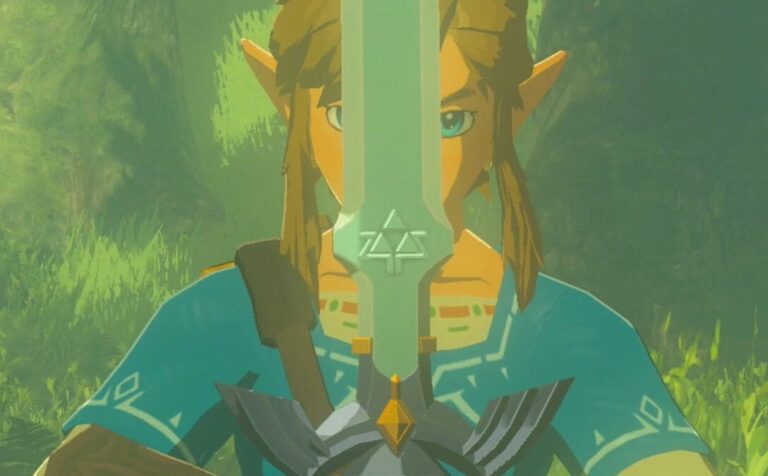
Eiji Aonuma, the longtime producer of The Legend of Zelda series, has been honored by the French Ministry of Culture with the title of Knight of the Order of Arts and Letters. The ceremony took place this week, marking official recognition of his decades-long contributions to interactive entertainment and game design. Catherine Pégard, France’s Minister of Culture, presented Aonuma with his medallion and described him as “a storyteller who always leaves room for the player’s imagination.”
Pégard thanked Aonuma for inspiring children across the world to dream through his creative work. Aonuma responded with prepared remarks delivered in French, including a personal message to his wife who was present at the ceremony: “Thank you for following me so far, let’s continue this adventure together.”
Aonuma’s Career at Nintendo
Aonuma joined Nintendo in 1988, beginning his tenure at the company during the NES era. However, it was his assignment as director on The Legend of Zelda: Ocarina of Time for the Nintendo 64 that would define his career and establish him as a central creative force within the organization.
From Director to Producer
Following his directorial work on Ocarina of Time, Aonuma transitioned into a producer role, a position he has maintained across the entire mainline Zelda series. His influence extends through The Wind Waker, Breath of the Wild, and into recent remakes and reimaginings of earlier entries. His involvement reaches beyond the primary titles to encompass most of the spin-offs and side projects developed under the Zelda brand.
Design Philosophy: Player Imagination
Aonuma’s approach to game design centers on creating space for player interpretation rather than prescribing every detail of the experience. As Pégard noted in her remarks, he is fundamentally a storyteller who trusts player imagination. This philosophy has influenced how Zelda games are structured across multiple console generations, from the Nintendo 64 era through the current Switch generation. His influence extends beyond individual design decisions to shape the franchise’s overall identity and what players have come to expect from a Zelda experience.
Reshaping Open-World Design
Breath of the Wild exemplified Aonuma’s design principles by fundamentally challenging how open-world games could be structured. Rather than using traditional progression gates to funnel players through prescribed sequences, the game allowed players to tackle challenges in nearly any order. The systems were designed to reward creative problem-solving and experimentation, allowing players to discover unintended solutions that still worked within the game’s logic. This approach influenced broader industry conversations about open-world design and demonstrated that commercial success and critical acclaim could follow from trusting players to find their own paths.
Game Developers Receiving French Cultural Honors
The French Ministry of Culture’s decision to knight Aonuma places him within a select and growing group of video game creators who have received institutional recognition through this honor.
Previous Game Developer Recipients
Shigeru Miyamoto, the legendary Nintendo designer behind Mario and Donkey Kong, received the Knight of the Order of Arts and Letters title in 2006. Peter Molyneux, the British game designer known for simulation and strategy games, followed one year later in 2007 with his own knighthood from the same institution. These recognitions established a precedent for honoring video game creators at the highest levels of cultural institutions.
Expansion to Entire Studios
Earlier in 2026, the French Ministry announced its intention to award the honor to Sandfall Interactive, the studio responsible for Clair Obscur: Expedition 33. This represents a significant shift in the award’s history, marking the first instance of an entire game studio receiving a shared knighthood. The decision signals recognition not just of individual visionaries but of collaborative creative teams.
The Award’s Scope and Context
The Order of Arts and Letters operates without nationality restrictions, allowing the French government to recognize artists from around the world and across multiple disciplines. While game developers are becoming more common recipients, artists in other mediums such as visual art, music, and literature remain more frequently honored. Aonuma’s class of recipients this year includes jazz musician Kenny Garrett, actress Richa Chadha, and Rumiko Takahashi, the creator of the manga series Ranma 1/2.
Timeline of Announcement and Ceremony
The French Ministry of Culture announced Aonuma’s knighthood in 2023, with the formal ceremony occurring only this week. The gap between public announcement and official ceremony represents standard administrative practice for such honors, providing time for necessary coordination and preparation.
Significance for Gaming as Culture
The French Ministry’s recognition of Aonuma reflects a broader institutional shift in how video games are viewed as a cultural medium. For decades, gaming struggled for recognition as an art form worthy of the same institutional respect afforded to film, literature, and visual art. These knighthoods signal a changing perspective at conservative cultural institutions that have traditionally centered on established art forms.
Pégard’s characterization of Aonuma as a storyteller and her emphasis on his ability to inspire children worldwide to dream pointed to something beyond commercial metrics or technical achievement. The knighthood acknowledged his role in creating experiences that have become formative for millions of players across generations. From children discovering their first Zelda game to adults who grew up with the series, Aonuma’s work has shaped the cultural landscape of interactive entertainment and influenced how subsequent generations approach game design and interactive storytelling.
Source: Kotaku
Frequently Asked Questions
Why did the French Ministry of Culture knight Eiji Aonuma?
Catherine Pégard, France's Minister of Culture, recognized Aonuma as a storyteller who leaves room for player imagination. He was honored for inspiring children worldwide to dream through his creative work.
Which games did Eiji Aonuma work on?
Aonuma directed The Legend of Zelda: Ocarina of Time and has served as producer on all subsequent mainline Zelda titles including The Wind Waker, Breath of the Wild, and recent remakes, plus most spin-offs.
Have other video game developers received this French honor?
Yes. Shigeru Miyamoto received the Knight of the Order of Arts and Letters in 2006, Peter Molyneux in 2007, and Sandfall Interactive will receive it in 2026 as the first entire studio to share the award.
