
Key takeaways
- The financial hemorrhaging at Warner Bros. Discovery underscores the scale of Suicide Squad’s commercial failure.
- Internal accounts paint a picture of creative despair masquerading as corporate efficiency.
- A critical turning point arrived when Rocksteady’s founders, Sefton Hill and Jamie Grant, departed the studio at the end of 2022—precisely when Suicide Squad entered its final development stages.
- The game’s player retention metrics reveal the speed and totality of its commercial collapse.
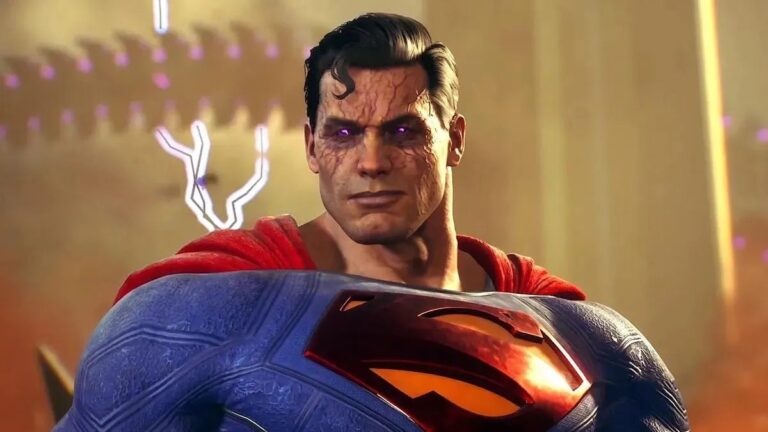
Warner Bros. Discovery disclosed a staggering $200 million loss tied to Suicide Squad: Kill the Justice League during a financial earnings call on May 9, 2024, marking one of the gaming industry’s most catastrophic missteps for a single title. Developed by Rocksteady Studios and released on February 2, 2024, across PlayStation 5, Xbox Series X/S, and PC, the game represents the legendary Batman: Arkham franchise creator’s disastrous pivot to live-service multiplayer gaming. Behind-the-scenes accounts from developers now reveal a toxic internal culture that transformed the creative process into something far removed from game-making itself.
A $200 Million Reckoning for Rocksteady’s Live-Service Gamble
The financial hemorrhaging at Warner Bros. Discovery underscores the scale of Suicide Squad’s commercial failure. The $200 million loss encompasses development costs, marketing expenses, and the write-down of an investment that the publisher had banked on as a franchise cornerstone. This figure places the title among the most expensive gaming failures in entertainment history, surpassing numerous other high-profile live-service disasters.
The game’s critical reception compounded the financial disaster, arriving with a Metacritic score of 60 out of 100—a middling rating that represents a dramatic departure from Rocksteady’s established legacy. The studio’s previous Batman: Arkham titles all scored 85 or higher, establishing Rocksteady as a developer capable of delivering critically acclaimed experiences. The gap between past successes and this failure highlights not merely a misstep, but a fundamental rejection of the studio’s new direction by both critics and players.
Developer Culture Fractured by Spreadsheet-Driven Design
Internal accounts paint a picture of creative despair masquerading as corporate efficiency. According to reports, developers described a workplace culture of “toxic positivity” where rigid perfectionism strangled innovation at every stage. The most damning assessment came from team members who felt they were “not making games anymore, [but] following a spreadsheet”—a visceral indictment of how live-service engagement metrics supplanted artistic vision during development.
This disconnect between creative ambition and corporate mandate directly contributed to the project’s notorious delays. Originally announced for 2022, Suicide Squad did not reach players until February 2024, a two-year slip attributed to “shifting visions” and internal chaos. Behind the scenes, developers waited weeks or even months for feedback from leadership on their work, creating bottlenecks that stalled progress and demoralized teams tasked with building a game no one seemed certain about.
Founder Departure Signals Management Crisis
A critical turning point arrived when Rocksteady’s founders, Sefton Hill and Jamie Grant, departed the studio at the end of 2022—precisely when Suicide Squad entered its final development stages. Their exit stripped the project of its original creative leadership during the most crucial phase, leaving the remaining team without the vision-setting presence that had guided the Arkham franchise to critical and commercial success. The timing proved catastrophic, occurring just as the game needed decisive direction most.
The founders’ absence compounded existing management problems. Their involvement had created a feedback bottleneck where developers submitted work only to wait indefinitely for responses on creative direction. When Hill and Grant departed, they took institutional knowledge and decision-making authority with them, leaving a vacuum that contributed directly to the “shifting visions” that plagued the final years of development. This leadership collapse, combined with the rigid spreadsheet-driven culture, created conditions where meaningful game development became nearly impossible.
Player Abandonment Reflects Fundamental Design Failures
The game’s player retention metrics reveal the speed and totality of its commercial collapse. Suicide Squad launched on Steam with an all-time peak concurrent player count of just 13,000—a modest number for any major release, let alone a title from Rocksteady backed by Warner Bros.’ marketing muscle. More damning still, current 24-hour player peaks have plummeted to the low triple digits, often dropping below 500 concurrent players on a nightly basis.
For a game designed as a live-service experience requiring sustained multiplayer engagement, these figures represent effective death. The comparison to Marvel’s Avengers, another failed superhero live-service title, proves instructive: Suicide Squad’s concurrent player numbers paled in comparison to that game and now sit far below sustainable levels for any ongoing service model. The rapid exodus of players suggests that the game failed to engage audiences even in its launch window, indicating fundamental design problems that no amount of post-launch updates could remedy.
Studio Leadership’s Defensive Positioning
Rocksteady’s public statements reveal an organization struggling to defend choices it made. Studio product director Darius Sadeghian stated in interviews that the team did not “really think of our game as fitting with any particular label,” explicitly refusing to characterize Suicide Squad as a live-service title despite its mechanics, progression systems, and multiplayer-centric design. This rhetorical distancing suggests internal awareness that the live-service label carried toxic associations following Marvel’s Avengers and other high-profile failures.
The defensive posture contrasts sharply with the game’s actual design, which incorporates all hallmarks of the live-service model: seasonal content, battle passes, cosmetic monetization, and multiplayer-dependent gameplay loops. The refusal to own the design choice publicly underscores institutional confusion about what Suicide Squad actually was—a problem that apparently plagued the entire development process and contributed to the “shifting visions” that consumed years of work.
Consequences Ripple Through Rocksteady’s Future
The commercial collapse triggered immediate organizational consequences. Rocksteady Studios cut staff in the aftermath of the $200 million loss, with layoffs disproportionately affecting the Quality Assurance team responsible for testing and bug-catching. Industry sources indicated that these cuts would negatively impact the developer’s ability to maintain quality standards on future projects, potentially damaging the legacy of franchises like Batman: Arkham that built Rocksteady’s reputation.
The QA cuts represent more than simple cost-reduction; they signal a studio in contraction, struggling to justify its size and overhead to corporate ownership. For a developer that built its reputation on meticulously crafted, polished experiences, the removal of quality oversight capacity threatens future product integrity. The layoffs also serve as a grim reminder to the industry that failed live-service experiments carry consequences extending far beyond individual games.
What Lies Ahead for Rocksteady and the Live-Service Experiment
Rocksteady Studios now faces a critical juncture regarding its future direction. With Suicide Squad’s live-service model abandoned and the studio’s reputation damaged, the developer must either recommit to the single-player, narrative-driven experiences that defined the Arkham franchise or find a new creative path entirely. The question of whether the studio will attempt to revive Suicide Squad with major overhauls or move on to new projects remains unresolved, though the $200 million loss suggests corporate appetite for continued investment in this particular title has evaporated.
The broader gaming industry watches Rocksteady’s next moves closely, as the studio’s failure reinforces a hard lesson: legendary pedigree and critical acclaim cannot overcome fundamental design philosophy misalignments. Suicide Squad: Kill the Justice League stands as a stark warning that even the most accomplished developers cannot force players to embrace a game design they reject, no matter how much corporate capital backs the effort.
