
Key takeaways
- Ben Affleck's Netflix thriller Animals, designed to showcase ethical AI in filmmaking, disappointed both critics and audiences with weak characters, clunky dialogue, and abnormal shot composition.
- Affleck stated at a Bloomberg event that his goal was to use AI responsibly without displacing workers, yet the film's failure suggests ethical labor practices alone cannot guarantee storytelling quality.
- Audiences consistently prefer entertainment perceived as human-created, and AI's technical visibility in production tends to undermine rather than enhance commercial appeal.
- The gap between Affleck's acclaimed earlier work like Argo and Animals' poor reception highlights how prioritizing technological demonstration over craft can diminish a director's output.
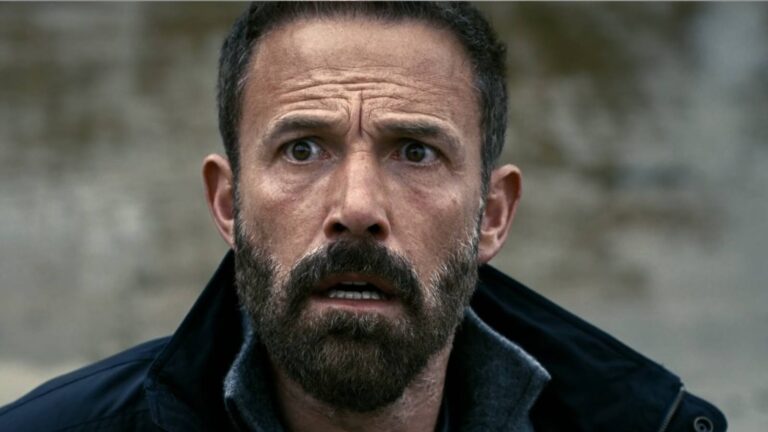
Ben Affleck has positioned himself as an advocate for artificial intelligence integrated responsibly into Hollywood production. Over the past year, he has argued that algorithmic tools can coexist with human creativity and labor, provided they are deployed ethically. His latest feature, Animals, which premiered on Netflix this weekend, was designed as a demonstration vehicle for this vision. The political thriller stars Affleck himself alongside Kerry Washington, cast as Abigail, the wife of Mark Kimball, a mayoral candidate whose campaign derails when his son is kidnapped.
Yet Animals has failed to validate Affleck’s technological thesis. According to Kotaku’s coverage, the film sits underwater on Rotten Tomatoes across both critic and audience scores, suggesting that Affleck’s commitment to showcasing ethical AI production came at the cost of fundamental storytelling discipline.
The Film’s Premise and Cast
Mark Kimball runs for mayor but lags in the polls. When his son is taken hostage, Kimball and his wife Abigail face an immediate crisis: they must secure ransom money without sabotaging his electoral prospects. The scenario itself contains the bones of a functional thriller, the kind of high-stakes personal conflict that has anchored many successful films before it.
Washington brings professional credentials from her role in the television series Scandal to the ensemble. The setup places personal survival against public ambition, a tension that competent filmmaking can exploit. Affleck’s prior experience directing thrillers suggests he understands the architecture of suspense.
Affleck’s Directorial History and Departed Standards
Earlier Acclaimed Work
Affleck directed Gone Baby Gone, a Boston-set kidnapping thriller that earned critical respect for its handling of moral ambiguity. He also directed Argo, which won the Academy Award for Best Picture. Those credits establish that Affleck has successfully navigated crime narratives and stories with political dimensions. Argo in particular set a standard for craft and clarity that audiences recognized.
The Gap Between Past and Present
Animals does not meet the quality threshold those earlier films established. Kotaku noted that critics identified paper-thin character personalities and clunky dialogue as recurring problems in the screenplay. The visual composition struck reviewers as abnormal for a thriller, with shot choices that seemed tonally inappropriate for the genre.
The visual oddities drew specific comparison to comedic material. Kotaku suggested that some framing resembled the kind of awkward composition comedian Paul Rudd might deconstruct on late-night television, implying that the visual choices worked against rather than for narrative clarity. This disconnect between intention and execution appears throughout the film.
Critical and Audience Response
Rotten Tomatoes reflects a comprehensive rejection. The film underperformed among both professional critics and general audiences, indicating the problems transcend critical taste and extend into the fundamental viewer experience. People who paid to watch Animals found reasons to criticize it across multiple dimensions: character development, dialogue, and visual execution.
Kotaku’s assessment noted that critics and audiences aligned in their dissatisfaction, suggesting the problems are not matters of perspective but of execution. When both professional reviewers and paying audiences identify the same deficiencies, the film’s failings become structural rather than subjective.
Affleck’s Ethical AI Philosophy
His Stated Position on Technology
Affleck has declined to specify exactly which production elements involved artificial intelligence during Animals’ creation. His discretion tracks a broader reluctance among filmmakers to detail AI’s actual role in contemporary film production. What he has articulated explicitly is his philosophical framework.
At a Bloomberg event, Affleck articulated his position on AI in creative industries. “I don’t believe that there will ever be ‘Just type it in and make a movie that people want to see,’” he said. He continued by emphasizing the ethical dimension: “The whole effort behind it was to do something ethical, to do something that did not displace people, but that allowed people in this economy and this world to benefit from this technology.”
Affleck’s rhetoric positions him as a guardian concerned with labor preservation. He acknowledged earlier skepticism about AI’s implications, describing how the technology spooked him years ago. His current advocacy represents a philosophical shift: rather than reject algorithmic tools, he seeks a pathway where AI supplements rather than replaces human workers.
What the Results Reveal
The commercial and critical failure of Animals poses a direct challenge to Affleck’s thesis. If ethical AI cannot produce films audiences want to watch, what practical value does it confer? The underlying promise of his argument rests on the idea that AI can coexist with human talent to expand creative opportunity. Animals provides no vindication of that claim.
Kotaku’s analysis noted that despite enthusiasm among entertainment executives who view AI primarily as a labor cost reduction tool, audiences have demonstrated consistent preference for art bearing recognizable human authorship. Human-created work continues to dominate viewership, while AI’s presence in production tends to become visible precisely at moments where technical seams show.
Why Audiences Prefer Human-Made Art
Kotaku highlighted how audiences gravitate toward content with identifiable human creative signatures. The success of artist Kane Parsons with Backrooms simulacra illustrates this pattern: audiences connected with work they perceived as authentically human-conceived. Human creativity carries a signal that audiences trust.
AI excels at announcing its own presence through technical markers and stylistic inconsistencies. This visibility works against rather than for commercial success. AI remains effective at reminding viewers of its existence; it has proven considerably less effective at compelling them to purchase tickets. The technology’s defining characteristic, its tendency to appear noticeably algorithmic, undermines rather than supports audience engagement.
Kotaku pointed out the paradox: executives may view AI as inevitable progress, but audiences continue to signal preferences aligned with human authorship. This tension between what executives want to implement and what audiences want to consume remains unresolved.
Implications for Hollywood’s AI Future
Animals arrives at a moment when entertainment executives debate AI’s appropriate role in production pipelines. Some industry leaders argue that algorithmic tools represent inevitable progress capable of enhancing efficiency while reducing labor costs. Audiences, however, continue to reveal preferences that align neither with pure cost reduction nor algorithmic creation.
The film may function as an early case study in what happens when technological innovation receives prioritization over storytelling discipline. Affleck’s explicit commitment to ethical labor practices—keeping humans employed and compensated throughout production—deserves recognition as a stated principle. Yet noble intentions cannot substitute for creative execution.
If the resulting product fails to engage viewers, the labor preservation argument loses persuasive force. The specific deficiencies Kotaku identified—shallow character development, awkward dialogue, and incongruous visual composition—suggest that good faith efforts to maintain ethical labor practices cannot themselves guarantee quality output. Affleck’s year-long advocacy for responsible AI deployment in Hollywood now carries a cautionary lesson: technology integrated into production requires narrative and visual discipline to justify its presence, ethical considerations notwithstanding.
Source: Kotaku
Frequently Asked Questions
What is the plot of Ben Affleck's Animals?
Animals follows Mark Kimball, a mayoral candidate lagging in the polls whose son is taken hostage. Kimball and his wife Abigail must secure ransom money while managing the political consequences of the kidnapping to his electoral campaign.
Why did Affleck want to use AI in Animals?
Affleck has advocated for ethical AI in Hollywood. At a Bloomberg event, he stated: "The whole effort behind it was to do something ethical, to do something that did not displace people, but that allowed people in this economy and this world to benefit from this technology."
What did critics say was wrong with Animals?
According to Kotaku, critics identified paper-thin character personalities, clunky dialogue, and abnormal shot composition as primary problems. The visual framing was compared to comedic deconstruction inappropriate for a thriller.
