
Key takeaways
- Margaret White is reinterpreted as a loving mother using subtle control rather than overt abuse, becoming the emotional foundation of the series.
- New mythology about women with supernatural powers expands beyond King's novel, potentially connecting multiple King adaptations in a shared universe.
- The Emaline character's obvious, early-telegraphed twist undermines Carrie's tragic isolation and the catastrophic impact of the prom night climax.
Stephen King’s Carrie has been adapted numerous times across screens, yet none has matched Brian De Palma’s 1976 film. The 1999 follow-up The Rage: Carrie 2 included clips from the original, essentially surrendering. The 2002 NBC television movie, written by Bryan Fuller, disappeared despite Fuller’s success on Wonder Falls and Hannibal. Kimberly Peirce’s 2013 film prompted the same question its predecessors did: why bother?
Amazon Prime’s new eight-episode Carrie, directed by Mike Flanagan, answers that question. According to Kotaku, the series justifies its existence by using King’s 1974 novel as a foundation for something entirely different—a story about power, control, and how women with agency are perceived across centuries.
Flanagan’s New Approach
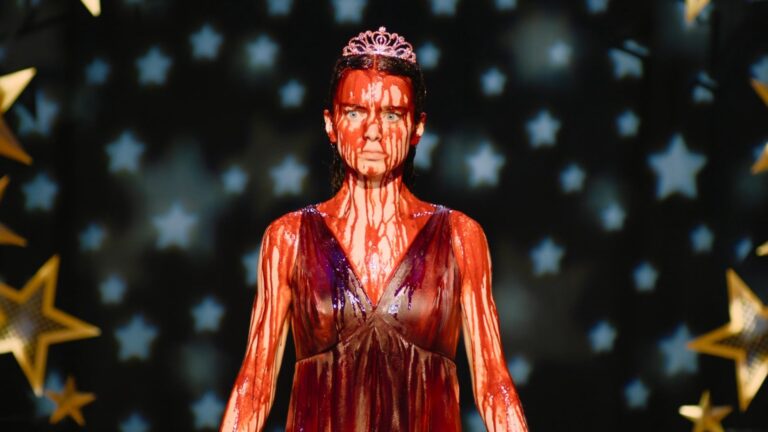
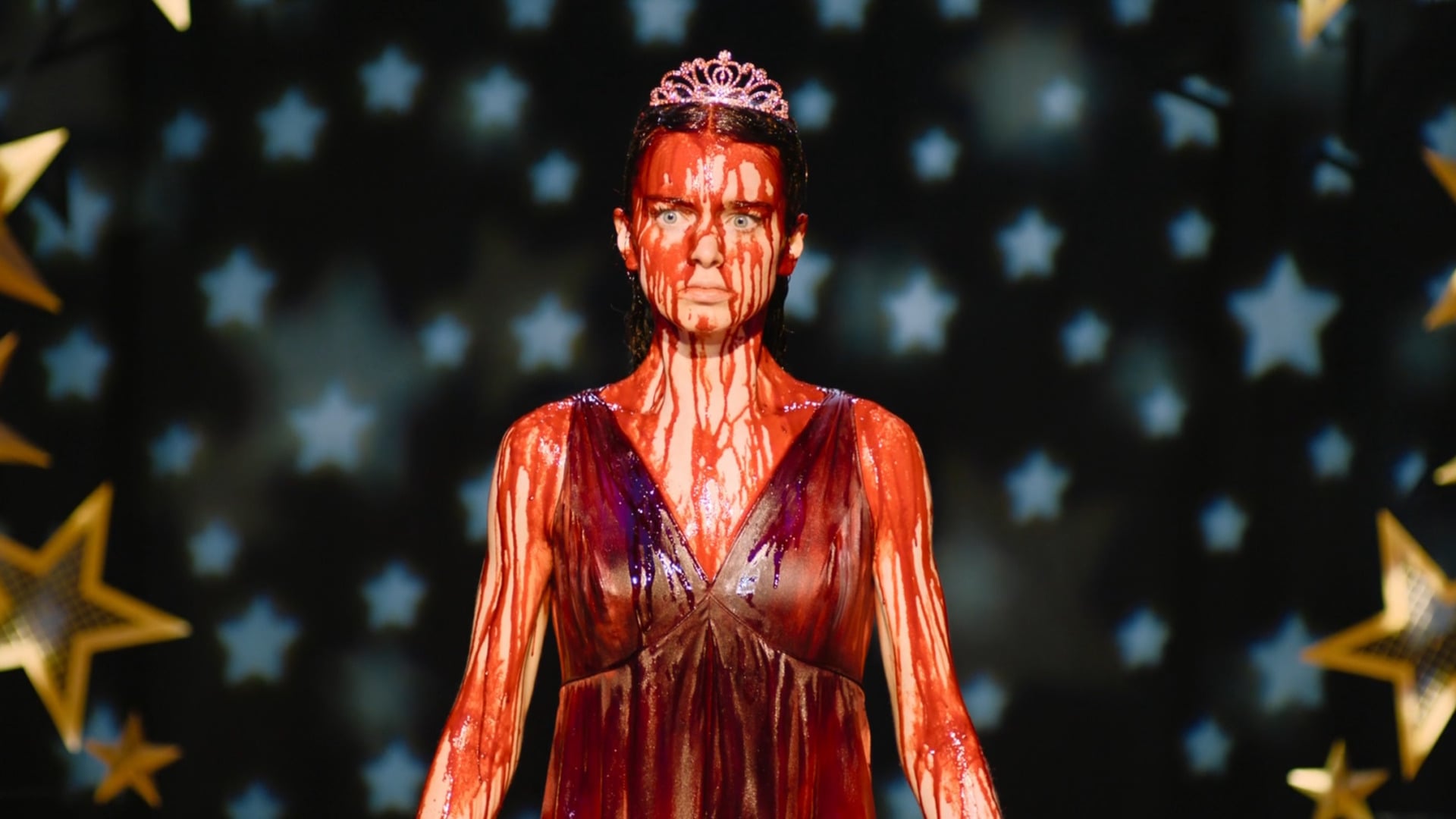
The first episode immediately acknowledges audience familiarity. We open on the aftermath of prom: the burning school, casualties, Sue Snell being interviewed, Carrie streaked in blood. Rather than hiding this, Flanagan leans into what viewers already know, promising the story will explore something beyond the familiar massacre.
A Mythology Beyond King
By episode’s end, Kate Siegel begins narrating sardonic essays about the historical treatment of women with supernatural abilities, branded as frauds or witches across centuries. This opens an entirely new layer absent from King’s novel. An organized network of women with powers apparently monitors Carrie’s emergence. This foundation potentially connects to multiple other King works, with a second season already commissioned before the first even concluded.
Modernizing the Family Dynamic
The adaptation updates the family structure in subtle ways. Carrie’s father, a conspiracy-minded survivalist, kept his family completely off the grid. His death in the opening scene focuses attention on the mother-daughter relationship. The family’s religious ideology shifts from traditional Catholic dogmatism to something more contemporary: MAGA-coded individualism that feels both modern and insidious.
The Cast and Performances
Summer H. Howell plays Carrie with genuine innocence, appearing notably younger than Sissy Spacek did in 1976 despite Spacek being only 21 at the time. This age difference partly stems from Carrie’s sheltered upbringing, she’s barely encountered the outside world before the events of the story.
Samantha Sloyan’s Margaret White
Samantha Sloyan’s performance as Margaret White represents the series’ most significant reimagining. Rather than the religious zealot who despises her daughter for becoming a woman, Sloyan’s Margaret actually loves Carrie. Her cruelty operates through subtle control disguised as support, never through overt hatred. She never mentions “dirty pillows” or screams about sin. Instead, her undermining appears as performed concern, control wrapped in maternal language.
Kotaku’s reviewer identified this as the emotional core that makes the series work. Margaret contains genuine contradictions: she’s cruel but in ways that resist easy categorization, willing to abandon her husband’s strict values to pursue her goals, conspiratorial yet clearly aware of the broader world despite his attempts at isolation. She’s vengeful and cunning, vulnerable and driven. Most importantly, she loves her daughter, which fundamentally transforms how the prom night climax lands emotionally.
Supporting Players Develop Genuine Depth
Flanagan’s regular cast populate the ensemble. Michael Trucco, Tahmoh Penikett, Rahul Kohli, Kate Siegel, Ruth Codd, Katee Sackhoff, and Mark Hamill appear throughout. Chris Hargensen transforms from a stereotype into a character whose viciousness has traceable causes. Sue Snell’s goodness stems not from supernatural kindness but from having a loving mother and safe home. Amber Midthunder, known for Prey, plays teacher Rita Desjardin, developing a relationship with Rahul Kohli’s fellow teacher Seth Peist. Tim Bagley from Somebody Somewhere and Matthew Lillard complete the school community with unexpected complexity.
The Broader Mythology
The series’ central addition—an organized female network with supernatural abilities—opens possibilities for expansion. Firestarter and The Institute are obvious candidates for future seasons. The Shining receives explicit reference, while some observers have noted potential Dark Tower connections. This universe-building, entirely absent from King’s novel, justifies why Flanagan chose to revisit this particular story rather than adapting unmade King properties like Insomnia or Rose Madder.
Where It Falters
Emaline, played by Thalia Dudek from The Running Man, disrupts the series’ emotional logic. This punk-coded character appears when Carrie rages in the school bathrooms, seemingly a supernatural confidant. According to Kotaku, the character’s nature telegraphs itself immediately through filmmaking choices—no one else interacts with Emaline meaningfully, and later scenes clearly show Carrie speaking to herself while others pass by obliviously.
The eventual twist revelation, accompanied by a montage of supposed proof, adds little surprise. More significantly, it dilutes the core tragedy. Carrie’s devastating power stems from being a girl whom life systematically destroys, until she finally snaps. Introducing a supernatural companion undercuts this, transforming her isolation into something different, one less girl absolutely alone and more girl with hidden support. The prom night climax loses its gut-wrenching inevitability.
Why This Remake Works
Despite the Emaline problem, Flanagan creates genuinely compelling television. Scenes like Carrie discovering the school library for the first time carry real emotional weight. She finds a vast room of books she’s never been allowed to access, and that contrast between glimpsed hope and inevitable destruction powers both King’s novel and the original film. The series sustains this largely through its willingness to complexify Margaret White and ground other characters in believable conflict.
The decision to remake Carrie finds its justification in having something new to say about power and maternal love while preserving the fundamental tragedy of the source material. The show succeeds more than it fails, establishing genuine reasons for its existence beyond simple nostalgia-driven cash-in.
Source: Kotaku
Frequently Asked Questions
What makes Flanagan's Carrie different from previous adaptations?
The series moves beyond the familiar prom night story to explore Carrie's mother-daughter relationship and adds new mythology about women with historical supernatural abilities. It also modernizes the family's ideology from traditional Catholicism to contemporary conspiracy-theory-driven fundamentalism.
Who plays the main characters?
Summer H. Howell plays Carrie White, with Samantha Sloyan as her mother Margaret. The cast includes Kate Siegel providing narration, Amber Midthunder as Rita Desjardin, Rahul Kohli, Tim Bagley, and Matthew Lillard.
Has a second season been confirmed?
Yes, according to Kotaku, a second season has already been commissioned. Potential connections to other Stephen King adaptations like Firestarter and The Institute have been noted by observers.
