
Key takeaways
- Kotaku's reviewer describes a kinetic theater experience so intense it requires communal viewing, with strangers gasping and exclaiming simultaneously throughout the runtime.
- The egg-whisking scene with Billy Evans triggers deep alarm in the reviewer, crystallizing his controlling nature more effectively than any explicit confrontation could.
- Nathan Fielder visibly breaks his documentary neutrality, at one point telling Holmes "Liz, come on" when she offers a twisted definition of the word "can."
- Despite three hours of footage, the film leaves its central question unresolved: whether Holmes is a performer controlled by Evans or whether authentic moments reveal who she truly is.
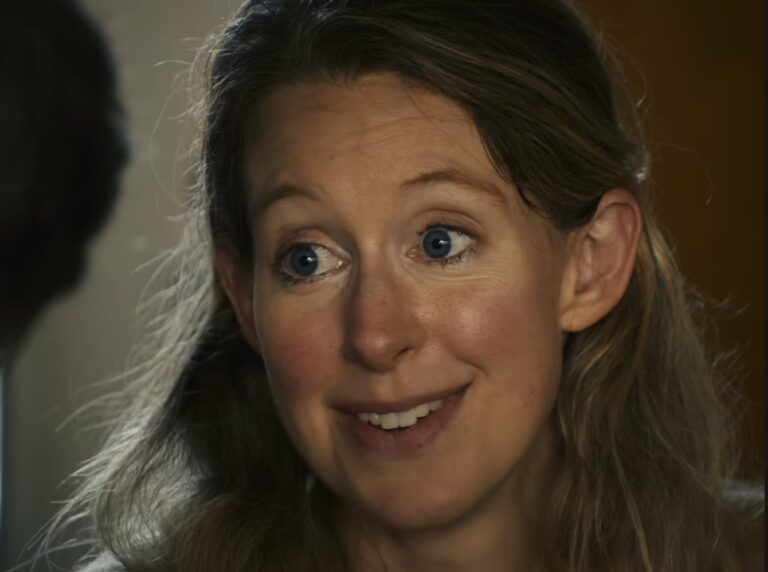
The documentary “You Can See Everything,” featuring convicted fraudster Elizabeth Holmes and led by Nathan “Nathan for You” Fielder, has become one of the most unexpectedly immersive theater experiences available to audiences right now, according to Kotaku’s review. The film, directed by Lance Oppenheimer alongside Fielder, has a runtime of nearly three hours and follows Holmes during her final 34 days of freedom before she must report to prison to serve an 11-year sentence for defrauding investors through her failed health technology company Theranos.
The Theater as Active Participant
According to Kotaku, watching this documentary in a semi-crowded theater proved far more interactive than most traditional narrative films. The reviewer described gasping involuntarily, exclaiming aloud, and physically grasping at their companion throughout the screening, riveted and repulsed simultaneously by what unfolded on screen. The kinetic energy created by the collective audience reaction becomes part of the experience itself.
The communal aspect of viewership, Kotaku argues, is not incidental to the film but essential to its full impact. Seeing it with others allows audiences to exchange glances and whispered reactions during the most shocking moments, creating a shared sense of disbelief that would be impossible to achieve alone. Without that human presence for validation and reaction, something integral to processing the documentary would be lost. The reviewer emphasizes that this is not like watching a standard drama or thriller where crowd reactions enhance suspense. This is something stranger and more necessary, where checking in with strangers becomes an actual coping mechanism.
The Documentary’s Premise and Cast
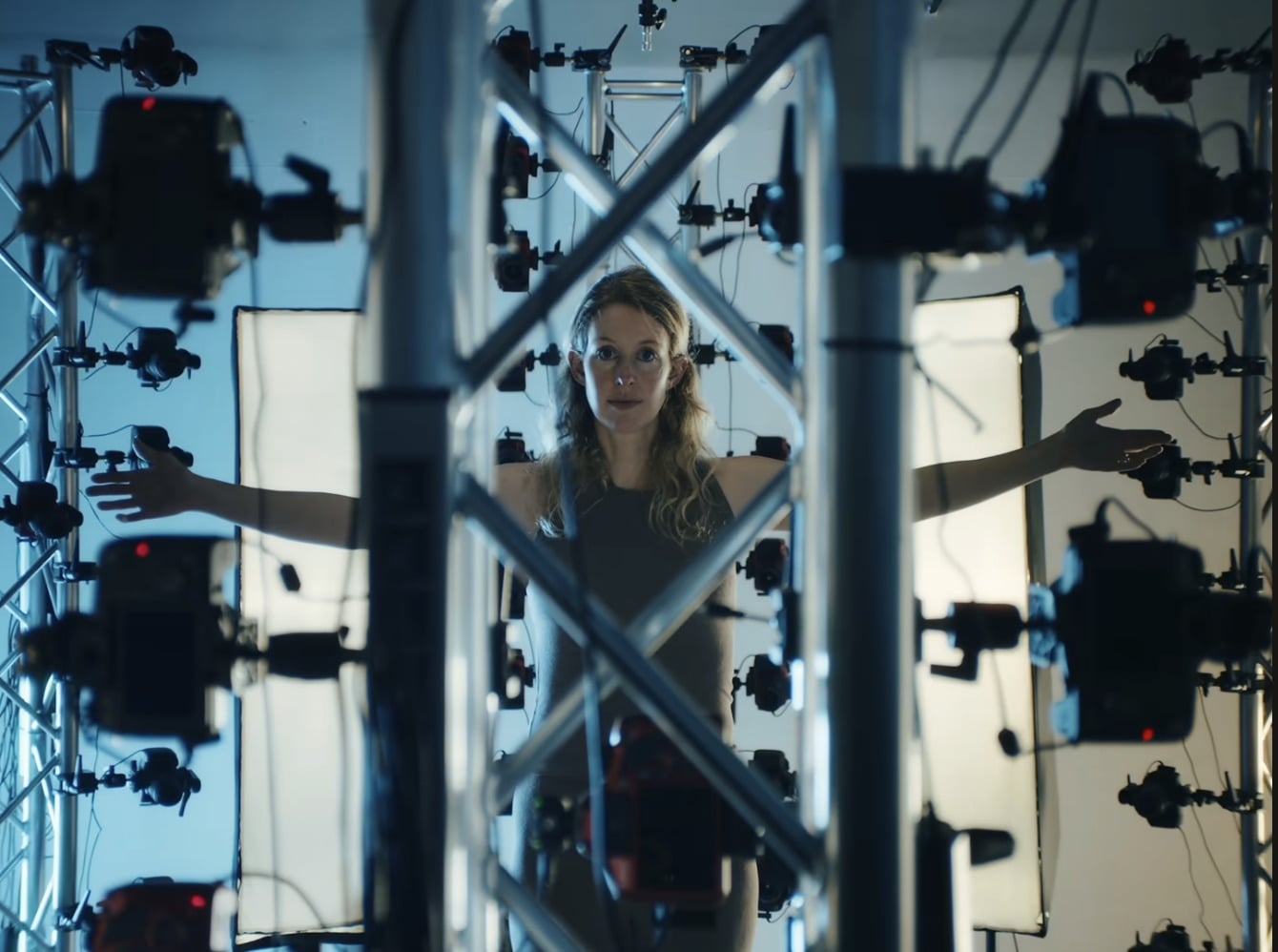
Holmes agreed to allow a documentary crew to film her home during her final weeks of freedom. The cameras capture her time with her two young children and her partner, Billy Evans, who serves as the heir to the Evans Hotels business. The premise is simple and almost dark in its ordinariness: a convicted fraudster preparing for prison, surrounded by family and filmed for public consumption.
Nathan Fielder, widely recognized for his years of work on “Nathan for You,” brings his trademark documentary approach to the project: a relentless pursuit of clarity and an almost uncomfortable willingness to sit in awkward silences until subjects actually answer the questions asked of them. Director Lance Oppenheimer collaborates in building the film’s structure around these moments of confrontation and evasion.
The Real Focus: Billy Evans
Control Over Every Detail
Much of the documentary’s unsettling power, according to Kotaku’s review, stems not from Holmes herself but from the man standing beside her throughout filming. Billy Evans appears in nearly every frame, and his presence exerts constant influence over which questions Holmes will address for the documentary, what her father is permitted to say publicly, her personal image, her social media presence on X, and even the granular details of her daily domestic life. One pivotal scene focuses on the precise manner in which she whisks eggs.
The Egg-Whisking Moment
That egg-whisking scene emerges as the documentary’s most viscerally disturbing moment. According to Kotaku, anyone with familiarity with patterns of abuse or narcissistic control will feel their self-preservation alarm systems activate at full volume. For the first half of the film’s runtime, the reviewer found themselves wondering whether Holmes herself required intervention, regardless of her own documented crimes.
The Troubling Partner
Kotaku’s assessment is unflinching: Billy Evans surfaces as a more troubling figure than Holmes, described as exercising control over nearly every aspect of her existence during the filming period. Holmes may be a convicted liar, but Evans, according to the review, presents as something more dangerous in the immediate moment.
Fielder’s Breakdown of Neutrality
Nathan Fielder’s role as documentarian becomes increasingly fractured as the project unfolds. Rather than maintaining the traditional distance expected of documentarians observing their subjects, Fielder repeatedly abandons that boundary, growing visibly unable to accept the explanations, deflections, and non-answers offered by both Holmes and Evans.
The most revealing sequence occurs during a conversation about the definition of the word “can”—a discussion so absurdly twisted and unconvincing that even Fielder’s patience visibly snaps. According to Kotaku, he abandons his observational stance entirely and directly expresses his disbelief, telling Holmes, “Liz, come on.” His tone suggests not the neutral curiosity of a documentarian but the exasperation of someone watching a con unfold in real time.
These moments of broken kayfabe, where Fielder ceases pretending to be a neutral observer and instead reacts like a skeptical person witnessing evasion and manipulation, form the documentary’s emotional core. Holmes and Evans appear to trip over themselves when presented with the simplest questions, their rehearsed answers and convoluted interpretations straining the credulity of even sympathetic viewers. Fielder, by breaking character, validates the audience’s own suspicions that something dishonest is occurring on screen.
What the Documentary Reveals and Withholds
According to Kotaku, “You Can See Everything” accomplishes what it purports to attempt, though perhaps not as completely as hoped. The documentary’s central promise involves showing Holmes’ authentic face as a person, but this remains complicated by the omnipresent control exerted by Evans and by lingering questions about Fielder’s own objectivity after spending more than 30 days embedded with his subjects.
Authentic moments do appear in the film, aided by the unmistakable sound of Holmes’ young children vocalizing in the background and the undeniable reality that these children will be without their mother for more than a decade of their childhood. Yet these genuine moments alternate with sequences where the couple seems to be performing, adhering to a script, managing their narrative, attempting to control the documentary’s ultimate message.
The title itself carries weight and ambiguity: you can indeed see everything in this film. Whether what you see constitutes truth, or whether you believe the versions of events presented to you, remains entirely within the viewer’s discretion.
Why Theater and Audience Matter
Kotaku strongly recommends watching “You Can See Everything” in as crowded a theater as possible, preferably with someone familiar to you. Attempting to view this documentary alone would forfeit what makes it work as a cinematic experience rather than as a streaming artifact.
The film’s runtime of nearly three hours is filled with evasions, twisted logic, and rare moments of authentic distress. It appears designed to prompt a specific response: collective doubt that is best processed immediately, in the moment, with witnesses who are feeling the same shock simultaneously. The reviewer offers no reservation on this point, arguing that seeing it communally transforms the experience entirely.
Source: Kotaku
Frequently Asked Questions
Who directed You Can See Everything and what is the documentary about?
Nathan Fielder, known for Nathan for You, directed the documentary alongside Lance Oppenheimer. The film follows Elizabeth Holmes during her final 34 days before reporting to prison to serve an 11-year sentence for defrauding Theranos investors.
What moment does Kotaku identify as the documentary's most disturbing?
A scene involving Billy Evans and how Holmes whisks eggs. Kotaku notes this moment triggers alarm in viewers familiar with patterns of control or manipulation, as Evans is shown exerting influence over nearly every aspect of Holmes' life during filming.
Why does Kotaku recommend viewing this documentary in a theater with an audience?
Kotaku emphasizes that communal viewing allows audiences to process the documentary's shocking moments collectively, exchanging reactions with strangers and friends as events unfold. Watching alone would diminish this integral aspect of how the film functions.
