
Key takeaways
- World of Warcraft expects dual announcements: a final Midnight patch and The Last Titan expansion reveal, likely featuring a revamped Northrend and resolution to years-old storylines.
- StarCraft is poised for a major return after 16 years of dormancy, with hints pointing to an unannounced StarCraft shooter currently in development.
- Blizzard is revisiting legacy properties and alternate timelines, including the mysterious 'Camelot' project rumored to be a reimagined World of Warcraft: Classic.
- Hearthstone may introduce Monk as the first new class in four years, while Diablo celebrates its 30th anniversary with unconfirmed but anticipated announcements.
The BlizzCon opening ceremony begins Saturday, September 12 at 10 a.m. PT, with a livestream available to those watching from afar. For Blizzard fans, the timing marks the end of a frustrating drought: the company cancelled BlizzCon in 2020 and 2022, ran a virtual-only event in 2021, returned for a physical convention in 2023, then sat out 2024 and 2025 entirely. This return signals Blizzard’s renewed commitment to gathering its playerbase under one roof, and based on the announcements already being strategized behind the scenes, the company is ready to make it count.
World of Warcraft’s Dual Timeline
World of Warcraft commands the most attention heading into the show. The MMORPG remains Blizzard’s flagship property, reaching a narrative inflection point that demands a stage this size.
Midnight expansion conclusion
The immediate priority involves wrapping the Midnight expansion, which is still receiving content. A major patch is expected to arrive before or be unveiled at BlizzCon, concluding the current expansion’s story arc before the next chapter begins. Such patches typically bundle multiple systems together: a new zone to explore, at least one additional dungeon and delve, a raid encounter, and assorted quality-of-life features. There’s speculation among players that Blizzard may also preview a limited-time seasonal event modeled after the Shadowlands Remix, giving older content a temporary second wind.
The Last Titan and Northrend’s return
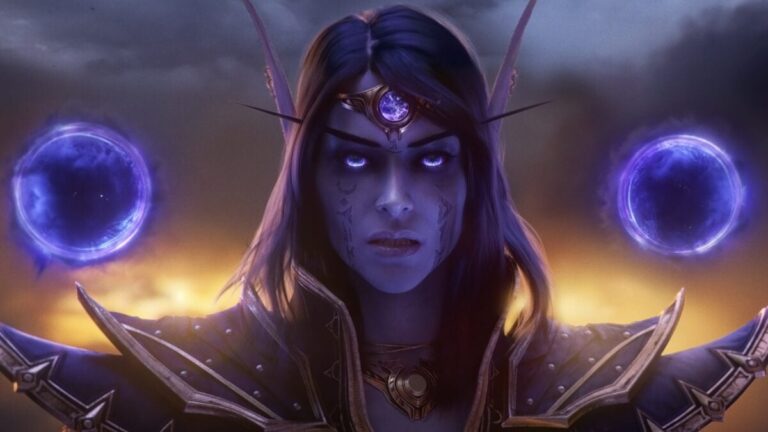
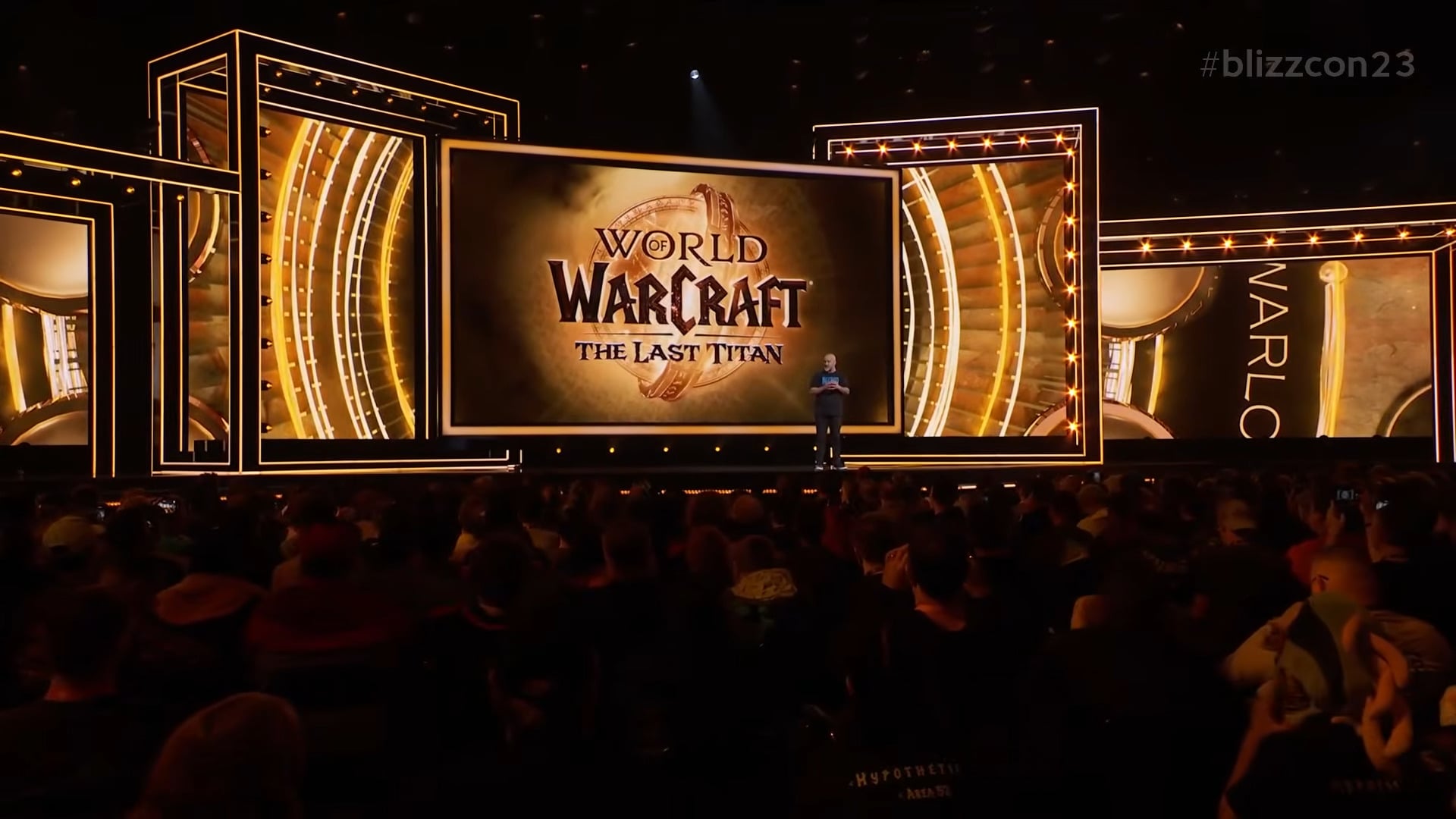
The real draw is The Last Titan, the forthcoming expansion that will serve as the final installment in what Blizzard has branded the Worldsoul Saga. The narrative has centered on the void harbinger Xal’atath and her scheme to consume the planet’s soul, with players pursuing her across multiple expansions. The Last Titan will presumably bring this arc to its climax, though Blizzard historically reserves major unreleased expansion details for the press rather than the main stage. Still, a cinematic unveiling is not out of the question.
Players widely expect Northrend—the iconic frozen continent from Wrath of the Lich King (2008)—to return in a redesigned form. What’s also unresolved after years of buildup is the “giant sword in the room”: a massive blade embedded in Silithus since the end of the Battle for Azeroth expansion. The community has speculated endlessly about its purpose and origin. If The Last Titan is truly the climax of the current saga, addressing this dangling plot thread would satisfy long-time players.
Camelot: The alternate classic
Among the more cryptic rumors is “Camelot,” a codename that has surfaced in various Blizzard-adjacent contexts. The leading theory among community members is that Camelot refers to a reimagined version of World of Warcraft: Classic—the recreation of the original 2004 game that Blizzard released in 2019.
Rather than simply re-releasing the same experience, the concept suggests Blizzard could take the classic era and evolve it along a hypothetical alternate timeline. Instead of following the exact progression of content patches from 2004 to 2006, this alternate version might introduce new dungeons, raids, zones, or mechanical changes, giving classic WoW renewed life without abandoning its foundation. The evidence for an imminent Camelot announcement is circumstantial but suggestive: Blizzard’s official merchandise store recently added a “Camelot” color theme to its inventory system, the kind of backend housekeeping that typically precedes a coordinated merchandise push.
StarCraft Emerges From Hibernation
If one franchise stands to surprise attendees, it may be StarCraft. After years of relative quiet, Blizzard has begun dropping hints across its official channels and website suggesting something StarCraft-related will materialize at the convention. An alternate reality game (ARG) is already underway, engaging the community in puzzle-solving to unlock information.
The most intriguing possibility involves a StarCraft shooter, a project Blizzard has reportedly been developing for several years. Details about the game’s current state remain scarce, and its final form—whether it’s a hero shooter similar to Overwatch, a tactical multiplayer experience, or something else—is still in flux. What matters is that something exists and is ready for public consumption.
The timing of a StarCraft revival cannot be overstated. The franchise’s most recent major release, a remaster of StarCraft 2, came out nearly a decade ago. StarCraft 2 itself launched in 2010. For sixteen years, the franchise has essentially been dormant in terms of new content beyond patches and cosmetics. The competitive scene in South Korea tells part of the story: despite being close to 30 years old, the original StarCraft remains among the top 10 most-played titles in Korean internet cafes, a testament to its enduring cultural footprint. Blizzard clearly recognizes this dormancy and is poised to capitalize on that legacy.
Diablo, Overwatch, and Hearthstone’s Unknowns
Diablo’s uncertain path
Diablo presents a murkier picture. Diablo 4 launched three years ago and is still receiving updates, most recently the Lord of Hatred expansion this past April. A full sequel seems premature, yet the lack of chatter around major announcements is notable. A new expansion for 2027 is plausible and might be previewed at BlizzCon. Alternatively, Blizzard may simply showcase incremental updates and seasonal content without unveiling anything revolutionary. There is one wildcard: Diablo is celebrating its 30th anniversary this year, and anniversary years sometimes yield surprises.
Overwatch’s hero roadmap
Overwatch’s news cycle is more predictable. Blizzard committed to releasing ten new heroes throughout 2026, and two remain unannounced. At minimum, one—possibly both—will be formally introduced at BlizzCon, with updates on the 2027 hero roadmap, new maps, hero reworks, cinematics, and cosmetics all within the realm of possibility.
Hearthstone’s Old Gods and Monks
Hearthstone’s situation is more intriguing. The card game’s official channels have been circulating cryptic images featuring the numbers “9 1 2″—the date of BlizzCon’s opening ceremony. The aesthetic suggests an Old God-themed expansion, which aligns with Hearthstone’s history of cosmic horror sets. More provocatively, community members are discussing the possibility of a new class joining the roster for the first time in four years. The leading candidate is Monk, a class that has existed in World of Warcraft since 2012 but has never appeared in Hearthstone’s base set. The last additions to Hearthstone’s roster were Death Knight and Demon Hunter.
Blizzard’s Pivot Toward Legacy
The pattern emerging across these announcements suggests Blizzard is experiencing renewed investment in its classic franchises and alternate approaches to existing universes. Beyond Camelot, there are whispers of Warcraft Chronicles, rumored to be a real-time strategy game that could revitalize the Warcraft RTS lineage dormant since Warcraft III (2002). Transmedia expansion is also on the horizon, with Blizzard expressing interest in bringing Warcraft to film and television, and BlizzCon could be the venue for formal announcements in that space. Le Sserafim is also returning to Overwatch with new skins and music.
Collectively, these projects position BlizzCon 2026 as a significant inflection point for Blizzard, not because any single announcement will redefine the industry, but because the company is signaling a willingness to revisit foundations while continuing to support its live-service franchises. Whether players receive the reveals they anticipate remains to be seen when the opening ceremony begins Saturday morning.
Frequently Asked Questions
When does BlizzCon 2026 begin?
BlizzCon 2026 opens on Saturday, September 12 at 10 a.m. PT, with a livestream available online.
What is 'Camelot' and when will it be announced?
Camelot is a rumored project widely believed to be a reimagined version of World of Warcraft: Classic that evolves along an alternate timeline. Blizzard's merchandise store adding a Camelot color theme suggests an imminent announcement at BlizzCon.
Why is StarCraft's announcement significant?
StarCraft 2 launched in 2010, and the last major franchise release—a remaster—came out nearly a decade ago. Despite being close to 30 years old, the original StarCraft remains a top 10 most-played game in South Korean internet cafes, making a revival strategically valuable.
