
Key takeaways
- Dressmaker centers entire gameplay around detailed clothing customization and garment creation, targeting players who spend extensive time in character creators.
- The dressmaking process mirrors genuine tailoring: measuring clients, selecting patterns, managing fabric resources, and sewing with care and precision.
- Resource scarcity and economic constraints create strategic depth, while forgiving mechanics allow experimentation without permanent failure or frustration.
- Progression unlocks new garment components and fabrics, sustaining engagement as players create dresses beyond required commissions for pure enjoyment.
The appeal of a robust character creator within a larger game often overshadows the main experience—countless players report spending hours adjusting facial geometry, skin tones, and outfit combinations before ever engaging with the actual narrative. Dressmaker inverts this dynamic entirely by making the act of dressing others the core gameplay loop rather than a preliminary step.
What Dressmaker Is
Dressmaker is an indie crafting game centered on a dressmaking business. Players assume the role of a tailor fulfilling commissions from various clients across an expanding town. Each request presents specific requirements: color palette, style parameters, fabric texture preferences, and occasion context. The initial wave of commissions stems from a Duke’s funeral, with townspeople seeking appropriate attire whether for mourning or catching the eye of the Duke’s unmarried son. As the business grows, commissions diversify across sporting events, weddings, balls, pet shows, and social gatherings, with style requests becoming progressively more nuanced and challenging.
The Dressmaking Process
The mechanics mirror genuine garment construction in several stages, each introducing distinct gameplay layers and decision-making.
Design and Measurement
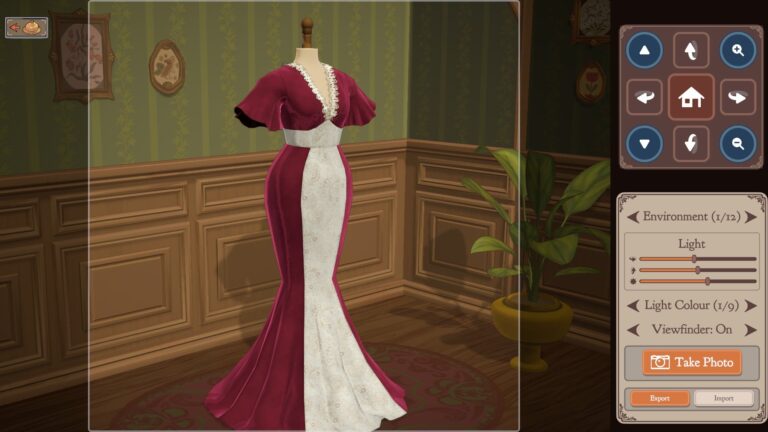
Upon accepting a commission, players measure their client using a tape measure, recording precise proportions. These measurements transfer to a mannequin that serves as the fitting form; players can adjust the mannequin’s skin tone to match the client as well. The design phase begins with pattern selection: sleeves, collar, bodice, and skirt options expand as progression continues, with each stylistic choice influencing the overall aesthetic. Romantic, gothic, workwear, and cute designations emerge organically from these structural selections. Before committing to fabric, players can sketch color assignments using colored pencils and test swatches against one another to preview potential combinations, allowing experimentation without resource waste.
Resource Management and Cutting
The actual dressmaking introduces resource scarcity as the primary tension. Purchasing fabric means acquiring specific yardage; five yards equals exactly five yards of usable material. Cutting pattern pieces depletes that roll permanently, creating a puzzle layer where players must arrange and orient their patterns efficiently to minimize waste. The game includes optional complexity: pieces can be cut straight or on the bias, with bias cuts delivering higher quality results if executed correctly. These details remain optional, allowing players to ignore cutting orientation and still complete commissions, though client satisfaction improves with precision. The game extends extraordinary grace for errors, allowing any cut pieces to be returned to the scrap basket where they magically reintegrate with the fabric roll as if never separated. This forgiving system removes frustration from trial-and-error while maintaining the economic game loop.
Assembly and Decoration
Once fabric is selected and cut, pieces transfer to the mannequin for sewing. Players guide patterns through a virtual sewing machine, staying within guidelines to maintain seam quality. A seam ripper tool allows corrections or fabric swaps mid-project without permanent consequences. Finishing touches include pinning decorative elements—lace, buttons, brooches, ribbons—that add visual detail and personality to completed pieces. The available garment components span gathered ballgown skirts, butterfly sleeves, and elevated scoop ruffle bodices, paired with fabric options including plum silk, meadow green cotton, ebony lace, and ecru wool.
Progression and Customization Depth
Each completed commission unlocks new dress cuts and styles, simultaneously expanding design possibilities and raising client expectations. Successful work builds renown, granting access to additional fabric types and accessories. This progression system ensures continued discovery across extended play; the game contains numerous commissions, with players reporting they haven’t exhausted available requests despite substantial play time. The marriage of mechanical depth with approachable gameplay creates an experience calibrated specifically for players who gravitate toward extended character creator sessions in larger titles, where clothing customization typically receives minimal attention compared to facial features or skeletal proportions. Most games acknowledge the logistical challenge of detailed outfit adjustment, recognizing that minute clothing customization far exceeds most titles’ scope, but Dressmaker makes that system the entire foundation of its design.
Story and Presentation
Dressmaker wraps its mechanics in a narrative framework with self-aware humor and appealing character artwork. The story unfolds through client interactions, generating context for each commission while maintaining a lighthearted tone. The writing avoids melodrama, allowing the actual act of dressmaking to remain the centerpiece of player attention. The game succeeds partly through its tacit acceptance of aesthetic failure: clients will praise thoroughly unattractive dresses if those pieces satisfy specified requirements for style category, color, and fabric type, removing perfectionism as a barrier to exploration and creative freedom.
Design Philosophy and Target Audience
The game explicitly targets a niche audience with specialized interests. Character creators increasingly offer granular control over nose shape, mouth position, and body proportions, yet rarely extend that precision to clothing beyond preset selection. Dressmaker dedicates its entire framework to what other games barely attempt, providing tactile customization depth that permits players to explore endlessly without consequences. Players describe pausing other activities throughout their day to complete additional dress designs beyond required commissions, suggesting the core loop sustains engagement across extended sessions. The act of selecting colors, feeling textures mentally, and imagining how silhouettes might move replicates an older experience: childhood play with physical fabric scraps, assembling patchwork dresses for imaginary occasions. That nostalgic element—the fantasy of hands-on craft without requiring actual sewing expertise—sits at Dressmaker’s heart.
Technical Issues and Limitations
The experience includes minor friction points worth acknowledging. Lace placement occasionally resists player intention when pinning decorative elements, causing alignment frustration that breaks the otherwise smooth creative flow. Additionally, failed commissions that required purchasing incorrect fabric create financial difficulty; players report situations where suboptimal cloth purchases cascaded into inadequate dress completion and money shortage, with no mechanism to recoup spent fabric. The desire to undo these purchasing decisions represents the primary expressed limitation in an otherwise forgiving design philosophy. Early money constraints can feel punitive when learning the system, though this challenge eases as the business grows and capital accumulates.
Specialized Appeal and Longevity
For players seeking tactile customization depth regarding appearance and attire, Dressmaker represents specialized fulfillment unlikely to appeal universally but perfectly calibrated for its target audience. The game’s commitment to garment construction terminology and visual detail, the nomenclature of gathered skirts and bias cuts, the visual personality of ecru wool against ebony lace, pairs with approachable mechanics that never require actual sewing knowledge. This combination creates a distinctive indie experience where fantasy craft indulgence becomes the entire point, unencumbered by the larger narrative systems that typically subordinate character creation to story advancement. The ability to keep making dresses purely for enjoyment, unlocking new components with each commission, sustains engagement beyond the point where the actual story concludes.
Frequently Asked Questions
What is Dressmaker about?
Dressmaker is an indie crafting game where players run a dressmaking business, accepting commissions from diverse clients with specific style, color, and fabric requirements. Players measure clients, design dress patterns, manage fabric resources, cut pieces, and sew garments together while unlocking new clothing options and building renown.
How does the gameplay loop work?
Players measure clients, select pattern pieces like sleeves, collar, bodice, and skirt that influence the dress aesthetic, cut fabric pieces carefully from purchased rolls to minimize waste, sew the pieces together on a mannequin with a virtual sewing machine, and add decorative finishing touches like lace, buttons, and ribbons. Completed commissions unlock new garment styles and fabrics.
What makes Dressmaker different from other games with clothing systems?
While most games treat clothing as a preset system within a larger experience, Dressmaker makes garment design and creation the core mechanic. It offers deep customization through pattern selection, fabric management, cutting techniques, and decoration options that rival the clothing depth available in traditional character creators.
