
Key takeaways
- Songs of Glimmerwick uses rhythm charts to teach magic spells that improve with higher performance scores, with spells designed to automate farming tools.
- The game never rushes players through its story—the clock freezes until you reach class, letting you pursue fishing, farming, and exploration at your own pace.
- Glimmerwick omits quest markers and tutorial guidance, trusting players to discover NPC requests and story details through conversation and exploration rather than interface prompts.
- Developed by the creator of Eastshade, Glimmerwick shifts focus from island exploration to musical magic school life simulation with farm management mechanics.
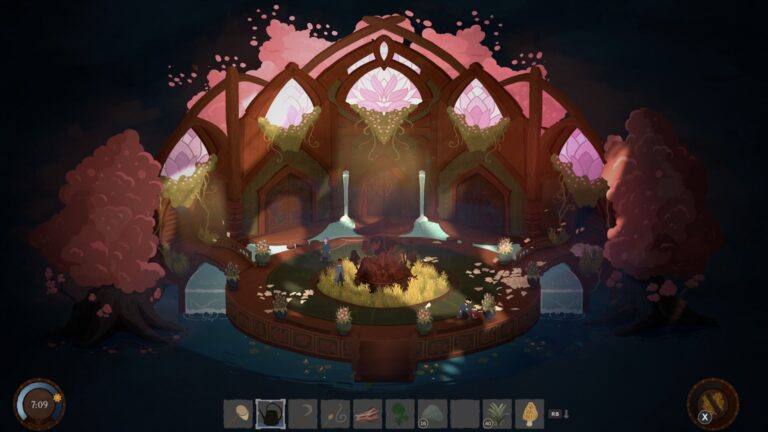
Songs of Glimmerwick is a witch school farm simulation that centers magical abilities around music and rhythm. According to Kotaku, the game is developed by the creator of Eastshade, a 2019 exploration title that focused on learning to love every corner of a small island. Glimmerwick takes a different approach, positioning players as students at a musical magic academy where they study spells, maintain gardens, and navigate life on a flexible schedule that respects their pacing.
A School Where Music Casts Spells
Magic in Glimmerwick functions entirely through rhythm-based performance. Players learn spells by completing short rhythm charts, and meeting a minimum performance threshold allows them to cast the spell repeatedly without replaying the chart each time. Kotaku noted that higher scores on these rhythm challenges improve the power and effect of spells when cast. The spells learned so far are primarily utilitarian, enabling players to enchant tools—hoes, picks, axes—that then work automatically, freeing the player to focus on other activities like seed planting.
Learning Through Rhythm
The rhythm system creates a feedback loop where musical skill translates directly to magical capability. This differs markedly from typical magic systems where spells are either learned as binary on-off abilities or developed through experience points. Kotaku found the approach encouraging, since performing well has tangible benefits beyond simply unlocking an ability.
Fishing as Musical Experience
Among Glimmerwick’s minigames, fishing stands out for its musical implementation. According to Kotaku, each fish species possesses its own melody, transforming fishing from the traditional timing-based or click-based mechanics seen in most farming and life simulations. This makes fishing feel thematically consistent with the game’s broader musical magic system, and Kotaku identified it as one of the most distinctive fishing minigames encountered across the genre.
Potionmaking as Puzzle Craft
Alchemy in the game functions as an ingredient-sorting puzzle rather than a recipe memorization exercise. Kotaku found that performance quality during potionmaking directly affects the final potion’s effectiveness. NPCs throughout the school and surrounding town constantly request custom potions for various purposes, creating a perpetual stream of alchemy work. This ties potionmaking into both the economic and social systems of the game.
Life Simulation at Campus
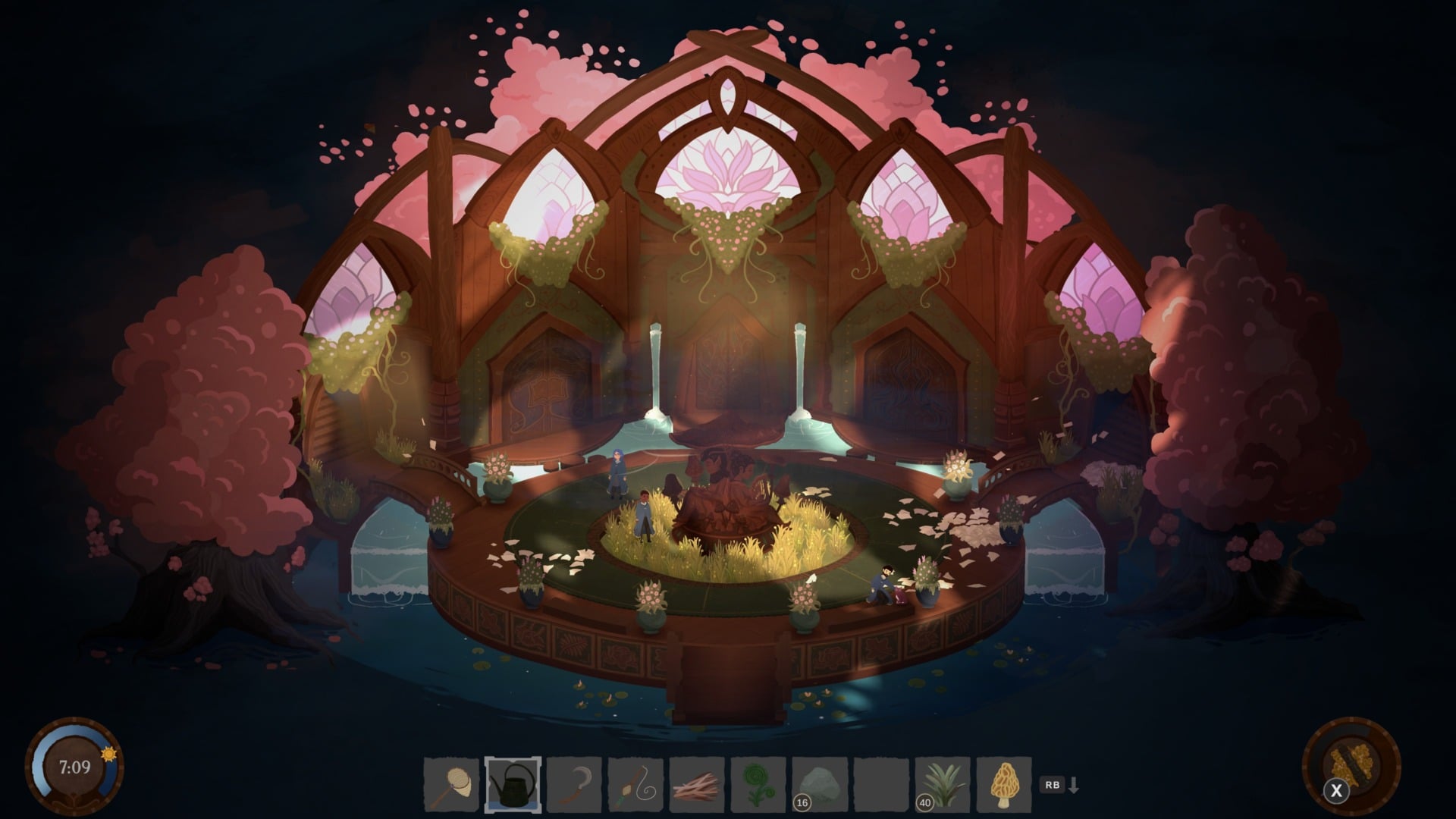
Beyond spellcasting, Glimmerwick operates as a comprehensive farm and life simulation. Kotaku described the player’s on-campus garden as initially overgrown but gradually improving through magical tool assistance. The garden produces basil, marjoram, multiple flower varieties, and cranberries grown in a pond area. These crops serve a dual purpose: producing income through sales while simultaneously functioning as potion ingredients, creating interdependency between different game systems.
The class schedule operates on unique logic. Kotaku noted that the game’s clock freezes whenever a player approaches a classroom, making it impossible to miss lectures regardless of how much time was spent elsewhere. Classes arrive via letter notification on an irregular schedule, removing predictability from academic obligations. This structure means no day plays identically to the last. Between classes, social engagements and job responsibilities fill the calendar, but nothing imposes strict deadlines. Kotaku observed that some mornings feature mysterious, cultish pamphlets appearing throughout campus, indicating an underlying narrative touching on themes including religious extremism and prescriptive ideology imposed on communities.
The Philosophy of Freedom
Glimmerwick deliberately omits quest markers, objective arrows, and tutorial systems that guide player behavior. Kotaku found this absence transformative. Information emerges through NPC conversations, where people may offer something useful, request assistance, or say nothing notable at all. Discovery becomes the primary method of learning what tasks exist, and missing information isn’t treated as a failure state.
This design choice fundamentally alters motivation. Without constant interface reminders highlighting available tasks, Kotaku noted that the sense of obligation dissolves. The reviewer expresses contentment simply maintaining the garden, learning spell music, and fishing—suggesting that players construct their own daily priorities rather than following a predetermined checklist. Some may prioritize exploration, town visits, and story engagement, while others might focus entirely on farming or music practice. The game accommodates these different approaches without signaling that any path is incorrect.
Character and Story Considerations
The Player’s Journey
The player character’s backstory involves escaping fundamentalism and discovering an environment serving as the opposite of oppressive control. Kotaku found this thematic foundation interesting, as it mirrors the game’s design philosophy of giving players freedom and agency. However, the reviewer expressed uncertainty about whether the game develops this character as an individual or primarily uses her as a neutral stand-in for the player, limiting deeper exploration of her personal arc.
NPCs and Memorability
Most main characters lack distinctive traits, according to Kotaku’s experience. The camera positioning—pulled far back to showcase the game’s fantasy landscape—makes individual character details difficult to parse at a glance. Everyone wears near-identical school uniforms, further reducing visual distinction. Some NPCs fare better: Kotaku enjoyed a fish-person new to land and enthusiastic about kimchi, while critiquing the player’s roommate for creating a fireplace catastrophe on the first day and expecting the player to resolve it.
Narrative Themes
The main story appears locked into specific beats that trigger regardless of player choices. The underlying plot seems interested in exploring control, collective decision-making, and who gets authority over community direction. This thematic focus complements the game’s mechanical commitment to player freedom in the spaces between major story moments.
Legacy of Eastshade
Glimmerwick connects to Eastshade through its developer but diverges meaningfully in focus. Eastshade centered on learning and loving every environmental detail of a small island through exploration. Glimmerwick centers on school attendance and magical education. Kotaku found it took longer to develop deep affection for Glimmerwick compared to Eastshade’s immediate enchantment, though progression suggests growing fondness. The camera distance that limits character recognition does showcase the game’s visual fantasy world as consistently lovely, offering environmental appeal even if individual character models blur.
Unhurried Magic at Your Own Pace
Kotaku’s experience suggests Songs of Glimmerwick succeeds through its commitment to unhurried pacing and player agency in determining daily priorities. Nothing forces urgency; nothing punishes players for prioritizing one activity over another. The game’s underlying narrative about control and individual freedom thematically matches its mechanical design, where players escape rigid systems and discover an environment trusting them to decide what matters.
Whether every element remains accessible depends partly on time invested versus calendar progression, but Kotaku’s experience suggests the game trusts that players will discover what holds personal significance. The reviewer appears content inhabiting this world’s rhythms, playing its music-based magic, and allowing the story to unfold across a school year they control the pace of.
Source: Kotaku
Frequently Asked Questions
How does the magic system in Songs of Glimmerwick work?
Magic is learned through rhythm charts. Completing these charts lets you cast spells without replaying them, but higher scores improve spell power and effect. Spells are primarily used to enchant tools like hoes, picks, and axes to automatically clear land, freeing the player to focus on other activities.
Will you miss classes if you arrive late in Songs of Glimmerwick?
No. The game's clock freezes whenever you approach a classroom, making it impossible to miss lectures regardless of how much time you spent exploring or farming beforehand. Classes arrive via letter notifications on an irregular schedule.
What makes fishing distinctive in this game?
Fishing is a rhythm-based minigame where each fish species has its own melody. This makes it thematically consistent with the game's broader music-based magic system and distinguishes it from traditional timing-based or click-based fishing mechanics in other simulations.
