
Key takeaways
- Patroll, a prominent volunteer, suspended all VRChat contributions in protest against AI-generated content overwhelming the platform's discovery systems.
- VRChat banned deceptive thumbnails immediately but remains uncertain on user-facing AI uses, with the company seeking community input on labeling and prohibition policies.
- The conflict pits those who see AI as democratizing creation against those who view it as commodifying human-created labor and degrading content quality.
- The platform commits to finalizing AI policies after a week of community consultation, a decision that may determine VRChat's future as a creator-driven platform.
VRChat, the free social VR platform built around community-created worlds and experiences, has become ground zero for a mounting conflict over artificial intelligence content. The controversy erupted when Patroll, a prominent volunteer contributor who maintained the community wiki, supported testing efforts, and coordinated translations, announced plans to cease all work on the platform in protest of what they characterized as a “rampant plague” of AI-generated worlds and images flooding the service.
The core issue centers on how AI-generated content disrupts the platform’s discovery systems. Users report that worlds appear in search results with deceptive AI-generated thumbnail images that misrepresent their actual content. This pollution of the discovery feed frustrates players seeking genuinely community-crafted experiences—the kind of user-generated content that defines VRChat’s identity and cultural significance.
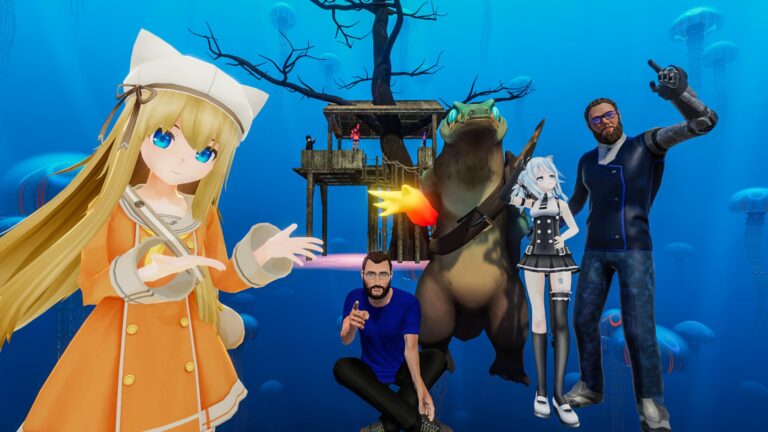
VRChat has evolved into something resembling the metaverse vision that Mark Zuckerberg championed, but built organically by its user base rather than through corporate mandate. The platform hosts everything from fan communities to official company events and concerts. The ecosystem sustains itself through in-app purchases, subscriptions, and merchandising, while the community itself generates additional revenue through avatar commissions and freely distributed tools that support other creators.
The Protest and Its Momentum
Patroll’s exit resonated immediately across the platform. Prominent worlds began displaying banners explicitly stating they use no AI in their creation or assets. The coordinated response indicated widespread frustration with how VRChat has handled generative AI proliferation. Beyond ceasing platform work, Patroll also announced they would stop spending money on VRChat and invited others to join the protest group NOAI.3843.
Patroll specifically called on other developers to join the effort and asked VRChat itself to implement multiple changes: introduce filtering systems to identify AI content, reduce AI usage within VRChat’s own development practices, and provide clearer labeling mechanisms. The visibility of the protest forced the company to respond with a formal statement that acknowledged the tension and outlined an initial policy framework.
VRChat’s Response and Policy Framework
The company framed its position as fundamentally conflicted. AI tools can accelerate development work and reduce technical burden for creators, yet they simultaneously enable mass production of low-quality, low-effort content that damages the human-centered experience the platform was built around. In their statement, VRChat acknowledged finding itself at an “uncomfortable crossroads.” They elaborated: “On one hand, AI can help accelerate development and ease technical burden, while on the other, it can generate endless streams of low-quality, low-effort content that erodes human connection.”
Immediate Action: Banning Deceptive Thumbnails
The company’s first concrete step targeted the search discoverability problem directly. VRChat immediately banned the practice of using AI-generated deceptive thumbnails, preventing worlds from appearing in search results with misleading preview images. This addressed the most obvious vector for AI-generated spam polluting user discovery.
Permitted AI Applications
The platform outlined several AI applications as acceptable within its ecosystem. Translation services powered by AI received approval, as did code assistance through tools like GitHub Copilot. AI-powered features embedded in standard development software—such as capabilities built into Blender or Unity—are also permitted. Personal-use AI tools that operate behind the scenes and never reach a user-facing audience similarly sit within acceptable bounds.
The Gray Area Requiring Community Input
A second tier of AI usage prompted VRChat to seek community input rather than establish firm rules immediately. This category includes AI-generated physics or game logic systems for worlds, the use of AI-generated assets within user-facing spaces, and the practice of fully generating entire worlds through AI tools. VRChat explicitly asked the community to share opinions on how restrictive the platform should be regarding these applications. Should such content be labeled? Should it face outright prohibition?
The company also pledged to improve its search algorithm to prioritize higher-quality discoveries and reduce what it termed “slop” from appearing prominently in results. However, it left open the question of whether worlds should carry a label indicating their AI usage status. The practical challenges of policing such designations and the risk of mislabeling made the company hesitant to commit to mandatory labeling schemes.
Community Reactions Remain Divided
Some users view VRChat’s response as meaningful progress toward addressing legitimate concerns about content quality and authenticity. Others argue the company has not gone far enough, particularly regarding labeling. Critics questioned why mandatory labeling for players who want to filter AI content out is even a point of debate rather than an immediate feature.
Patroll, the protest’s leader, escalated demands beyond what VRChat proposed. They called for the platform to enable users to build their own custom discovery systems, giving individual players direct power over which content types and creation methods appear in their personal feeds.
The Fundamental Tension Facing the Platform
VRChat’s situation reflects a broader industry collision. The platform depends entirely on its community to generate value. Worlds, avatars, tools, and social experiences exist because users built them. In-app purchases, subscriptions, and user-generated merchandise sales sustain the entire service. When a tool like AI generation appears to lower barriers to creation while simultaneously devaluing the work of dedicated human creators, consensus becomes nearly impossible to reach.
Those who see AI as a legitimate creative aid and productivity tool argue it democratizes world-building, allowing more people to participate despite technical skill gaps. Those who view it as theft or laziness contend it floods the platform with junk and commodifies community labor. VRChat now faces the challenge of threading that needle without alienating either group.
The Week Ahead
The company committed to continuing community consultations for another week before finalizing its AI policy. The findings and rules that follow will either restore confidence among creators or deepen the rift, and may well determine whether VRChat remains the thriving creative hub it has been or becomes another platform where corporate compromise satisfies no one.
Source: Kotaku
Frequently Asked Questions
Why did Patroll stop contributing to VRChat?
Patroll protested what they characterized as a "rampant plague" of AI-generated worlds and images overwhelming the platform. They stopped maintaining the wiki, ceased testing work, halted translations, and stopped spending money on VRChat, inviting others to join the NOAI.3843 protest group.
What AI applications does VRChat consider acceptable?
VRChat permits AI for translation, code assistance via tools like GitHub Copilot, AI-powered features in development software like Blender and Unity, and personal-use AI tools that don't reach user-facing spaces.
What is VRChat's timeline for an AI policy decision?
The company committed to continuing community consultations for one week before finalizing and enacting its AI policy.
