
Key takeaways
- Bethesda and Activision issued cease-and-desist orders against viral AI-generated game recreations, with Fallout: New York reaching 3.5 million views in three days before legal action.
- Fallout: New York was built with Claude Opus 5.5 code generation and featured quests, dialogue trees, V.A.T.S., and a Pip-Boy interface entirely generated by AI with no texture or sound files.
- Modern Warfare 2 decompilation used 17 AI agents in parallel to reverse-engineer the original game's source code, reaching a fully playable state before Activision's multi-channel takedown.
- Publishers targeted individual creators rather than AI companies themselves, raising questions about whether traditional copyright enforcement can scale as AI-generated game projects become more frequent and accessible.
In the last week of September 2026, two major Microsoft-owned game publishers took distinct but complementary enforcement actions against artificial intelligence-generated recreations of their most recognizable franchises. Bethesda Studios and Activision deployed cease-and-desist letters and copyright claims within a span of three days, targeting projects that had accumulated millions of views and demonstrated genuine technical achievement. Both takedowns raised an immediate question about whether traditional copyright enforcement mechanisms can scale to match the speed and frequency at which AI-powered game projects appear online.
Fallout: New York—From Code to Cease and Desist
Building a Fallout Game Without Assets
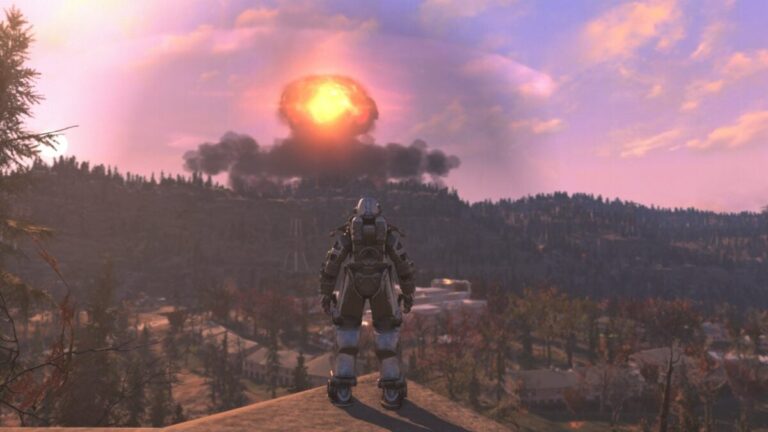
On September 28, a developer using the online handle ChrisFirst shared a demonstration of an AI-generated recreation called Fallout: New York. The project was designed to run directly in web browsers and transplanted Bethesda’s post-apocalyptic action RPG setting to the streets of New York City. Rather than relying on pre-made game assets and texture files, the entire experience was generated by code created with Claude Opus 5.5, Anthropic’s most capable large language model.
ChrisFirst’s documentation of the project outlined a scope that went well beyond a simple proof-of-concept. The recreation included functional quest systems, branching dialogue trees, V.A.T.S.—the tactical targeting system central to Fallout’s combat—and a working Pip-Boy interface, the wrist-mounted computer that players interact with in the original games. “Every building, weapon, face and sound is generated by code,” ChrisFirst wrote, highlighting the absence of any pre-built textures, sprites, or audio files in the traditional sense. The technical feat demonstrated that large language models could generate not just text but functional game logic and interface systems.
Three Days to Legal Action
The post resonated widely across social media, accumulating over 3.5 million views within its first few days. The engagement was significant enough to catch the attention of Bethesda’s legal department. On October 1—just three days after the initial post—ChrisFirst announced publicly that he had received a cease-and-desist letter from Bethesda Studios citing intellectual property infringement. He immediately moved to shut down the project and addressed the situation in a follow-up post: “Hey, Bethesda Studios how about you make a Fallout game instead so I dont have to? Sorry to everyone who enjoyed the game! But the suits got involved and the fun is over.”
Modern Warfare 2 Decompilation with Parallel AI Agents
Seventeen Agents Working in Parallel
While Fallout: New York was being dismantled in real time, Maurice Heumann had been pursuing a different target using a different technical strategy. Rather than recreating an open-world environment from scratch, Heumann was attempting to decompile and reconstruct the source code of the original Modern Warfare 2 from its PC release. On September 30, he posted progress updates on the project, revealing that he had automated much of the reverse-engineering process using AI.
Heumann’s approach differed markedly from ChrisFirst’s single-model generation. “With currently 17 agents working in parallel, we’re making progress at an incredible pace,” Heumann wrote. “The game is fully playable now and almost all visible bugs are gone. Only a few are left. I even managed to get my first nuke.” The post included video footage showing the decompiled game running in a playable state, with multiplayer functionality intact enough for Heumann to complete an in-game killstreak reward. The technical feat demonstrated that AI-assisted decompilation could reach functional parity with the original product in a relatively short timeframe.
Activision’s Multi-Channel Response
Activision’s enforcement approach surpassed Bethesda’s in breadth. Rather than relying solely on a legal letter, the publisher deployed multiple enforcement mechanisms simultaneously. Video footage that Heumann had uploaded to demonstrate the working recreation was disabled by YouTube through the copyright claim system, replaced with a notice: “This media has been disabled in response to a report by the copyright owner.” Additionally, the online repository hosting the decompiled code was taken offline, apparently removed following DMCA takedown notices or similar legal requests. In subsequent posts, Heumann indicated that Activision’s enforcement efforts had expanded further, with his AI agents themselves reporting deletion of additional project files and data.

The Enforcement Pattern and Its Challenges
The two takedowns, separated by three days and targeting different franchises under the same corporate umbrella, illustrated a fundamental challenge for publishers in the age of AI-generated content. Legal enforcement is reactive by nature—it can only address projects that gain enough visibility to trigger human review. Each takedown removes an individual project from circulation but does nothing to restrict the underlying tools or methodologies that enabled its creation. The cycle was immediately apparent: projects emerge, spread rapidly on social media, are eventually noticed by company legal teams, and are then removed. Nothing in this sequence prevents the next developer from attempting the same recreation using identical tools.
Why Publishers Target Creators, Not AI Technology
The enforcement actions also reveal a critical strategic decision that game publishers have made, one that diverges from how other entertainment sectors are approaching AI-generated content. In Hollywood, studios and individual creators have pursued legal claims directly against AI companies, arguing that their training datasets included copyrighted material without authorization. Bethesda and Activision, by contrast, targeted the people who created the projects, not the AI tool providers whose technology made the recreations possible. Neither company filed suit against Anthropic or attempted to hold the Claude service provider liable for enabling the infringement.
This choice suggests that publishers believe they can maintain meaningful control through selective enforcement against individual creators. The implicit assumption is that the threat of legal consequences, combined with public visibility of takedowns, will deter others from similar attempts. Whether this strategy can scale remains uncertain.
The Napster Parallel and Longer-Term Implications
Discussion in online communities around the takedowns invoked the specter of historical precedent. One commenter wrote: “Going after the little guys instead of the technology, this is Napster and music industry 2.0. Were already saw how this plays out, we win they lose.” The reference invoked the music industry’s experience in the early 2000s, when legal action against individual file-sharing services and users failed to stem the tide of digital music distribution. That battle ended not with the defeat of file-sharing technology but with the industry’s adoption of new business models—streaming services, subscription licenses, platform partnerships—that accommodated rather than resisted the shift in consumer expectations.
As AI tools become cheaper, faster, and more accessible to average users, the volume of potential infringement could quickly outpace the administrative capacity of any legal department to address it comprehensively. The events of late September 2026 may ultimately mark the beginning of a prolonged competition between increasingly capable AI tools and the enforcement mechanisms designed to contain them. Whether gaming eventually follows the music industry’s path toward accommodation and new business models, or whether publishers develop alternative strategies, will become clear only as the frequency and sophistication of AI-generated projects continue to rise.
Source: Kotaku
Frequently Asked Questions
What was Fallout: New York?
A browser-playable recreation of Bethesda's Fallout franchise set in New York City, built entirely with AI-generated code using Claude Opus 5.5. It featured quests, dialogue trees, V.A.T.S., and a Pip-Boy interface with zero texture or sound files, accumulating 3.5 million views before Bethesda's cease-and-desist on October 1.
How did Maurice Heumann's Modern Warfare 2 project work?
He used 17 AI agents working in parallel to decompile the source code of the original Modern Warfare 2 for PC. The game reached a fully playable state with most bugs resolved when he posted about it on September 30, before Activision disabled his video footage and took the code repository offline.
Why didn't publishers sue the AI companies instead of individual creators?
Neither Bethesda nor Activision filed legal action against Anthropic or other AI providers. They chose to target individual creators, betting that legal enforcement and public deterrence could scale to manage future projects, unlike Hollywood studios which have pursued AI companies directly for training on copyrighted material.
