
Key takeaways
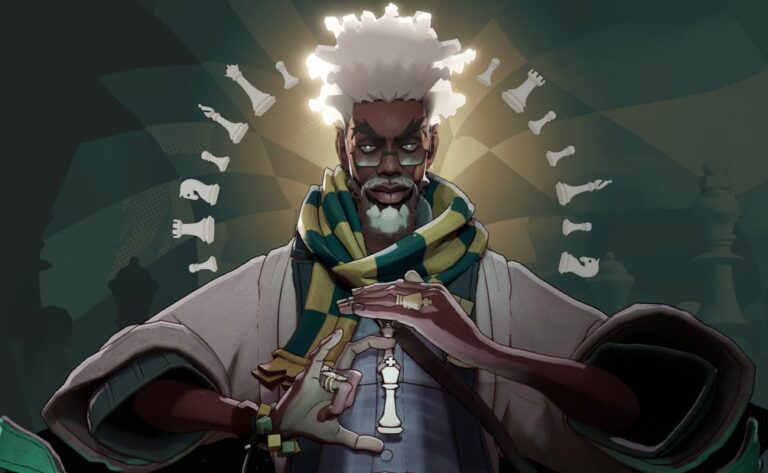
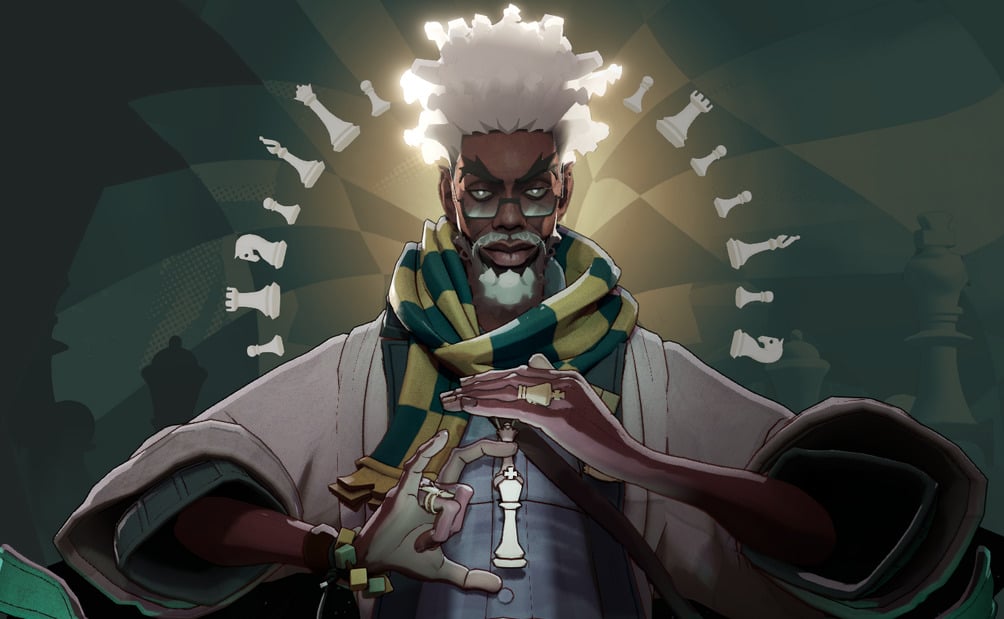
- Solomon, Deadlock's new chess grandmaster hero, summons giant board pieces that move according to authentic chess rules during gameplay.
- The character's reload animations reference actual historical chess games, from the 1851 Immortal Game to Deep Blue's 1996 victory over Garry Kasparov.
- Players have already identified Solomon as Deadlock's most compelling hero, rewarding Valve's meticulous attention to historical detail and original character design.
Valve’s closed-beta hero shooter Deadlock has attracted significant player attention during its slow roll toward wider release, with much of the focus landing on Solomon, a chess grandmaster hero introduced in the recent “City Never Sleeps” update. The character exemplifies Deadlock’s design philosophy—emphasizing original character concepts, mechanical specificity, and meticulous craft invested even in incidental details like reload animations. This approach has generated growing interest in a genre where most competitors have struggled to find distinguishing characteristics.
Deadlock itself is set in an alternative mid-century New York where two rival deities compete for control of the city. A catastrophic event called the Maelstrom flooded urban streets with fantasy creatures, drawing skilled warriors to align with one faction or the other in pursuit of divine patronage and power.
Solomon’s Design and Core Mechanics
Visual Identity and Meditative Presence
Solomon appears as a meditating figure floating in lotus position, establishing his identity around stillness and contemplation rather than kinetic urgency. The design references Zenyatta from Overwatch but functions distinctly within Deadlock’s world and rule set. This visual choice signals immediately that Solomon operates according to different principles than typical hero shooters.
Board Piece Gameplay
Solomon’s core ability materializes giant replicas of chess pieces on the battlefield, commanding them to move according to authentic chess rules. Bishops move diagonally, rooks travel in straight lines, knights move in their characteristic L-shaped jump. This transforms combat into a space where understanding chess logic provides tactical advantage, blending game theory with first-person shooter mechanics in a way most hero shooters never attempt.
The ability to summon multiple pieces and coordinate their movements creates complexity that rewards player knowledge. A match between two evenly skilled players could pivot on understanding how pieces interact and how board positioning translates to battlefield advantage.
The Reload Animation System and Historical Depth
Solomon’s most distinctive feature emerges during reloads. Rather than simply replenishing ammunition, Solomon’s board pieces rearrange into configurations drawn from historical chess games. Each layout is selected based on how much ammunition Solomon has remaining, ensuring that every reload animation carries thematic weight and references real chess history rather than being randomly generated sequences.
The historical scope is impressive. Configurations reference the 1851 “Immortal Game” between Adolf Anderssen and Lionel Kieseritzky, a match so brilliant and daring that it defined chess aesthetics for generations. Later games appear as well, including Maurice Ashley versus Josh Waitzkin from 1999. One particularly notable reference is the 1996 match where IBM’s Deep Blue computer defeated Garry Kasparov—a watershed moment when artificial intelligence surpassed human mastery of competitive strategy. Additional positions draw from games involving Hikaru Nakamura, spanning multiple decades of professional play.
According to Kotaku, eagle-eyed players have already begun identifying and cataloguing these references. The discovery process itself signals how thoroughly Valve invested in historical accuracy, implementing hundreds of thousands of reload sequences across all player accounts that reference real games and real players rather than generic animations.
The City Never Sleeps Update Context
Six Heroes Introduced Simultaneously
Solomon arrived as part of a substantial roster expansion that introduced six new heroes total. The update also brought an illustrious witch drawing on folklore traditions and a Nutcracker-inspired character inhabiting sewers—creative reinterpretations of recognizable archetypes filtered through Deadlock’s specific world rather than direct adoptions of existing characters from other franchises.
Solomon’s outsized reception among players compared to the other newcomers suggests that audiences particularly respond to character designs built around specific, knowledge-intensive mechanics. A character whose core gameplay interacts meaningfully with chess theory creates engagement patterns different from more traditional hero shooter archetypes.
Deadlock’s Distinct Positioning in a Crowded Genre
Original Characters Versus Licensed IP Strategy
Deadlock deliberately positions itself outside the current industry trend toward licensed hero shooters. Marvel Rivals relies on established superhero IP, which provides immediate recognition but constrains character design decisions—every visual and mechanical choice must align with decades of existing comic book canon and audience expectations. Deadlock builds original characters instead. Solomon could logically exist nowhere else because his identity is inseparable from Deadlock’s specific rules, world, and design philosophy.
This strategic choice mirrors broader industry frustration. Kotaku observed that Concord, which released earlier, featured characters that despite technical competence felt undifferentiated and generic. Marvel Rivals compounds this by trading heavily on established franchises, emphasizing stylized character designs and swimwear aesthetics that prioritize fan service over mechanical differentiation or meaningful gameplay identity.
Thematic and Visual World-Building
The alternative mid-century New York setting establishes visual and thematic coherence across Deadlock’s entire hero roster. Depression-era aesthetics inform the environment, character designs, and overall tone, creating a unified world rather than a collection of disconnected character skins or IP properties forced together. Solomon’s chess grandmaster identity fits naturally into this world—a character who could plausibly exist in an alternative version of mid-century America, reflecting a historical period when chess carried particular cultural weight and prominence.
This world-building approach suggests that each character in Deadlock emerges from specific design principles rather than being assembled from existing IP or generic templates. The fantasy elements introduced by the Maelstrom—creatures and magic—blend with the urban setting in a way that creates visual and narrative cohesion across the entire game.
Player Reception and Analysis
Fans have already identified Solomon as among Deadlock’s most compelling heroes in the current roster. The response extends beyond passive approval to active analysis, with players dedicating time to research the historical chess games referenced in reload animations. This level of engaged player behavior reveals something significant about what audiences value: genuine investment of craft and historical knowledge into systems that most live-service games treat as secondary or incidental.
The enthusiasm for Solomon specifically—and his prominence compared to the five other heroes in the same update—suggests that player audiences recognize and reward mechanical depth combined with thematic coherence. A character whose abilities require chess knowledge while also embedding that knowledge into reload animations creates multiple layers of engagement.
Implications for the Broader Market
Deadlock remains confined to its closed beta, but the analytical attention players pay to historical references during this phase typically indicates either strong sustained engagement upon launch or significant disappointment if other systems prove problematic. For now, Deadlock has generated sufficient momentum by demonstrating that live-service audiences still respond enthusiastically to games designed from first principles—built around specific mechanics and cohesive themes—rather than assembled from recognizable IP. This positioning offers a sharp contrast to competitors that have felt derivative, generic, or cynically constructed around familiar properties.
Source: Kotaku
Frequently Asked Questions
Which update introduced Solomon to Deadlock?
Solomon arrived in the "City Never Sleeps" update, which introduced six new heroes total to Deadlock's roster.
What historical chess games appear in Solomon's reload animations?
Solomon's reload positions reference games including the 1851 Immortal Game between Adolf Anderssen and Lionel Kieseritzky, Maurice Ashley versus Josh Waitzkin in 1999, and Deep Blue's 1996 victory over Garry Kasparov.
How does Solomon's chess mechanic work in gameplay?
Solomon can materialize giant replicas of chess pieces on the battlefield and command them to move according to authentic chess rules, with bishops moving diagonally, rooks moving in straight lines, and knights moving in L-shaped jumps.
