

Key takeaways
- Edgerunners II's ensemble structure leaves three protagonists disconnected until the show forces contrived connections late in the season.
- The show treats Night City as visual decoration rather than the active narrative force that defined the original season.
- While Studio Trigger's animation and voice acting remain polished, weak reveals and disjointed storytelling lack the emotional impact that made season one devastating.
- CD Projekt Red revealed plans for the anime's next arc at Anime Expo 2026, with future installments depending on whether the studio can restore focused storytelling.
Netflix and Studio Trigger’s Cyberpunk: Edgerunners II arrives as a mostly standalone continuation of the anime adaptation of CD Projekt Red’s Cyberpunk 2077 universe. While the first season tracked protagonist David Martinez toward a focused tragic conclusion, the second season fragments its narrative across three distinct characters whose storylines remain largely disconnected through most of the season’s runtime. Roman documents Night City through an analog camcorder rather than immersing himself in braindance simulations; Talia, a teenage cyborg in rebellion against her family, draws the attention of veteran edgerunner Weak when her mother fears for her safety among the Maelstrom gang; and D, a Nomad seeking revenge for his clan’s mysterious destruction, pursues his own path through the city.
The Ensemble Approach
Multiple Stories, Loose Connections
The shift from a single protagonist to an ensemble creates immediate narrative complications. The video game Cyberpunk 2077 manages multiple storylines through the player character, who serves as the connective tissue linking Night City’s various residents and conflicts. Edgerunners II lacks any equivalent anchor point. Roman, Talia, and D share geography but not meaningful interaction, leaving their arcs orbiting independently for the season’s first half before the show begins forcing connections that feel manufactured rather than organic.
Structure Versus Payoff
The disjointed construction gives the impression of three separate anime interrupted by forced plot convergence. Where these storylines should create gravitational pull between them, instead they feel scattered, present in the same solar system but lacking any compelling reason to intersect. The season meanders through this fragmentation for more than half its runtime before attempting to weave the threads together, and by then the damage to narrative momentum feels irreversible.
The Weight of the First Season
What Worked Before
The inaugural Cyberpunk: Edgerunners season established impossibly high standards through meticulous structural design. Studio Trigger and CD Projekt Red built toward specific emotional devastation: Maine’s descent into cyberpsychosis depicted through unsettling visual detail, Lucy finally achieving her lifelong dream of reaching the moon only because of David’s ultimate sacrifice. The season earned these moments through relentless investment of every frame, crafting narrative scaffolding that made the payoffs unavoidable and devastating.
Where Season Two Falls Short
Edgerunners II generates violence and spectacle without generating the emotional resonance that justified the first season. The show delivers gruesome set pieces with polished animation, yet fails to mount any meaningful argument about what violence signifies in Night City’s hierarchy. Season one’s ultraviolence served thematic purposes; it meant something. Season two’s brutality exists primarily as visual entertainment, leaving viewers without the gut-wrenching aftermath that made the first season linger in memory.
Night City as Forgotten Character
Within the Cyberpunk franchise, Night City functions as more than a setting, serving as protagonist, antagonist, and thematic lens simultaneously. The video game achieves this by making the metropolis the container for every conflict. Characters from radically different economic strata and power levels intersect because of where they live and who controls what. The city’s brutal hierarchies drive every interaction and relationship. This structural choice made Night City feel like an active storytelling force.
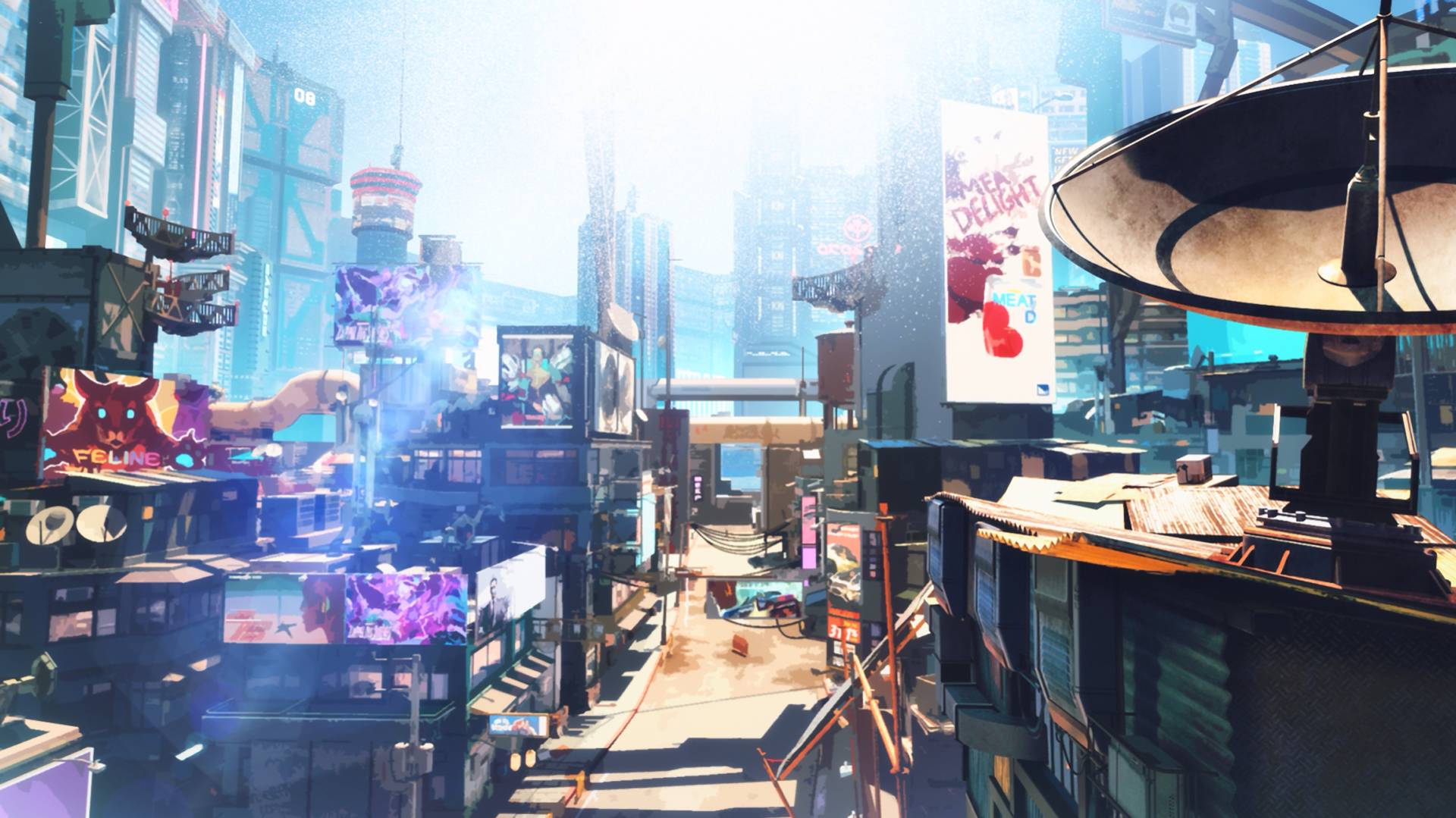
Edgerunners II treats Night City as decoration. Studio Trigger’s technical recreation remains impressively faithful to Cyberpunk 2077’s visual design, down to architectural details and district aesthetics. Yet that fidelity becomes meaningless when the city no longer drives the narrative. The show’s storylines could unfold in any cyberpunk metropolis without substantial revision. The specificity that grounded the first season—the feeling that these events could only happen in Night City because of Night City—has evaporated.
Structural Weakness at the Core
The major reveals meant to tie the season’s fragments together arrive underpowered. Characters face escalating stakes: Talia’s body deteriorating as she upgrades with increasingly dangerous cyberware, D’s quest to avenge his clan. Yet these plot developments feel strategically inconsistent in their dramatic weight. The show repeatedly readjusts what it considers important, with D’s revenge narrative becoming increasingly self-righteous despite the moral bankruptcy of every substantial character in the city.
The season would improve through editorial reduction. Several storylines could compress or vanish entirely while reaching identical conclusions, suggesting the ensemble approach created bloat rather than layered complexity. Edgerunners II avoids risk-taking in favor of adding characters and plot threads without ensuring those additions serve a unified vision. The thinness of the intended reveals suggests that the show knew its connections weren’t substantial, and compensated through repetition.
Technical Polish Without Narrative Substance
Studio Trigger preserves what it does best: animation excellence. The studio demonstrates undiminished technical mastery in character movement, visual effects work, and stylistic consistency across all ten episodes. The voice cast delivers solid performances throughout their scenes. These production values provide sufficient craftsmanship to keep the season watchable even as the writing underneath wobbles. Professional execution alone becomes a consolation prize when narrative ambition fails to match the technical capability on display.
The Franchise Continues Forward
CD Projekt Red announced at Anime Expo 2026 that development on the next narrative arc for the series is underway, signaling continued investment in the anime adaptation despite the second season’s mixed reception. The crucial test facing future installments will be whether Studio Trigger and CD Projekt Red can restore the focused storytelling and thematic clarity that made the first season resonate, or whether the ensemble model introduced here has become the permanent trajectory.
Cyberpunk: Edgerunners II disappoints without reaching outright failure. The season presents competent craftsmanship in its technical and vocal dimensions while fumbling its narrative architecture. There exist countless untold stories within Night City waiting for exploration, yet the presence of stories does not guarantee that all of them will achieve anything approaching greatness.
Source: Kotaku
Frequently Asked Questions
What is the structure of Cyberpunk: Edgerunners II?
The second season is mostly standalone and follows an ensemble format with three protagonists: Roman, a young observer documenting Night City through an analog camcorder; Talia, a teenage cyborg rebelling against her family; and D, a Nomad seeking revenge for his clan.
How does Edgerunners II compare to the first season?
The first season built toward focused emotional payoffs through meticulous narrative structure, with memorable moments like Maine's cyberpsychosis death and Lucy reaching the moon. Season two fails to achieve similar emotional resonance despite featuring ultraviolent set pieces, and its storylines remain disjointed through most of its runtime.
What role does Night City play in Edgerunners II?
Night City functions more as visual decoration than as an active narrative force. While Studio Trigger's recreation remains faithful to Cyberpunk 2077's design details, the city no longer drives the plot or serves as the thematic character it embodied in the original season.
